OK, so I went to NUS to meet with my FB Assignment group and parking my car outside COM1 costs me a whopping $6! This is serious daylight robbery. So where should I park? I’m not exactly familiar with NUS and am probably more suaku than the year 1s.
I think my team has a good mix. We have a business guy, an electrical engineer, two partially geeky students (I didn’t make this up – they told me) and one kaypoh (busybody – that’s me). So “good” a mix maybe I’m getting a bit stressed out that we might be technically lacking. But don’t worry. I have faith in you guys. 😛
As a consolation, let me say something. Ugly (probably) sells. Yes, the crappiest, ugliest of all things usually sells well. Don’t ask me why. Here’s my observations.
Google is ugly, but we use it over Yahoo or Bing.
Gmail is ugly as hell, but we rather use it over Hotmail. (Sidenote: I’ll give some credit to Yahoo mail here.)
Ebay ain’t the prettiest of all sites around, but heck it sells like mad.
Facebook is kinda ugly and doesn’t allow me to customize a hideous pink background like Friendster, but it is the most hit site on the Internet today (don’t ask me why I know, I’m not supposed to tell, but I am certain of this fact).
Most blogshops are ugly as hell. If you think they look nice, you need to see doctor. But the funny part? They sell too!
So here’s my takeaway point. Ugly (probably) sells.
Looks like I’ve gotten my first team for the Facebook assignment and am still trying to figure out a team for the second Seminar assignment. Hopefully I can get that settled as well so I can get this off my back and concentrate on the actual work rather than kay-pohing about people’s lives.
Meanwhile I’m poking around Google Wave. Actually not really very excited yet. I’m more confused than excited – I can’t seem to find a practical use for it at the moment. I will try to explore it more. It looks useful as an internal Wiki kind of thing. I won’t use it to replace my regular IM though. Problem here is, Wave is invite-only and I have limited invites so I cannot realize the full collaborative power of this tool yet. :S
Short and sweet post. I need to get back to work. Sigh.
I just got my Amazon EC2 account today and poked around a bit. Technically, it’s just a super cluster of virtualized servers running a (very likely) hacked copy of the open source Xen with a AJAX-enabled web management interface. The servers are undoubtedly Intel Xeons.
[root@domU-12-31-39-09-2E-31 ~]# uname -a

Linux domU-12-31-39-09-2E-31 2.6.18-xenU-ec2-v1.2 #2 SMP Wed Aug 19 09:04:38 EDT 2009 i686 i686 i386 GNU/Linux

[root@domU-12-31-39-09-2E-31 ~]# cat /proc/cpuinfo

processor    : 0

vendor_id    : GenuineIntel

cpu family    : 6

model        : 23

model name    : Intel(R) Xeon(R) CPU           E5430  @ 2.66GHz

stepping    : 10

cpu MHz        : 2666.760

cache size    : 6144 KB

fdiv_bug    : no

hlt_bug        : no

f00f_bug    : no

coma_bug    : no

fpu        : yes

fpu_exception    : yes

cpuid level    : 13

wp        : yes

flags        : fpu tsc msr pae mce cx8 apic mca cmov pat pse36 clflush dts acpi mmx fxsr sse sse2 ss ht tm pbe nx lm constant_tsc up pni monitor ds_cpl vmx est tm2 cx16 xtpr lahf_lm

bogomips    : 5335.77
There’s nothing technically amazing here but it’s interesting how Amazon put it together into a pay-per-use revenue model. It seems like they got the billing portion right.
Personally, I don’t quite like the management of it though. If you’ve used VMware ESX or Citrix XenServer you might agree with me.
For example, I couldn’t alter my firewall configuration once my instance was deployed. I created my first instance with a default firewall rule that drops everything, so in desperation I created another one.
Then I realized I couldn’t delete an instance either. It took me a while to figure out that there is actually a command line client tool written in Java that allows me to delete an instance. In fact, the client tool has way more capabilities than the funky AJAX web interface.
Here’s the Getting Started Guide. You need to read this to learn how to set up the authentication mechanisms. I presume most of us here can set up the Java environment variables no problem.
It took me quite a while to find these links so do bookmark them.
***
Just a quick start for everyone here since the authentication part is a hassle. The documentation had a bunch of talk cock before they got to the point.
You’ll need to login to AWS, then go under the Your Account > Security Credentials menu on the top right hand corner.
Scroll down and look under the Access Credentials heading.
Click the X.509 Certificates tab.
Click Create a new Ceritificate.
Download both the Private Key File and Certificate File.
Get down to your command prompt.
Change to the directory where you unzipped the EC2 API tools.
Make sure JAVA_HOME and PATH are both set.
Set EC2_HOME to the directory in step 7 above.
Change to the bin directory within the EC2 API tools directory.
You’re all ready to go run the .cmd files (for Windows) or the non .cmd files (for MacOS/Linux guys).
***
Update: Here’s a freebie for the MacOS X users – paste these into ~/.bash_profile so you don’t have to specify your key and cert all the time. (Edit where necessary.)
In the last few days of 2009, I was on leave and planned my days around meeting people. I made a point to take photos with all the people I’ve met and write about them. At the end of 2010, I will look back at this post to see if anything changed, and if we did what we said we wanted to do.
December 28, 2009
Primary School Friend – Xin Yun
I met up with Xin Yun. We’ve completely lost contact ever since Primary School days. Thanks to Facebook, we finally met around 12:30 PM at Sun Plaza after 15 years! We chatted over a burger and drink at Macs’ and recalled the silly things we did as kids – some of them I couldn’t even remember. This shows that females does have better long term memory. It was a 2 hour long chat. Before we parted, we had an agreement to meet up with the rest of the BBSS 6Q (1994) gang.
Secondary School Junior – Tian Yao
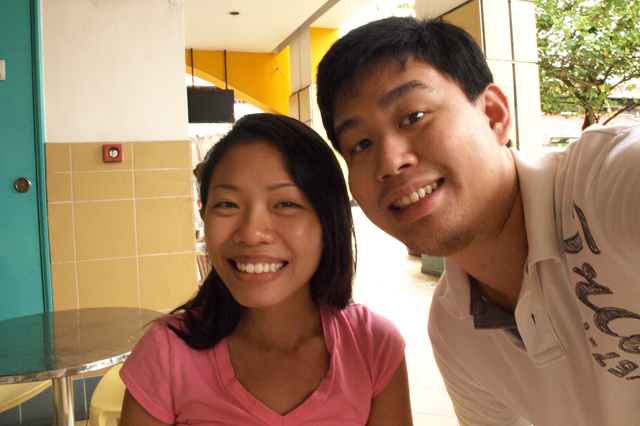
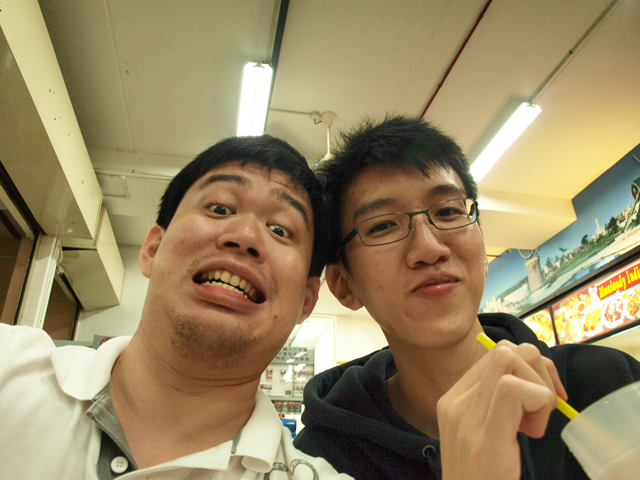
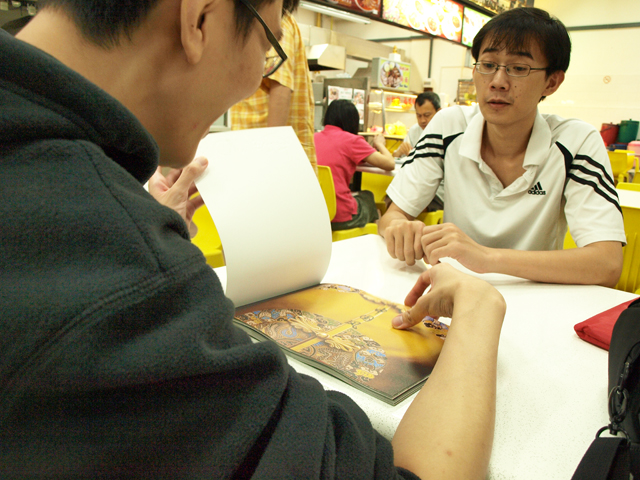
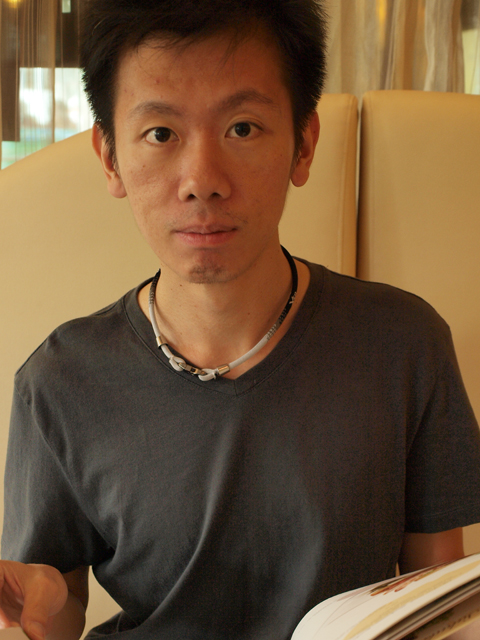
Later that day I went to NUS with Tian Yao to meet A/Prof. Ben Leong to discuss a personal P2P project I’m looking to build. We exchanged some interesting ideas and Prof. gave me some homework (!!!). Then we ate dinner at Marina Square and dropped by Yan Po’s house for coffee where the pics were taken.
Poly Friend – Yan Po
Tian Yao spoke about his job hunting process and I guess the last I heard was that he had joined NCS. Not that I would encourage him to, but the pay package seems decent. We’ll see how he’s feels about his job at the end of 2010.
Yan Po’s still doing pretty well in the job I’ve recommended. It’s something new and hopefully he’s learning more from it each day than his days as a phone operator in StarHub. He should (hopefully) get a VMware certification by the end of 2010.
December 29, 2009
Old IRC Friend – Kelvin Koh
This day started with an early lunch (11:30 AM) at Novena Square with Kelvin. We had lots of constructive discussions that I won’t publicly reveal, but a quick summary is to stop slacking and start doing something while we’re still young.
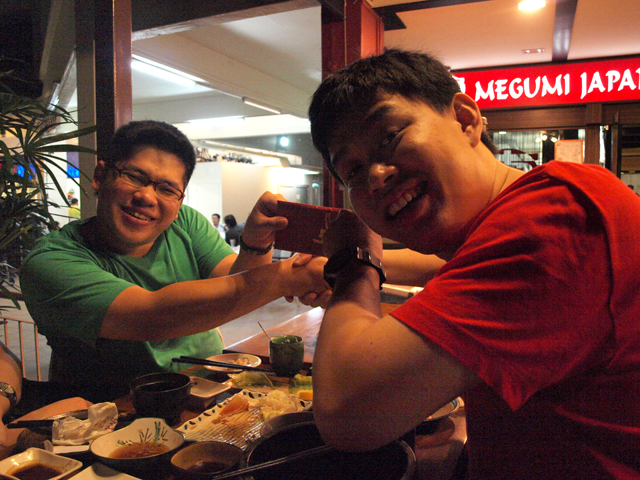
I spent the afternoon finalizing the curtains for my house which should be delivered sometime early this month, then I met up with Francis and Vanessa at Megumi Japanese Restaurant along Sunset Way for dinner. It was a treat to thank me and Yan Po for helping at an event. The wife was with us as well, to join the fun and awesome food.
Business Associate and Talk Cock Buddy – Francis Lo
Francis has big ambitions for 2010 as well and he’s aimed for a brand new car. His ambitions will be kept private and I won’t tell what car he’s aiming for yet… we shall see at the end of this year.
December 30, 2009
Old KHCO Friend – Edelyn Lee
It was a wet afternoon when I met Edelyn at around 2:00 PM. Actually, I can’t really recall how I met her except for hanging out during the 2004 SCO Mega Concert rehearsals. I drove over to Holland Village where we ate fantastic dim sum at Crystal Jade. Ede’s still pursuing her bachelors’ at NIE as a teacher and she’ll be attached to a school this year.
Poly Friend & Financial Planner – Justin Loy
I was 30 minutes late when I met up with Justin Loy for a swim at Queenstown. We barely went around the pool 4 times before we had to leave and meet up with Hanz at a coffee shop where they both had dinner. (I had to run for another event.)
Poly Friend – Hanz Guo
Justin Loy seems to be doing well as a Financial Planner at Prudential while Hanz’s having fun at Fujitsu serving the largest telco in Singapore. Both of them seem comfortable where they are and I wish them all the best in their careers this year!
MDC Folks – Moses, Jia Jing, Yan Hao
Of course nothing beats meeting a bunch of old friends from MDC. We met at 7:00 PM at TCC Clarke Quay and crapped over dinner. Most of them are still studying, with some graduating this year. Moses is on his way to further his studies, however.
MDC Folks – Tian Yao and Andy Chia
Of course, no MDC meeting is without the king of Pop Chinese Flute – Andy’s back in SG for good and he’ll be stirring up more jazzy dizi concerts.
So that’s all for 2009. It will be an exciting year ahead. Stay healthy and happy!
We were both lying down in bed, getting ready to sleep… almost. Then The Wife turned around and said, “dear, if you go out and see a bag this big *shows width and height of a rectangle with hands*, buy it for me.”
I sense the LV/Gucci request coming. Here’s the counter.
“Huh? Why? I thought I just bought you a new one?”
“That one is a little too big leh, I need a smaller one, you know, for me to go out casually.”
“Huh? What do you want to put inside?”
“Er, umbrella, wallet, handphone, maybe a water bottle.”
Thinks to myself: That’s a lot of shit… I’d put those in a backpackers’
“Har… what colour you like? I think storeroom got a lot… NTUC…”
Then I felt a sharp pain and couldn’t remember what happened next.
I’ve had some request to post up my cooking experiments on my blog and so here’s my first. I’ve decided to call my experimental cooking series Singaporean Style, Western Flavour since I tend towards ingredients that are easily found in neighbourhood supermarkets. Looking for western ingredients can be quite a chore as these small supermarkets don’t carry such a wide variety. If the ingredients aren’t found easily, then I’ll use ingredients that you’ll find at larger supermarkets but can be kept for a long time (such as herbs and oils).
I ate Bruschetta in a restruant at Tampines today afternoon and decided to go home and give it a try. Ideally, Bruschetta is served on Baguette but I used a loaf of white bread instead.
Ingredients
6-8 slices of thick white bread or baguette
2-3 cloves of garlic, finely chopped
1-2 cloves of garlic, chopped in half (for rubbing on bread)
1 teaspoon of balsamic vinegar
2-3 ripe tomatoes
Extra virgin olive oil
Basil, salt and black pepper
Smoked salmon (optional)
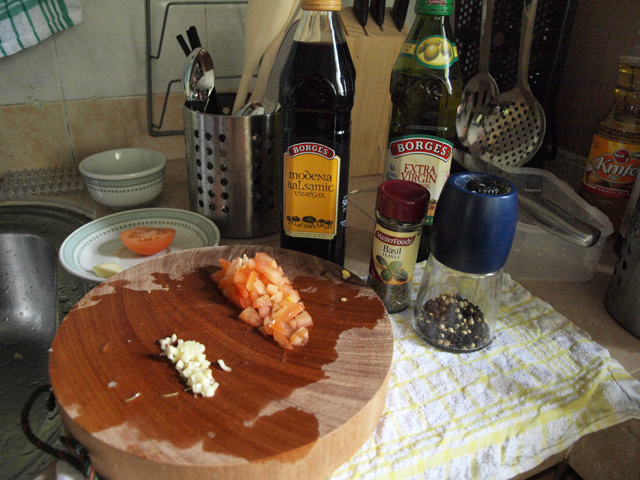
Ingredients for Bruschetta
Where to Get Them
If you want to use baguette, Delifrance sells pretty decent ones.
White bread, garlic and tomatoes can be had at any neighbourhood supermarket.
Olive oil, balsamic vinegar and smoked salmon can be bought at Cold Storage or larger NTUC outlets such as those in Jurong Point. Buy a good bottle of olive oil and balsamic vinegar and keep them – they can be kept for a long time.
I use dried Basil from MasterFoods. They come in small bottles that costs around $5 and can be found similarly at Cold Storage or larger NTUC outlets. You may use fresh basil but they can’t be kept for more than a few days.
If you absolutely must, then buy pre-ground black pepper from MasterFoods. I use a cheap Ikea pepper grinder and grind the peppers when I need.
Preparing the Tomato Topping
Optional – put the tomatoes in boiling water for about one minute and remove them. Remove the skin
Cut the tomatoes in quarters and remove the stem, seeds and juice from the center.
Optional – lighly fry the chopped garlic in some olive oil, otherwise it may taste too raw.
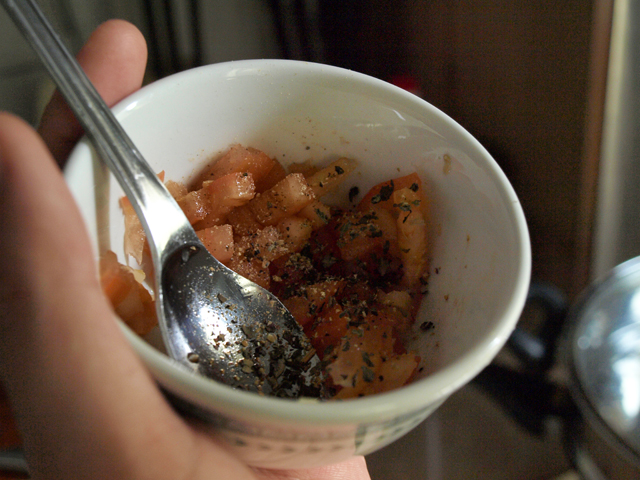
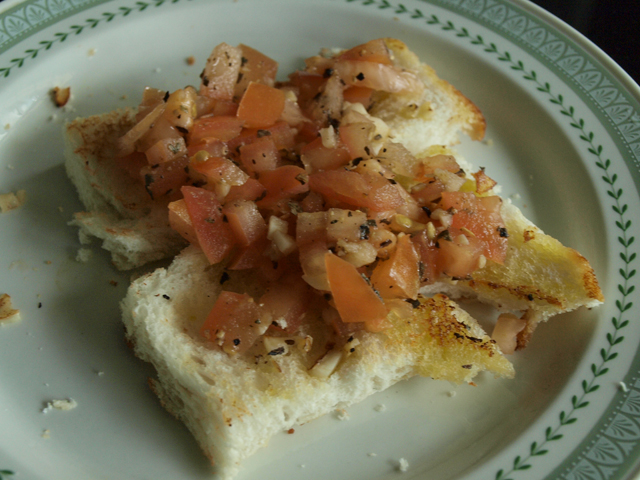
Chop the tomatoes then put them in a bowl together with the chopped garlic, balsmic vinegar and 1 tablespoon of olive oil. If you have smoked salmon, add them as well. Sprinkle in some basil, then a little bit of salt and pepper to taste and mix. (I tend to use less salt and more pepper.)
Mixing the Bruchetta's Tomato Topping Preparing the Bread
If you’re using baguette, slice them as you normally would diagonally about half an inch thick.
If you’re using a loaf of white bread, cut the slices in half to make them smaller.
If you’re using baguette, toast the bread, then rub the garlic on the slice and drizzle half a teaspoon of olive oil on each half-slice.
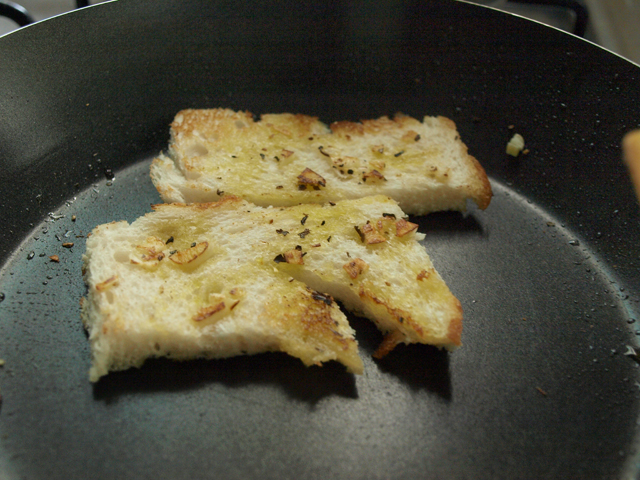
If you’re using white bread, it would be easier to chop the garlic and then fry them with some olive oil for about a minute on low heat, then place the bread on top.
Either serve the bread and tomatoes separately or immediately before serving otherwise the bread will turn soggy.
Frying the Bread in Olive Oil
Serving Size
Serves 2 to 3 not-very-hungry adults busy playing Wii.