Category: Automotive

  • Three-piece next generation ERP unit

    Three-piece next generation ERP unit

    I read about the new 3-piece next generation ERP unit and must say I was a little bit disappointed. I applaud Transport Minister On Ye Kung for openly sharing the decision making process that lead to this design.

    As an auto enthusiast, I’ve had my fair share of IU unit failures and also personally installed various in-car accessories such as cameras, GPS, bluetooth, etc.

    I believe LTA has an expert panel, but I hope some of my opinions here can persuade the Transport Ministry to reconsider the following:

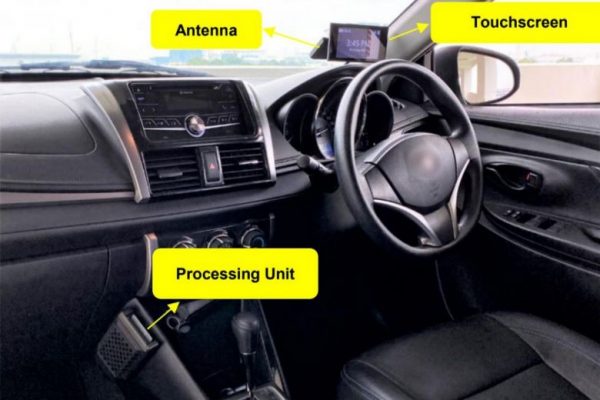
    Processing unit location

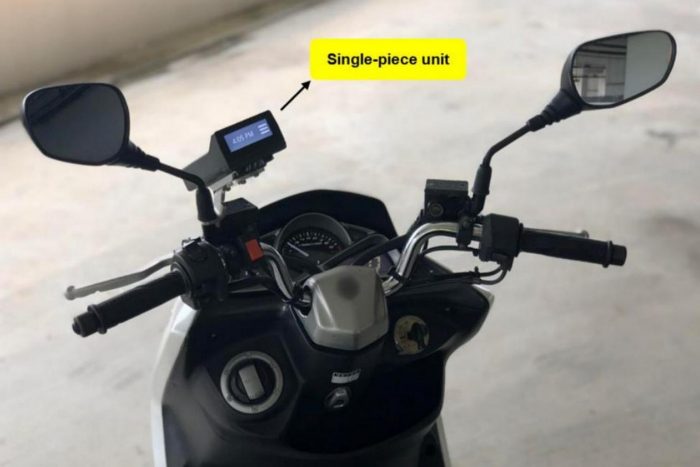
    The photo shows the unit installed on the passenger side and I certainly hope this will not be the case. It should be located under the driver’s dashboard.

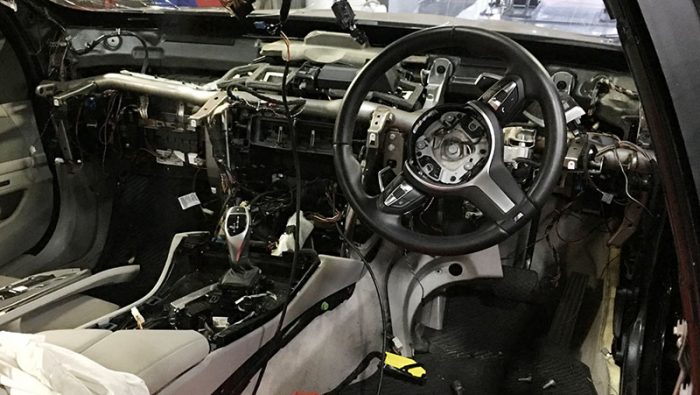
    While I think it is a good idea to reduce heat by relocating the processing unit in the car, the amount of effort required to install a device across the center console can sometimes be tremendous – especially in modern cars where there’s so much equipment and cabling already in the car.

    If contractors do not wire it carefully, the wires can be tucked through areas where there may be sharp edges (e.g. metal brackets that hold the dashboard) which may lead to abrasion and eventually a wire breakage, or worse a short-circuit after years of heat and vibration.

    Also an important consideration would be cable entanglement during dashboard removal which is sometimes necessary for air-con repairs. I have seen (existing) IU wires running across from the left to the right because the power is tapped from a fusebox located on the passenger side. In situations like these, wire breakage can happen when the dashboard is removed. Luckily the existing IU uses a simple two-wire 12V DC supply. If the new ones contain a data cable (for the antenna + display), it may require a full cable replacement.

    Cabling madness in a modern BMW 5 series

    Adapter to fit Japanese vehicles that have ETC

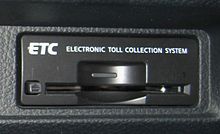
    LTA should also consider making the in-car processing unit conform to, or be available with an adapter that may be compatible with Japanese Domestic Market vehicles with a built-in ETC device so it can be tucked away neatly in the space designed.

    Japanese ETC unit integrated into the vehicle dashboard (Credits: Wikipedia)

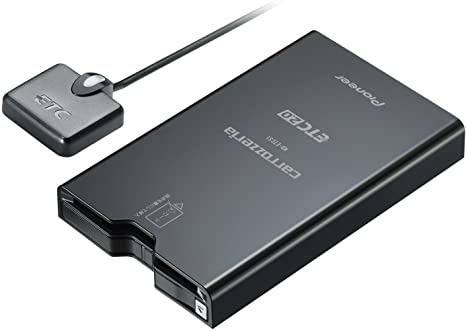
    It is also worth noting the small size of the 2-piece Japanese ETC 2.0 units.

    Japanese ETC unit is a 2-piece system with an external antenna and in-vehicle unit (Credits: Amazon)

    No touchscreen please

    I certainly do not encourage adding any more touch devices to distract drivers – especially taxi/private hire drivers. The automotive industry has moved away from touch to voice-control or gesture-control, and I would hope that LTA reinstate the static display – similar to that of the bike.

    Static display on a bike IU (Credits: LTA)

    No screen! Use Bluetooth + App!

    In fact, It would be a step up if the UI could be directly paired with a smartphone for the functions required and completely rely on a smartphone app. Similar to Parking.sg, wouldn’t it be awesome if I can top up and check my IU balance from my phone?

    Parking.sg app is a great move towards a paperless society (Credits: MND)

    If it can be app-enabled, then the screen can be made a removable or optional device. Simply unplug it, leaving the antenna.

    Minister Ong’s remark on smartphone: “there will be operational issues like battery running out, forgetting to bring smartphones, etc.” is also not quite valid, since most of us would have been able to charge our smartphone in our vehicles, but regardless, the IU should not be dependent on the smartphone, or vice-versa. The smartphone simply gives us access to more information where required. This is similar to many in-car cameras, where there are no displays and all actions are performed through an app.

    I understand there can be contractual obligations but if LTA can just get it right, we won’t have to go through ERP v4.0 in another 5-10 years. It’s a massive operation, and grandfathering bad designs can take a long, long time.

  • Where is COE headed in 2018?

    Where is COE headed in 2018?

    Several car salesman told me: “Next year price will go up! Buy NOW!”

    Well done. All the fear mongering will actually lead to a COE plunge. There was a run up prior to the end of this year because of all the panic buying, then it will stop as people adopt a wait-and-see attitude. By then, the car salespeople will tell you that COE is low, and it is the best time to buy. No matter COE high or low, they will spin a story to sell their cars.

    My guess is that sometime in Q1’18 will be the best time to renew COE, where it should plunge back to $40K or even $30K+ levels (for Category A).

    Yes, the new Euro 6 CEVS will affect car prices, but the market will adapt. It’s not like this is the first time the Government has introduced changes to CEVS or COE (e.g. the horsepower categorisation). Eventually the whole system will net itself to zero, i.e. COE drops + CEVS goes up. Car prices will probably just remain the same, and for a while until manufactures catch up with Euro 6, then the regulations will likely change again when majority of vehicles qualify for CEVS discounts.

  • Life with BMW diesel in Singapore, two years on.

    Life with BMW diesel in Singapore, two years on.

    I’m sure some readers have been curious, so here’s a 2-year review after my first post from two years ago.

    In summary, the BMW F10 520d is one of the best car I’ve driven on a daily basis. It is surely not as refined as my previous petrol inline-6 BMW 523i, but I realise that I spend most of the time talking with passengers, or pushing the car through traffic; I hardly pay attention to the diesel rattle most of the time. The car is incredibly quiet once brought up to speeds above 50 kph.

    • Vehicle: BMW 520d y.o.m. 2013 (F10)
    • Ownership: Apr 2014 to present
    • Mileage done: ~27,000 kms (~13,000 kms/year)
    • Breakdowns or faults: None
    • Servicing costs: ~$240 every 8,000 kms
    • Other repairs: ~$380 for one rear tyre replacement (more on this later)
    • Average FC: 12.5km/L, 80%/20% city/hway (see full log at Fuelly)

    Regrets? No.

    At times I do wonder if it would have been better if I had gotten a 530d wagon for the extra space and refinement of an inline-6 diesel, but the increase in road tax may not make sense. That said, I haven’t had a chance to drive this car up north — I am sure it would have been stellar as the car is best enjoyed on the highway, cruising at 110kph with the engine turning over well under 2,000 rpm.

    I’ve also tested the VW Touran TDI before it got pulled from the markets due to dieselgate, and it was incredibly quiet in the cabin, too.

    Savings can be substantial

    I did some math, comparing my previous ride (BMW F10 523i). The savings from the increase in fuel economy and reduction in fuel costs are substantial enough to pay for the insurance costs — around $1,600/year in savings even after deducting the increase in road tax ($210/yr more for the diesel).

    Even if you make a comparison against the current 2-litre petrol BMW 520i with a $800 increase in road tax, the diesel still brings around $1,000/yr in savings. The more miles you do, the more you will save.

    Diesel particulate filter woes

    I’ve read in forums that people worry about the diesel particulate filter (DPF). After two years of ownership and driving relatively short trips to and from work, I would say the DPF is nothing to worry about. We have good quality (Euro V) diesel here, and the car is intelligent enough to regenerate the DPF when it needs to. You can actually feel the DPF regeneration once you are more attuned to your car — the exhaust note changes.

    It is more important to use the correct engine oil for your engine as some engine oils may not be DPF friendly. When in doubt, buy OE oils. Modern Euro-V compliant BMW diesels require BMW LL-04 approved oils.

    Tyre trouble

    I drive through Upper Bukit Timah Road pretty often and the MRT (DTL) construction tends to be unfriendly to tyres. I’ve had several nails in my tyres, and one of them unfortunately hit a spot where it would not patch well so I had to replace one rear tyre (275/40 R18) with the same Pirelli P7 run-flat tyre costing a whopping $380.

    My current set of tyres are the originals that came with the car (18″ staggered). They seem to be due for a replacement soon having done 30,000 kms to date. I will be swapping them out for a set of M-sport 19″ non-staggered (245/40 R19) later this year. I feel there’s no need for staggered wheels on this car as it already understeers a bit. Replacing and driving those big heavy rear tyres are simply a waste of money and fuel.

    Servicing costs

    It seems that BMW diesel parts are getting more and more readily available as the BMW 2-series Grand Tourer diesel takes on popularity. The engine oil filter was a tad expensive, but is not a significant jump from the price of a petrol equivalent. The plus is that diesels have no spark plugs, so spark or or expensive ignition coils to worry about.

    However, I do not following the servicing interval prescribed by the car computer or dealer (15K or 25K km if yours is a parallel import). I change the oil changed 8,000 kms.

    Diesels run cooler, especially at idle

    Contrary to some old folks tale, it is also interesting to note that diesel engines run cooler, especially at idle. My engine oil is maintained at around 100 degrees C whilst petrol BMWs are kept at 110 degrees C.

    There’s no need to warm up the engine by idling a diesel because it will not warm up. In fact, there is no need to warm up all modern cars by idling, it especially in Singapore; simply drive the car and the load on the engine will warm the car up quickly. Once again, it is more important to use the correct engine oil so your entire engine gets the lubrication it needs from the get-go.

    Short note about improvement in suspension of the BMW F10 in later years

    One thing for certain is a marked improvement of the 2013 520d suspension over the 2011 523i. Both cars are the same model (F10) but the 2013 feels more planted and less like a boat when driven at speed. I have verified with my VIN that my vehicle does not have the optional M-sport suspension even though it is fully fitted with M-sport options from factory. I believe BMW fixed the suspension issues, and driving my friend’s 520i (2014) LCI model felt similar to the 2013.

    Ending note

    I believe we will continue to see more and more diesel cars in Singapore although turbocharged petrol engines are also getting more efficient; diesel has higher energy density, so it will likely still lead the way in fuel efficiency. My car is nearing the end of its product life cycle and a new model (codenamed G30) will get the new modular B-series engines already found in a few newer BMWs like the 216d Grand Tourer. We can see how each generation becomes more efficient, powerful and refined just by following at the progress of one manufacturer. I am sure the same applies for the other brands.
  • MAS eases curbs; where is COE headed

    MAS eases curbs; where is COE headed

    If you’ve been following the news, you should have heard about MAS easing the loan curbs. So where is COE headed? Most people say it will go up, but I think it will only inch up marginally.

    Reducing downpayment by 10% will help buyers reduce their upfront commitment by around $8K (for a $80K car). If COE shot up in excess of $10K, e.g. an $80K now costs $90K, it would defeat the loan curbs ($32K vs. $27K downpayment).

    The extension of loan tenure from 5 to 7 years makes monthly commitments easier on the pocket, but right now most buyers waiting on the sidelines are likely more cash strapped. Remember: it is supply and demand that causes COE prices to move.

    Also, the number of COE quota available right now actually meets or exceeds that of 2008 when COE was <$20K. With so many cars going to the scrapyards, we will see this quota sustain for quite a while. I believe this is the primary reason why the loan curbs were eased — otherwise we may see $20-30K COE by 2018. I believe the loans will be further relaxed in 2017 (to 80% + 8 years) if total quota exceeds 2,500 in each bidding. If the quota remains fairly constant, then there will be no change.

    In summary, I think COE prices will not move much… it may rise a little bit, with a little spike in the short term due to sudden demand, but should eventually stagnate around $50K for both Cat A and B.

    P.S. I can’t help but feel that LTA really screwed up on Cat A vs. B differentiation even when they had the one opportunity to do it right.

  • Thicker oil is killing your engine

    Thicker oil is killing your engine

    I wrote this entry hoping it would prevent people from using incorrect engine oil viscosities, especially newer cars that require as low as 20 weight oils (e.g. Mazda Skyactiv.)

    I often hear mechanics saying that we need to use thicker oils in our car because of our hot Singapore climate, so if my car came with 0W-30, the mechanic may recommend that I use 5W-40 instead.

    Modern engines are built to very tight tolerances. The thinner the oil, the easier it flows around the engine components and tight spaces. In fact, the most critical part of engine lubrication is during cold start, that’s why we use multi-grade oils (e.g. 0W-xx or 5W-xx) to ensure that engine oil flows even in winter conditions. The quicker the oil flows around the engine, especially to the head which gets a lot of wear and heat, the less it will wear.

    Sure, our weather never gets that cold — and that is part of the good news — but don’t forget that we also make fairly short or stop-and-go trips in our small country. The engine oil may not reach its operating temperature most of the time. Most cars have only a water temperature gauge; the water (coolant) can reach operating temperatures (~90 degrees C) within 10 minutes of driving. However, the engine oil takes much longer to reach operating temps — sometimes up to 30 minutes. If your car has an engine oil temperature gauge, keep an eye on that.

    How to tell if your car is showing coolant or oil temp: If the symbol at the temp gauge is a thermometer in liquid, it is coolant. If the symbol resembles an oil can or watering can, it is oil.

    Here’s a picture of the dashboard from a BMW M3 Coupé showing oil temperature below the tachometer:

    BMW E92 M3 Coupé Dashboard

    It is true that oil gets thinner with heat, but most of our cars — even in our hot climate — maintain internal engine oil temperatures between 100-120 degree C. Our engine cooling systems are more capable than we think. At the operating temps, all engine oils would be at their rated viscosities, and the engine manufacturer has requested that we use a specific oil viscosity at those temperatures.

    I drove my coming 10 years old Subaru Impreza 1.6A up to Sepang International F1 circuit. The car was in fully stock condition and 0W-40 engine oil, except for upgraded brake pads (stock pads were really crappy). I drove for hours to Sepang, then pretty much ran at full throttle all the way around the circuit (it was a slow car, and required little braking on a big F1 circuit) and the engine never overheated; in fact the water temp gauge never went above the center line. This shows how efficient the engine cooling system is.

    So here’s some food for thought: If we do not drive long enough distances to warm our engines up, shouldn’t we use thinner engine oils instead?

    For more in-depth reading, continue to this article.

  • Truth about automotive leather maintenance

    Truth about automotive leather maintenance

    Leather treatment/conditioning is a big automotive detailing fad. In cars built in possibly 1990s, and definitely 2000s and beyond, all automotive leather have a clear coat (read: plastic) applied to a treated, dyed and artificially textured leather. The clear coat makes the leather water proof, otherwise the leather would have stained when it comes into contact with water and sweat. If you have uncoated leather products (bags, wallets, etc.) you will know what I mean.

    The only exception is if you have a vintage car, or a really premium leather in an expensive car. AFAIK, even the leather in Rolls Royce are treated the same way.

    There’s no need to spend good money on leather treatment/conditioners. Some leather “conditioners” offer UV protection which may help prevent light coloured leather from discolouration, but it is likely a waste of money.

    Apart from long term wear and tear, the reason why leather in our cars crack and fade is largely because of poor care/maintenance. Not regularly vacuuming and cleaning the leather causes dirt and sweat (acidic) to accumulate and abrade/damage the clear coat. Once the clear coat is gone, the exposed leather underneath is left to face the environment and deteriorates quickly.

    How should automotive leather be cleaned

    You’ll need:

    1. Two pails – one for soapy water, one for clean water.
    2. A vacuum cleaner.
    3. A bar soap. You can also use hand soap, etc. but so far Dettol bar soap works best for me.
    4. Two cloths. One wet, one dry.
    5. A brush. I use the Kiwi Shoe Brush (used for leather shoes — Army guys should be familiar with this).

    Steps:

    1. Vacuum to remove dirt, especially between the creases. Dirt is abrasive, so you really want to get as much out as possible.
    2. Prepare a bar soap, water and a brush in the 1st pail. Wet your hands and rub some soap on your palm, then apply the soapy mix on your seats and start brushing!
    3. It is important to clean one section at a time, e.g. start with the seat bottom, then proceed to seat bolsters, then proceed to seat back. Never let the dirty soapy water dry on the leather.
    4. With clean water in the 2nd pail, wet a cloth, twist it so it is damp and not dripping wet, then wipe away the soapy mix. You will be surprised how dirty the cloth is. Rinse and repeat until you’ve gotten soapy water off the seat.
    5. Continue cleaning the rest of the seat until you have covered the entire seat. Do a final wipe down using cloth with clean water, then dry seat with another cloth.

    Extra tip: Do NOT use the brush on the steering wheel. Steering wheel leather is more delicate. Simply apply soapy water and use a cloth to wipe it down. Do this several times.

    What if my leather is already worn/cracked?

    Never, ever have your leather filled and resprayed. Sanding down the leather to prepare for filling and respray effectively removes the protective top coat. Leather usually cracks at the areas where it sees the most abrasion, e.g. seat bolsters, steering wheels, gear shifters. Filling and respraying in those areas will only last a short while, and once the paint wears off it will reveal the filler — usually white in color and that is really ugly.

    The only way, unfortunately, is to get the leather replaced.