Category: Automotive

  • Motoring tips for wet Singapore roads

    It’s the time of the year again. Singapore gets an average of 19 rainy days and about 260-290mm of rainfall in November and December1. Flash floods and accidents are reported everywhere, as if our traffic isn’t already bad enough!

    There’s two things all drivers can do to help yourselves and help other road users.

    First, get yourself a bottle of spray-on Rain X. Don’t be one of those driving at 20km/h with hazard lights, fog lights and high beam on. It only slows traffic and makes visibility worse for other road users.

    All you need is a few pieces of newspaper. Go to a sheltered carpark. Wipe off any water with a sheet of newspaper first. Spray on Rain X generously on the front, front sides and rear windscreens. Spread/apply with newspaper. Be sure to cover the entire windscreen. Wipe clean with a new sheet of newspaper. Repeat and apply/wipe off one more time. Also apply some on side mirrors. You’ll be set for the entire month.

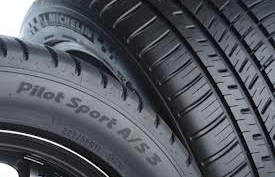
    Next, this is the time to get your tyres replaced if they are balding. Please don’t buy cheap or eco tyres — they have poor grip, that’s why they’re eco! Friction and fuel economy are inversely related. A lot of eco tyres are made for comfort and longevity and barely saves you any more fuel than a properly inflated tyre. Never compromise your safety for a few dollars in savings or fuel economy.

    Some tyres that are relatively quiet and known to perform well in the wet are Michelin Pilot Sport 3 (PS3) or Goodyear Eagle F1 Asymmetric (v1 and v2).

    The next thing you should check is your tyre pressure. A properly inflated tyre can make a significant difference in aquaplaning and braking performance.

    For FWD cars that are nose-heavy, I usually increase the front tyre pressure by 2-3 psi above the manufacturers’ recommended cold pressure (found on the door pillar or fuel filler cover). Most FWD cars have lower front tyre pressures to induce understeer to make their lawyers happy, but an under-inflated tyre is not good for the wet.

    A good mechanic once told me that if there’s anything you shouldn’t save on, it’s tyres, suspension and brakes.ย  Each tyre makes a contact patch no larger than the size of your hand. Added together, the total contact patch is no larger than an A4 sheet of paper. That’s the amount of rubber holding your 1,400kg car to the road.

    Safe motoring!

    P.S. I’ve heard people say Rain X damages wiper, etc. Seriously, wipers costs almost nothing to replace compared to a weekly tank of gas. If you keep your windscreen clean and just give your wipers a wipe down often, they should last very long. Our hot tropical climate damages wipers quickly especially when it sits under the hot sun against a dirty windscreen.

    1 Source: Climate of Singapore, from http://en.wikipedia.org/wiki/Geography_of_Singapore

  • Peer to peer car sharing in Singapore – is it really working?

    I’ve always wanted to make car sharing possible – there are two ways to go about it.

    First method: I would announce my travel plans and pick somebody going the same way as I am. In return I will get paid a token sum to ferry my passengers. I call this “Taxi style”.

    Second method: I rent my car out for profit. In short, it’s plain old private car rental. This is actually working in the US, see RelayRides.

    One problem with private car rental in Singapore is legislative restriction. At present, private car rental is only allowed on weekends or public holidays.

    The other problem is insurance coverage. Both methods of car sharing I described are classified as using the car for hire or reward. Hire/reward is explicitly prohibited on almost, if not all, private car insurance policies.

    Believe it or not, I called almost every insurance company in Singapore trying to see if rental coverage was possible. The answer was NO. Some did cover rental fleets, but the fleet size had to be considerable and it had to be a business.

    iCarsclub collaborated with DirectAsia to get the insurance problem resolved, so it is really very interesting.

    I decided to conduct an experiment.

    I signed up as a car owner. I did some research, and listed my car up at a very reasonable rate – $7 per hour, or $55 per day.

    My friend wanted to rent my car for the weekend, so he had it for 3 days on this long weekend (May 24 to May 26).

    The catch is this – fuel costs are borne by the car owner. iCarsclub in return charges the renter for mileage ($0.30/km). The renter also needs to pay for insurance coverage ($0.40/km).

    At the end of the rental, the bill came up to $326.83. The breakdown as follows:

    • Mileage traveled: 232 km
    • Booking fee: $2.00
    • Rental fee: $165.00 ($55/day x 3)
    • Mileage charges: $69.60
    • Insurance: $86.80
    • GST: $3.43

    iCarsclub takes a 20% commission from the rental fee.

    Insurance premiums are paid to DirectAsia.

    As a car owner I would only receive rental + mileage = $201.60.

    I also had to pay for the fuel, estimated to be about $60.

    On top of that, I have to pay for the SIM card in my car tracking device. That costs $39/mth.

    The result?

    • Car owner earns: $102.60 (31%)
    • Petrol company earns: $60.00 (18%)
    • Telco company earns: $39.00 (12%)
    • Insurance company earns: $86.80 (27%)
    • iCarsclub earns: $35.00 (11%)
    • Government earns: $3.43 (1%)

    It seems like businesses are the ultimate winners here. The owner actually receives less than a third of the amount.

    As a renter, there’s no price advantage. My car is already priced very low. My friend could have rented a similar car from a rental company for equal or less without worrying about the mileage based charges killing him.

    And because of the fixed mileage charges, it gives the renter no incentive to save fuel. He could go full throttle on the car all the time, or even abuse the fuel card.

    As a car owner, I am not sure if the amount risks I expose myself to would justify the $100+.

    Every car owner would have to sign a 2-year contract with iCarsclub, so my car would remain in their inventory for another 2 years. There is also a refundable deposit of $300 I had to pay. Breaking the contract would forfeit my deposit.

    Right now I think the pricing scheme needs to be tweaked. I am trying to get in touch with them to see how it can be improved. I am also hoping LTA’s announcement to liberalize private car rental on weekdays would come true.

    I am not discouraged yet and will continue to rent my car out to see how this whole scheme works out.

  • Why hybrids aren’t selling

    I’m not going to talk about EVs because they present a charging and power distribution challenge.

    However, there are quite some hybrids on the road now. But why hybrid cars still aren’t selling as well as traditional gasoline?

    First, batteries don’t last very long, are expensive to replace, are very heavy and also may potentially have safety issues in a crash (due to short circuit). And we really don’t know how much environmental damage is done actually making batteries. So now there’s 10 year warranties and all, but all that extra money just to put heavy batteries in a car? Really?

    I know about all that alternate fuel thing, so yes fossil fuels are running out, we’re all going die (not because of the lack of fuel but likely to war over fuel), and we need to find alternative energy.

    Okay, never mind. Here’s what I think is the biggest problem with hybrids: they simply all look like crap.

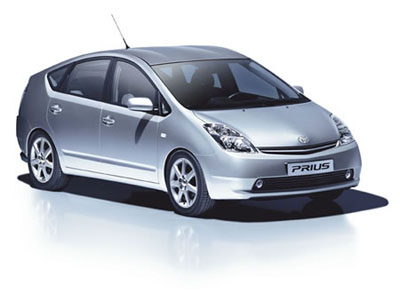
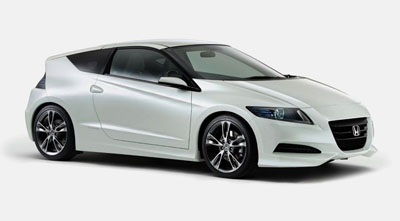
    Here’s a few we all know. The Toyota Prius and Honda CRZ.


    Why do hybrids have to look like that? Were they designed out of function (they need space for big batteries) or were the Japanese thinking of fancy looking hatches to attract the “save the world” folks? Hey, those “green” folks don’t wear weird clothes, do they?

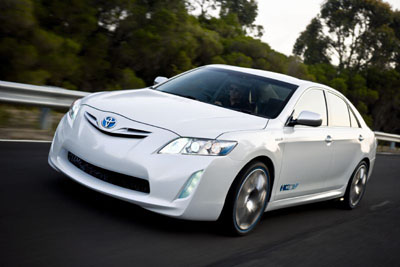
    What about the hybrid models of existing sedans? Why do they have to make something glow in blue, like the logo of the Camry?

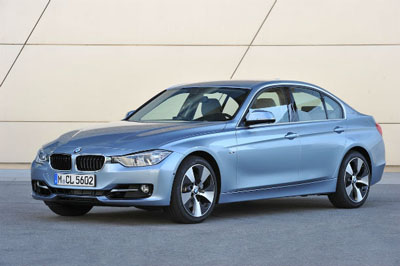
    Or even BMW, why does the ActiveHybrid 3 have such ugly wheels? For aerodynamics – really? After adding a few hundred kilos of batteries?

    Why can’t the BMW 5 series hybrid be called the BMW 535ih instead of ActiveHybrid 5? That badge looks like crap.

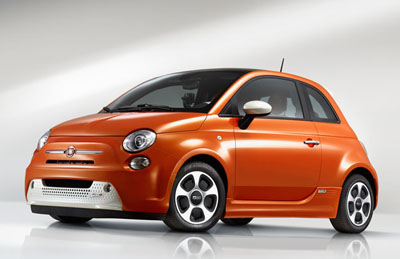
    At least Fiat is doing it right… the Fiat 500e looks awesome.

    Car makers — why can’t you make a hybrid look like a normal car?

  • BMW Buyer vs Public Transport Fan?

    I read this article and couldn’t resist my urge to bang wall.

    http://ride.asiaone.com/features/opinion/story/bmw-buyer-versus-public-transport-fan

    Comparison of extremes

    First, the example of an expensive $220K BMW 3-series is a little way off the charts as a basis for comparison against public transport. The author could have used a cheaper car, for example, a Kia Forte (which is a very decent family sedan, by the way.) He also failed to mention that a secondhand car market actually exists. Willful omission?

    And for a $2,000/month installment, assuming this is over 10 years, then $240K is the full amount including, not excluding, interests. The author seems to be clueless about the tax structure and rebates. (Business Times article, really?)

    The author also seems to have conveniently forgotten about all the recent complaints about queueing, waiting, squeezing, breakdowns, smelling people’s armpits, getting drenched in the rain, having people rub you all over, getting scolded by random aunties and having uncles with a laptop watch porn withbeside you.

    Where the hell are the taxis when you needed them most?

    Has anybody also forgotten about SARS?

    Can you or do you really want to bring a family of 5 onto a crowded bus with bags of groceries?

    What about the time and opportunity losses of the aforementioned Public Transport Fan (“PTF”)?

    There is indeed “a huge price to pay for convenience.”

    Anyway, let’s just take that as that, and that the BMW driver has a $340K hole in the bank as the author of the above article described.

    Invest, invest, invest!

    The author brought up investing! Why am I not so damn surprised?

    I haven’t seen my investments yield as much as the author has described. The truth is there are risks associated. The markets have been very volatile for the past four years, and I do not see it correcting anytime soon. All I can say is, invest with care.

    And for a regular investment of $2,000/month, a 3-4% dividend yield would return $720 every year. That is per year! Or about $60 per month.

    Condo… in Pulau Ubin?

    And as described by the author, if these dividends have been reinvested, i.e. with the effect of compound interest, the eventual sum of $999K would buy the PTF a piece of “suburban condominium” in 25 years. Really? With all the talk about investments, what ever happened to inflation?

    Anyway, I will put this theory to the test. I am investing fixed monthly sums into dividend yielding stocks starting this year. My portfolio should be growing as quickly, or even more quickly than my car installments. Unlike some book or article writers, I walk the talk.

    Will you really save that $2,000 a month if you didn’t drive a car?

    Sometimes money that goes around comes around. If you don’t spend on one thing, you end up spending on another — food, clubs, branded goods, gadgets, etc. Sure, maybe you won’t spend all of that 2 grands, but some of that is going to be spent somewhere, somehow.

    Public transport (and Taxi for that matter) will always be cheaper. Private transport is a lifestyle choice. If you are single, maybe it’s still OK. For those with a family, sometimes a car can really be of much help.

    And for those looking for a girlfriend… need I say more? ๐Ÿ˜‰

    Just for laughs:

    Just for Laughs - Where's your F***ing Ferrari?

  • On car loans again

    I just read this article.

    I found this statement by Tan Huey Min, general manager of Credit Counselling Singapore a little misleading:

    Over the long run, if you pay off the loan in eight years, the amount you have paid is much more than if you had paid the loan off in five years.

    First off, back when 100% 10-year loans were allowed, the interest rate was 1.88-2.8%. EIR 3-4%.

    Now that MAS capped loans to 50% 5-year, banks raised interest rates to 3.25%, or EIR 6-7%.

    Given an arbitrary amount of $100,000. This is how it works out:

    10 years, 100% loan @ 1.88% = $18,800 in interests
    5 years, 50% loan @ 3.25% = $8,125 in interests

    Sure, the interests would have reduced by over $10k+ but these have not taken into account the time value of money, i.e. inflation.

    Singapore’s inflation rate averaged around 4% over the last 5 years. Given that the old EIR was 3-4%, it was actually cheaper to take the loan.

    Note also when you stretch a car loan, the real EIR decreases.

    Here’s what $50K (the down payment amount) if hedged against inflation would work out over 5 years at 4%:

    $50,000 (P) x 4% compounded (r) x 5 years (Y)
    Future value = P(1 + r)^Y = 50000 x (1.04)^5 = $60,832.65

    Amused? No. It is exactly that. The interest rates have risen taken into account the reduction in banks profits.

    So to the cash-rich savvy investor, down paying 50% may not make sense with the revised interest rates then.

    However, if one does not invest wisely, sure… avoiding the debt would be good.

    Now with this blog post I did not say to go right now and take a full loan on a car while you still can. Taking on loan with leverage need to be weighed against risks. The most important risk to manage is the ability to bail out at any time.

  • Budget 2013 and what it means to the Singapore Car Buyer, part 2

    This is a continuum to my earlier post: Budget 2013 and what it means to the Singapore Car Buyer.

    Bank interests up

    So one of the predictions have already come true: Bank interests are up across the board. Here’s the new rates from UOB:

    The Public Transport Woes

    Many people are complaining that the new rules does not help middle income Singaporeans at all. I can empathize with them, and I can also understand why.

    A lot of my friends were driven away from public transport in the recent years because the situation has gotten really bad. In fact back in 2007 when I got my first car it was already bad. I had to commute from Bukit Batok to Tanjong Pagar and it was a crazy squeeze at the Bukit Batok station (second last stop of the North-South line) and then again at Jurong East.

    Many bit the bullet and got themselves a private transport. Truth is that the intangible benefits of car ownership can never be quantified in dollars and cents. Public transport/taxi will always be cheaper. The minimum expenditure for any car in Singapore works out to at least S$1,000 per month even if the installments are only $200. That is because running costs like insurance, road tax, parking and fuel make up about $700-800/mth. Running costs don’t vary much from car to car (unless you drive something with a big engine).

    But for those who are priced out of the market by the new rules, hang in there. More MRT lines are coming in the next few years and the government has promised to increase bus capacity. I have some confidence that they will deliver as promised.

    Used car dealers in trouble?

    This cut is very drastic. I can understand why used car dealers are complaining and coming up with alternative ways to circumvent the rules. I mentioned in the earlier blog entry that a lot of dealers took in cars at inflated prices over the past two years. Not many car dealers are cash-rich and leverage on special-rate financing for their stocks. It will not be a surprise if even big dealers wind up in the next few months.

    Hey, did we just mention leverage again? Ah, the woes of credit.

    Will MAS review this policies?

    Given the amount of noise the car dealers are making — not because they can’t find buyers but probably because all their stocks are now grossly overpriced — MAS may adjust this policy sooner than I initially suspected. If there’s adjustments, I think loan-to-value (LTV) ratio might increase by 10%.

    A bubble was growing

    I did predict a COE bubble back in 2011, albeit not in the same way that it happened. The government probably saw it coming.

    The same results, though, will apply here. I quote:

    Used car dealers will eventually be stuck with excess stock and there will be price war. A few used car dealers may even wind down due to inability to pay the financing for the cars in their showroom (they are usually on loan). Some people who lost money in the recent downward spiral of the stock market would also be forced to sell or auction their cars for cheap.

    When all these happens the prices of used cars will start to come down. People will then again flock to the used cars. But there isnโ€™t enough new car buyers to trade in their old cars. New car dealers will be in trouble when this happens and down comes the price of COE.

    Used car dealers have had a good time for the past two years, and they created a bubble of their own by over-inflating car prices. So the question is to die now or to die later? When COE hits $100K I think would be the breaking point but it never happened.

    COE $1 a possibility

    That said, COE prices will still take a plunge. The Cat B plunge might be more drastic than Cat A due to the higher prices of Cat B cars making them out of reach to a lot of prospective buyers. There may be possibility that we’ll see $1 COE in the coming months before buyer confidence regains, so those with cars expiring in the next two years (2013-2015), prepare some cash to renew your COE when this opportunity comes. It will not come everyday.

    To wait or not to wait

    If you are still seriously considering a car, the big question is to wait or not to wait? Here’s what I think: If you are going to buy a really cheap car (under $30K) then go ahead and buy it now, provided you have done your finances. Get the car and be done with it. I think cheap cars will be snapped up really quickly as soon as the COE prices reveal its new level.

    If you are waiting to buy a higher priced car, especially something above S$100K, then hold on to your horses. You may be in for a surprise.

    Rules of affordability

    If you are still thinking of a car and unsure of whether you can afford it or not, my rules are simple.

    You either pay it full in cash, or if it is too expensive to pay in cash and you prefer to leverage, then leverage to a point whereby you are able to dispose it and stomach the loss. This 40%/50% rule makes it a no-brainer. Notice I used the word prefer, not have to, because if you have to leverage, then high chances are that you cannot afford it. It’s that simple.

    It’s a pity I am not that savvy with other markets, especially property. I would have made big bucks.

    P.S. One of the article quotes a buyer who says he can’t buy a BMW M3 and because of that wants to migrate can go and die.