Category: Automotive

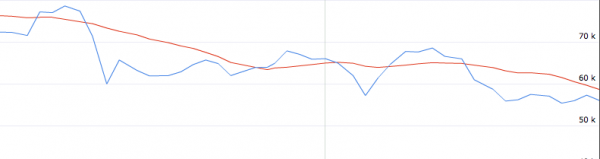
  • 2016 COE trend and illogical used car prices

    2016 COE trend and illogical used car prices

    Why are used car prices so ridiculously high when COE prices are down? It does not make sense, or does it?

    New cars are actually cheaper (in depreciation) now

    A brand new VW Golf (Mk7) 1.2 TSI was going for $98.8K over the weekend. This translates to a depreciation of approximately $9.5K/yr. If you do a search for VW Golfs on the second hand market now, there’s nothing below $11K/yr, and most are averaging $12K/yr — even the Mk6 1.2 TSI ones.

    A brand new Subaru Forester 2.0 (non-turbo) was also going for $116.8K. This translates to a depreciation of only $11K/yr for a brand new feature packed car. If you look at the second hand market, there’s nothing below $12K/yr for a Forester.

    So what has caused used car prices to go topsy-turvy?

    Here’s what I think is happening:

    1. The loan curbs (min. 5 years + 40% downpayment) priced many people out of the market. The high downpayment meant that people with less cash could only buy older cars. 5 year old cars seem to be in a sweet spot.
    2. People are adopting a wait-and-see attitude in hopes of further COE drops, so they are buying used cars with short lifespan to hold out for another year or two before they get a new car in 2017-2018, the predicted the “COE tsunami” years.
    3. Rising interest rates and weakening global economy in general deters people from spending on cars or luxury items.
    4. Old cars with 1-2 years left are being bought by rental companies turning them into private Uber fleets.

    The Uber-iztaion of Singapore

    In mid-2013 — when COE was some $60-70K — I bought a Subaru Impreza 1.6A with slightly over a year left of life at just below $5K/yr. If you look at the second hand market now, Imprezas are going for around $10K/yr. That’s a whopping two-fold increase. There’s practically no automatic Japanese sedans below $7K/yr right now.

    This whole Uber thing took off in the last 1 year or so, i.e. some time around mid/late 2014 till present. I strongly believe this is what wiped a lot of 8-9 year old cars off the market. These old cars were the best targets for rental because the risks are low — if the car is problematic or destroyed in an accident, just scrap it.

    Uber, renew or buy?

    I’m being asked quite often: Should I sell my car and go public transport/Uber, or renew COE, or buy a new car now?

    If you can live with public transport or Uber, why not? It will be cheaper than any form of car ownership. I’ve done my math and any basic car ownership right now would cost you somewhere between $14K-16K/yr for the car, road tax, insurance, fuel, parking, etc. If you have a $1K/mth budget for Uber, I’m sure you’ll be going places comfortably.

    But if you really need the convenience of a car, and — here’s the important part — you have the cash to spare, you can either renew 10 years provided your car is in good mechanical condition, or buy a brand new car with better technology, fuel economy, warranty, etc. Used cars are just so ridiculously priced right now that it doesn’t make much sense.

    If you are thinking of selling your 5-year old car and going Uber till COE drops, IMHO, now is the time.

    Where will COE be headed?

    I think COE will still continue to fall a little bit over the next 1-2 years, but I think it should bottom out at around $40K+. There’s a general resistance around that point, because at $40K+ the entry level Japanese / Korean cars could be going for around $70-80K and that seems comfortable for most people (and spells trouble for a lot of used car dealers).

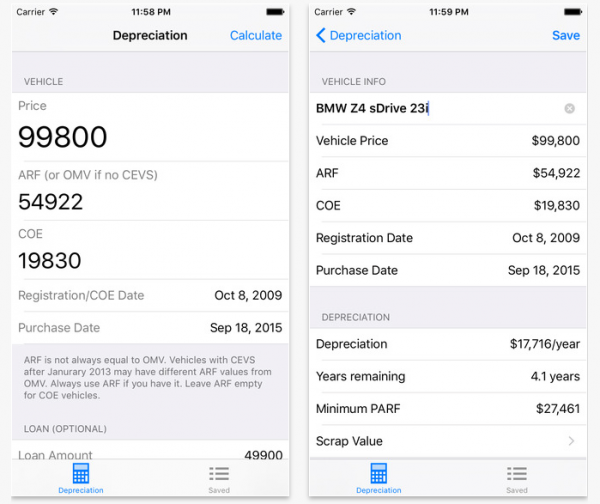
  • Carculator App for Depreciation, Loan, Scrap and Rule 78

    Carculator App for Depreciation, Loan, Scrap and Rule 78

    I just wanted to put this out there. This little app I built was finally approved by the Apple for the App Store last night. I am making it FREE until the end of this year. It will be on sale for S$1.28 starting 2016.

    https://itunes.apple…ro/id1035354237

    There are two other similar apps on the App Store going for S$1.28 but neither have as complete a feature set as this, which is a reason why I found it compelling to build the app myself. It’s difficult to be calculating depreciation especially when walking around at a dealer, so the ability to save the calculation and back-reference is very important.

    You can also enter your current vehicle into it and see your scrap and loan redemption values over time. This is very valuable if you want to know how much you still owe the bank during a trade-in.

    I will probably release a “Lite” version with advertising and less features in 2016, so do grab this Pro version while you can because I will likely drop the loan redemption and save functionalities in the Lite version.

    All suggestions/feedbacks are welcome.

    P.S. Sorry, no Android version yet.

  • How to buy a cheap(er) car: Will COE fall in 2015?

    We have an old car in the family expiring next year, and I’m sure everybody out there is wondering the same — will COE fall?

    My personal opinion is that it may fall a wee bit (Category A at around $50K) but may not fall further than that.

    Vehicle population growth rate has been reduced steadily from 3% to 1.5% to 1% and now 0.5%. I believe it may be further reduced next year, and it may possibly be capped at close to 0% growth because that’s really the limits of our infrastructure and limited land space.

    So if you are in such a situation, what’s the best way to get a cheaper car if you really need one?

    It’s actually very simple, but there’s one catch: you’ll need to pay fully in cash (no leverage).

    The trick is to buy a car with 1 year or less left on the clock, and renew when you think it’s right.

    Take for example a relatively new Jan 2013 Toyota Altis selling at close to $100K. The depreciation is about $12.5K/yr.

    If you bought an old Aug 2005 Toyota Altis at around $17K and renewed the COE (assuming current price at $66K), you will pay $17K + $66K = $83K for around 128 months of usage. This works out to a depreciation of only $7.8K/yr.

    No doubt older cars will also come with rising road tax (capped at 150%) and rising maintenance costs, and possibly even poorer fuel economy, but with the savings of almost $5K/yr you could spend that on an engine overhaul and still have spare change for a small holiday.

    If you feel that such a hefty sum of money can be better used to invest, then there’s only one way to leverage: long time owners of private properties can consider a mortgage term loan (using property as collateral) to partially finance COE renewal.

    Even if interest rates rise to 3%+ it may still be cheaper than a conventional vehicle loan because a mortgage loan is a reducing interest loan while a vehicle loan is a fixed interest loan.

    Business owners with overdraft facilities can consider too, if the vehicle is to be used for business purposes.

    I do not encourage taking a loan on the full value of COE. Although any unused amount of COE is fully redeemable, interests can get quite hefty, especially when OD interests are around 5-6%.

  • How to buy a used car in Singapore

    I have several friends asking me for advise on their car purchases — especially used ones because the process is more complicated, so I have decided to write a guide instead of having to repeat over and over again.

    Disclaimer: Buying a car is a big financial purchase, so there are many variables to consider. You must do your own due diligence regardless of my advices/recommendations.

    Know your needs

    Ask yourself these questions:

    • Do you really need a car?
    • What kind of mileage do you do every month? Are you a going to drive a lot?
    • Do you need a 7-seater for a big family?
    • Do you often carry large and tall items?
    • Will you drive into Malaysia?
    • Will you be sharing with your spouse or siblings?
    • What other uses do you need the car for?

    All these decisions will affect the type of car you purchase. For example:

    • A travelling salesman may want a fuel economical and reliable car to reduce running costs.
    • A recreational cyclist with foldable bikes may opt for a hatchback or an SUV to fit the bikes.
    • A big family of 7 may want an MPV instead.
    • A regular traveller to Malaysia may want to avoid cars popular for theft, like Hondas and Toyotas.
    • A person sharing with his/her spouse/siblings may need to consider their needs and budget.
    • A single and lonely man may want a convertible Mini Cooper to impress the ladies at the club.

    Know your budget

    Hint: At least $1,000/month.

    A car is a big purchase, so setting a budget is important. As a general rule, the overall expenses of car ownership in Singapore starts around a minimum of $1,000/month.

    Typical expenses breakdown

    Depreciation of a typical bread and butter car (as of 2014) $6,000/yr or $500/mth
    Insurance of a first time buyer with 0% no-claims discount (NCD) $2,400/yr or $200/mth
    Fuel cost of travelling approx 2,000km/month, 12km/l @ $1.75/l $292/mth
    Parking in HDB sheltered carparks $95/mth
    Road tax for a 1,500cc (1.5L) petrol car $686/yr or $57/mth
    General servicing of vehicle every 10,000 kms $600/yr or $50/mth
    ERP (tolls), parking at the office, etc. $100 to $400/mth
    Totals $1,294/mth onwards

    Other costs to consider

    It’s easy to forget that these are also daily costs of a driving a car in Singapore: –

    • Parking at home, at work, at shopping malls, at parent’s or friend’s
    • ERP in both directions of travel
    • Traffic and parking offenses
    • In-car camera — an almost mandatory accessory in cars these days
    • Battery and tyre replacement every 2-3 years or so (rubber gets hard, so do replace them even if they are not worn)
    • Other incidentals like tyre punctures, especially if you work near construction zones
    • Unfortunate incidents such as accidents, vandalism, hit-and-run and associated repair costs
    • Car wash/grooming/beautification/”zhng”


    Understand the tax structure

    Additional Registration Fee (ARF)

    Understanding how the ARF tax works is the key to understanding how to calculate the straight-line depreciation for a vehicle in Singapore.

    • Cars less than 10 years old are usually called PARF cars because they carry a Preferential ARF (PARF) value. PARF value is a percentage of the ARF (right now it is 50%) that is given back to you if you dispose the car at the end of 10 years. This is to encourage purchase of newer and more green/efficient vehicles.
    • Cars that are 10 years or older are usually called COE cars because they no longer carry a PARF value and only carry a COE value.

    Certificate of Entitlement (COE)

    Most cars in Singapore are sold with COE unless stated by the seller. If you see the terms “body only” or “w/o COE” then it would mean the price does not include COE.

    Used Import Cars

    There are also used import cars where the registration date of the car starts before the COE hence have more complicated depreciation calculations; I would recommend a first time buyer to avoid these. Used Imports are typical with high-end sports cars, as the savings can be significant.

    There’s simply too much to cover here, so please Google and read up on these terms: OMV, ARF, PARF, PARF rebate and COE. A very detailed summary is available on LTA’s website but may be too confusing for a first timer.

    Work your sums

    Hopefully a table is easier to digest. Just add these all up.

    PARF cars COE cars
    Annual depreciation formula (Purchase Price – Min. PARF) / (No. of months of COE remaining / 12) Purchase Price / (No. of months of COE remaining / 12)
    Road tax
    Same every year Increases 10% every year, maxed out at 150% (at year 15)
    Insurance Comprehensive or 3rd party (only if not under loan) cover Mostly 3rd party cover only, i.e. does not cover your own car in an event of an accident; there are some insurers that will still provide comprehensive cover for cars between 10 to 15 years of age.
    Financing Max. 5 years, or up to remaining lifespan of COE; interest rates between 1.88-2.88% Only available for cars less than 15 years of age; otherwise usually financed using personal term loans with very high interest rates (4-5%)
    Maintenance costs Increases with car age; big ticket repairs usually starts above 5 years or 100,000 kms Same as PARF cars, increases with car age, but COE cars are even older, so will run a higher bill if anything breaks; parts may also be hard to find depending on the model of the car
    Fuel economy Similar to maintenance costs, fuel economy tends to get a little poorer when the car ages, especially if not maintained properly Similar to maintenance costs, fuel economy tends to get poorer with age, but cars built before 2000 have older engine technologies that yield even poorer fuel economy
     Safety Generally better since most cars built after 2004 should have at least an airbag and ABS Generally poorer as safety technologies improved rapidly only in the last decade

    Things to watch out for at the delaer

    Unlike new cars which usually come with a 3 or 5 year warranty, used cars dealers can be dodgy. Here’s some pointers when hunting for a used car: –

    • Don’t trust the mileage. Mileage tampering is possible and is prevalent.
    • Don’t trust the paintwork. Most dealers get a cheap single-coat respray done before cars hit the showroom.
    • Look beyond the paintwork. A car is a mechanical device and a beautiful car that doesn’t move belongs to the museum.
    • Take a careful look at the interior. Interiors are expensive to replace or repair, and will tell a story of its use/care/abuse.
    • Switch off the radio during a test drive. Pay attention to knocking, grinding, squealing or other weird noises when driving; red flag if dealer does not allow you to test drive.
    • Pay a “surprise” visit. Don’t inform the dealer that you are coming; sometimes vehicles may exhibit issues when cold (especially transmission issues), so if you tell the dealer in advance they may warm up the car before you arrive.
    • Minor issues are okay, but don’t count on the dealer making repairs for you. You will be better off asking for a discount and then getting a trusted mechanic to fix minor gremlins.
    • Be sure to ask about the loan rates, the financial institution, the payment process, admin fees (aheem, salesman commission), insurance and road tax; red flag if they offer high interest rates for “in-house” loans, high admin fees (above $500).
    • Have an experienced person help check the car for you, or at minimum have it inspected for accidents and visible issues at STA — they have laser chassis alignment measurement machines.
    • Usually the buyer pays for inspection and a deposit to the dealer should not be required; red flag if dealer insists you place a big deposit before sending the car for inspection.
    • Make sure you work your sums carefully, including the downpayment, financing, transfer fees, insurance, and even road tax.
    • Take your time and shop around, don’t be swayed by sweet talking dealers; a car is a big purchase and you should shop carefully.

    Direct owner sale

    I personally prefer direct owner sales, since I will get to really know the car’s history from the owner. Be wary though, there are many dealers masquerading as direct owners to circumvent the Lemon Law introduced in 2012. One way to tell is that they are selling on behalf of friends/family member/relatives, do not have maintenance records of the vehicle and that they also offer to help with the loan and insurance paperwork. It may be a sign that the car has some serious issue(s).

    The buyer will have to source their own insurance and loan in a typical direct owner sale, but it is not difficult these days as there are insurers and banks that offer direct applications online. The whole process may be too much cover here, and I hope to cover it in a separate article someday.

    Final words

    You’ll see that a car will cost over $1,000 a month to run in Singapore. I’m sure this will turn many potential car buyers away, but if you really need a car and you can well afford it, then do consider one as it brings significant improvement to your quality of life but do not rush into the purchase.

  • Life with a Diesel Car in Singapore

    Life with a Diesel Car in Singapore

    When it comes to technology, I’m usually an early adopter and there’s no exception when it comes to cars.

    When I saw a resale BMW 520d (internal code name F10) for almost $20K below what its petrol siblings were asking for on the market, I jumped on it right away. The car is well optioned with multi-contour ventilated seats, 4-zone air-conditioning, premium hi-fi and the M-sport bodykit. These factory options aren’t cheap, which explains why the car also has an extremely high OMV value.

    I was sufficiently warned of the NVH (Noise, Vibration and Harshness) of diesels, so when I test drove the car it exceeded my expectations. Still, I knew I was venturing into uncharted waters, but the tremendous torque and potential fuel savings beckoned and I took the plunge.

    I thought this would be a fantastic comparison because I had the same car but with a different engine. The old car had the legendary BMW inline-6 2.5L naturally-aspirated engine, code-named N52 (badged 523i). This new car has the BMW inline-4 2.0L variable geometry turbocharged diesel, code-named N47. It’s good to note that BMW enthusiasts swear by the N52 — some refuse to buy the car if it does not come with an inline-6.

    Both are small engines considering the massive weight of the car (1.7+ tonnes). The diesel is slightly heavier (~50kgs). Both cars have the same transmission (ZF 8HP).

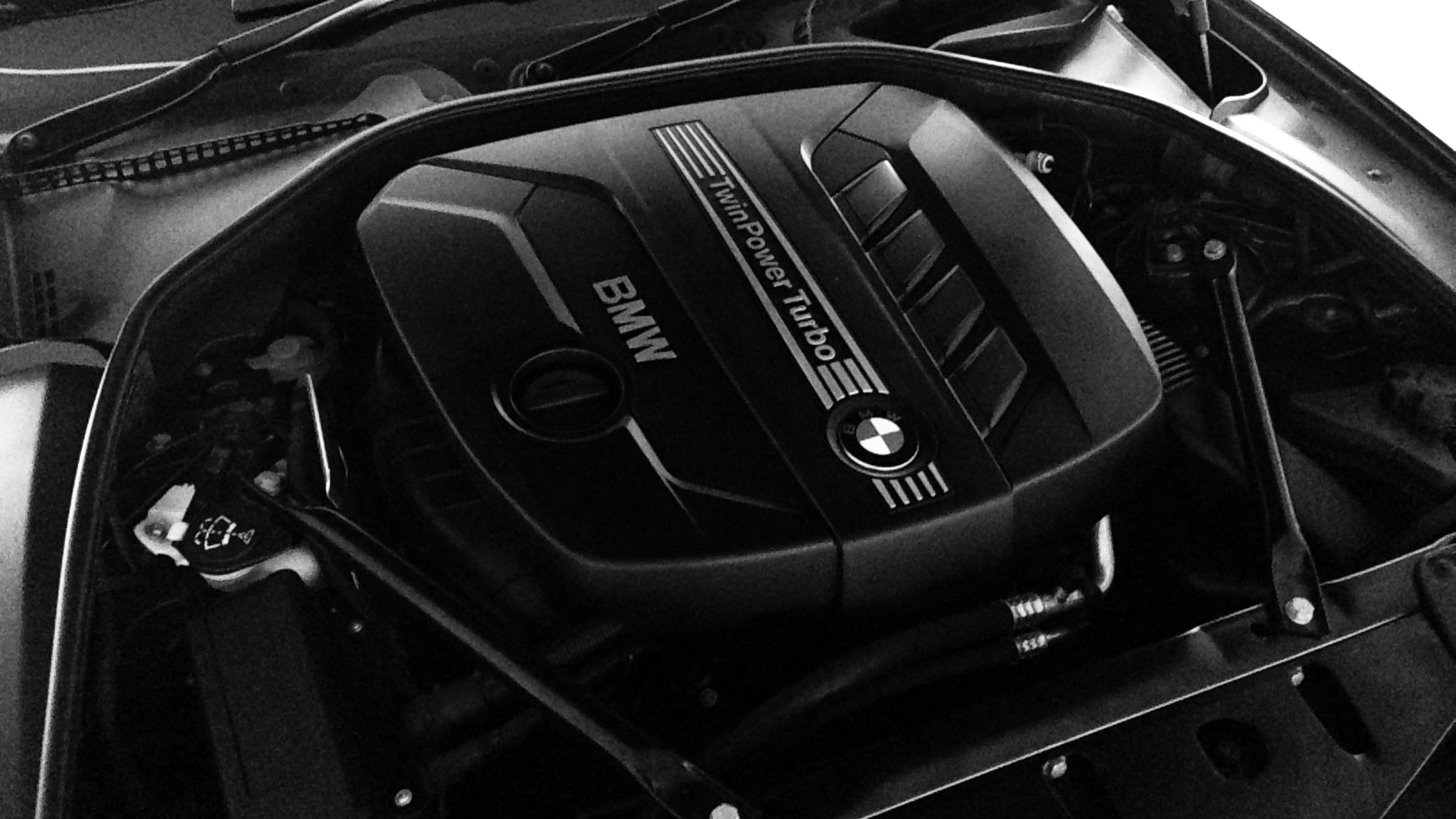
    BMW N47B20 engine in the F10 520d.
    BMW N47B20 engine in the F10 520d is a promising little motor with a BSFC of 198g/kWh.

    6 months down the road, what are my thoughts? No regrets — the diesel engine pulls effortlessly from just above idle to 4,000+ rpms. The massive 350Nm of torque is fantastic for city driving and it is no slouch on the highway either; I’d easily hit 110kph without even noticing that I had to configure a speed alert to warn me.

    The final drive of the 520d is also taller than the 523i thanks to the massive low-end torque. The car cruises on gear #7 well under 2,000 rpms at the legal Singapore speed limit of 90kph; there’s 8 gears on this tranny so it will also do 110kph under 2,000 rpms on the NSHW. This low-revving is probably why the engine is barely audible on the highway.

    Fuel economy? I averaged 13km/l (over the last few months) with fairly spirited driving, or about 800 kilometers on a tank of gas. I refuel my car once every two weeks now (was weekly). Bear in mind my engine hasn’t really broken in yet; it’s still under 10,000 kms and I am starting to get better fuel economy as the months go by.

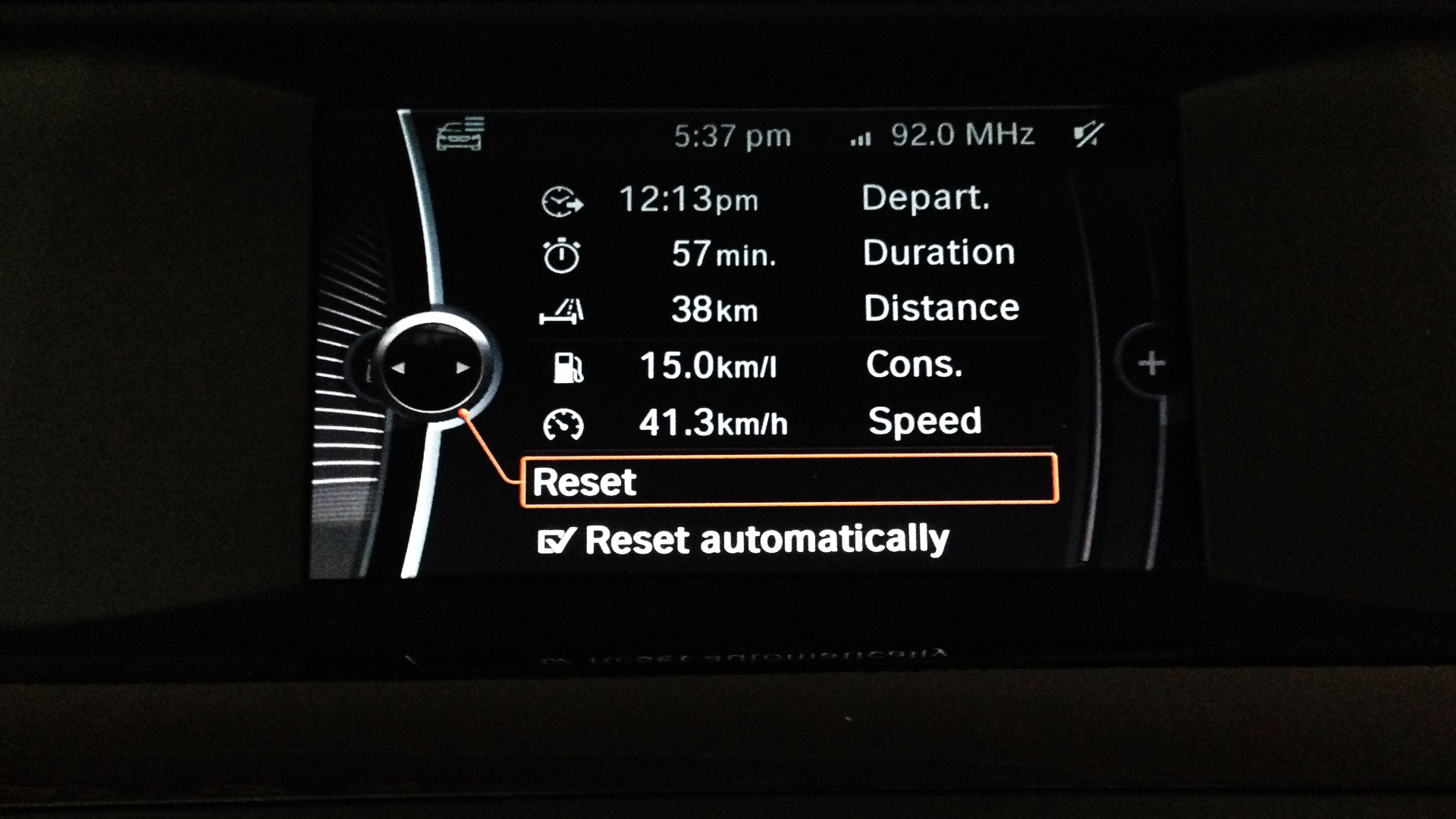
    On good days like today the fuel economy can reach 15km/l.
    On good days like today the fuel economy can reach 15km/l; notice the low average speed of 41km/h. This was just a drive out for lunch and a short drive back home (no jams).

    I only drive on average 1,500 kms per month and my monthly fuel bills have already shrunk from $330-350 (Esso 8000) to $170-180 (Esso Diesel). My daily commute is around 60-70% city, 30-40% highway.

    Although I pay more for road tax (about $400 more per annum), the savings in fuel more than makes up for it.

    So what are the drawbacks of driving a diesel?

    There’s definitely more NVH as compared to BMW’s creamy smooth Inline-6 engine. I do also miss the aural pleasure from my old car, but for daily driving the torque of the diesel and the way it pulls away from cars effortlessly with no drama wins me over.

    I also cannot refuel in Malaysia (yet) because they do not yet have Euro 5 diesel (currently Euro 2M), although a full tank will likely bring me to KL and back. I heard some mixing shouldn’t do much harm. Note that the engine can handle any type of diesel, it’s just the emissions systems, particularly the Diesel Particulate Filter (DPF) that have trouble with lower grade diesel. Malaysian 520ds do not have DPFs to work around their fuel problem.

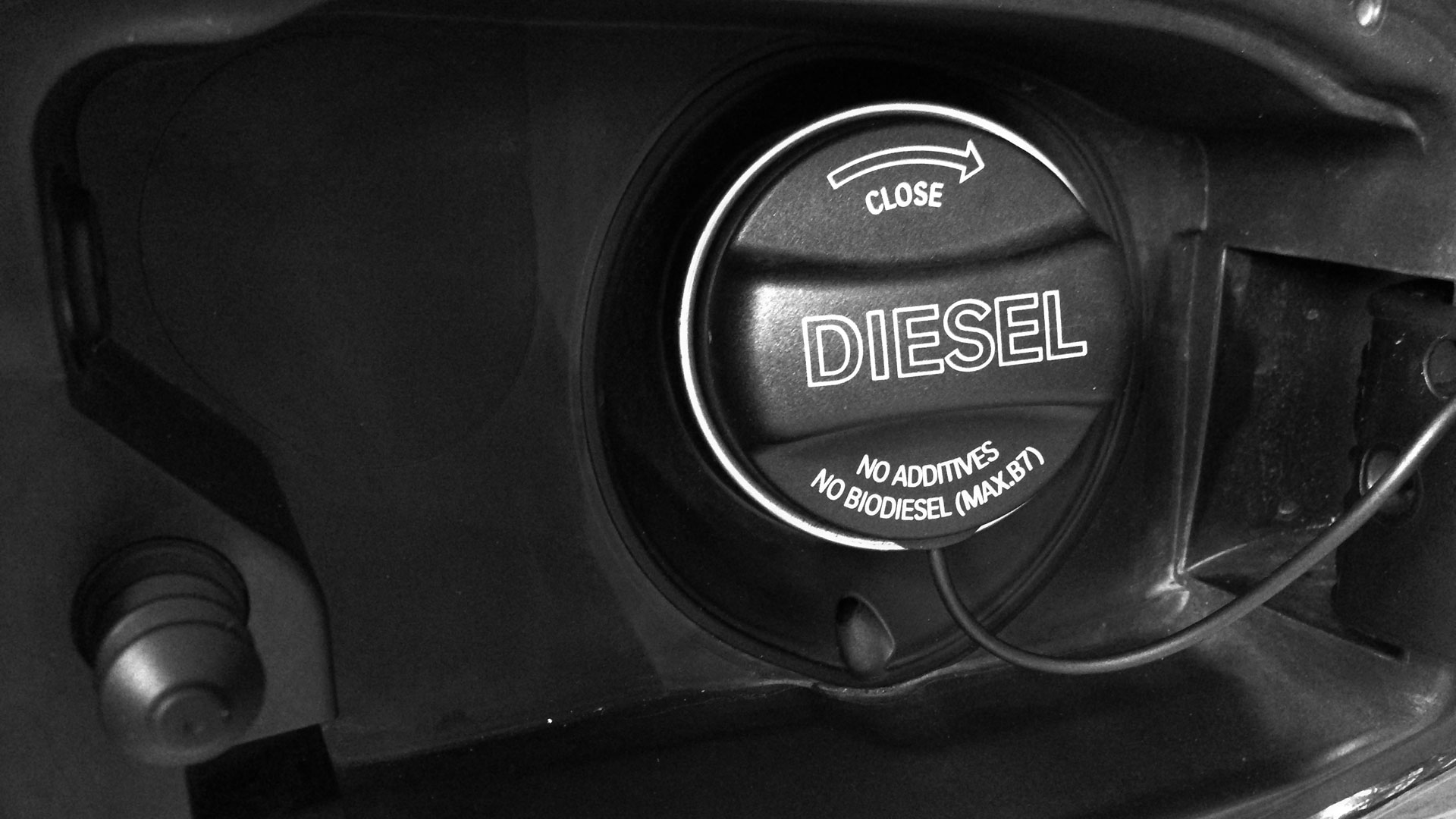
    Unfortunately I can only fill up Euro 5 diesel and it is not available across the causeway.
    Unfortunately I can only fill up Euro 5 diesel and it is not available across the causeway yet. Not even knife brand cooking oil can be used — it states clearly NO BIODIESEL.

    I do also get surprised looks at the petrol kiosk when I stick the diesel nozzle into my car, and occasionally some weird stares as I drive past unsuspecting people; I guess it must be the ticking of the diesel engine that people relate taxis to.

    Servicing costs me $30-40 more, primarily because my oil filter is uncommon and costs more. I use the same type of engine oil as other modern BMW petrols (BMW approved LL-04 such as Mobil-1 0W-40 ESP). As a plus, I do not have spark plugs, so that may equal out the extra costs of the oil filter. Modern BMWs use pretty expensive platinum sparks that should be changed every 50,000-60,000 kms or so.

    Driving the diesel 520d has been an absolute joy and I think it is the way to go — at least for the next 5 years. Alternative energies/technologies such as compressed natural gas (CNG), hybrid electric, fully electric, or fuel cell have some ways to go and the present infrastructure is lacking to support these technologies. (Sidenote: The BMW i3 seems pretty promising if you live in a landed property.)

    Remember that my car is over 1.7 tonnes unladen, and weight is a major contributing factor to fuel economy. If you buy a smaller diesel like the Volkswagen Touran 1.6 TDI, you will likely achieve 16-18km/l without breaking a sweat.

    I really hope more car owners in Singapore will switch to diesel. For the same amount of fuel, diesel is almost twice as efficient — we could keep fossil fuels around maybe just a little bit longer.

    Read my follow up article after two years of driving the BMW 520d.

  • Wheel upsizing and ride lowering – why you are doing it wrong

    Wheel upsizing (wider tyres + larger rims + wider offsets) and ride lowering are very commonly seen vehicle modifications. Many do so primarily for aesthetics and do not understand how these modifications affect handling. They think or hearsay they are improving their vehicle handling, but they are not.

    When tyre widths and wheel offsets change, suspension geometry is altered. Handling can be, and is almost always (if done cheaply) affected negatively — unless the manufacturer had set up the suspension poorly to start with.

    Price, size or performance? Choose two.

    Wider tyres can provide more grip but hurt fuel economy. The fact is that most people barely drive their vehicle to its limits. Worse even, some upsizers may compromise with cheaper tyres as larger tyres are significantly more expensive, so the effects of wider tyres may be completely negated by cheap tyres.

    Adding on to the list of grave mistakes, many actually ditch their heavy but sturdy stock wheels and opt for cheap wheels that are touted to be light, hence fuel economical. Little did they know these cheap lightweight wheels may crack easily. Good quality forged wheels are extremely expensive.

    Assuming all goes well and high quality rims and tyres are purchased, the list of mistakes do not end here.

    The usual theory goes: wider track and lower car = better handling, right? Not entirely correct.

    Here’s why.

    1. Wider track causes softer suspension. When wheels (offset) go further outboard, load on the suspension increases and as a result the ride becomes softer. To compensate, stiffer shocks and springs are needed. BMW, for example, would sell cars with staggered and non-staggered wheels. When opting for a staggered setup, the rear track becomes narrower because the staggered rear wheels are heavier. This compensates for suspension loading and also reduces understeer (wider front track = less understeer). Unknowing BMW drivers who opt to use spacers on the rears instead of installing proper staggered wheels are actually making their handling worse.

    2. Lowering springs? Need new shocks. When lowering springs are used without matching shock absorbers, the shock absorbers will wear prematurely and not perform optimally. Shock absorbers are designed to work within a nominal ride height and lowering causes it to work outside of its designed parameters. Lowering springs are also typically stiffer to prevent the lowered car from bottoming out easily. Shocks and springs that are mis-matched will result in a bouncy or unsettled ride. Again, this negatively affects handling.

    3. Rubbing fender? Too low! Wider offsets and excessively lowered rides may cause wheels to rub against fenders. When most people experience a rubbing problem, they tend to return to the tyre shop. The solution offered is usually a recommendation for lower profile tyres or sometimes even narrower tyres resulting in stretched sidewalls. Doing so affects the speedometer, odometer and fuel economy readings. The right thing to do is to raise your ride height and get a proper set of coilovers.

    4. Bottoming out? NEVER use spring stiffeners! Excessive lowering and poorly set up suspension will cause the vehicle to bottom out easily. That’s because most lowering springs are not very much stiffer than stock springs and cannot cope with the extra load and reduced travel. I have heard of “spring stiffeners”. These are basically blocks or “retainers” sitting in-between several coils of springs preventing them from compression. Doing so is NOT recommend — for your own safety! It will cause uneven stress across the spring and a broken spring can be disastrous. Get a proper set of coilovers!

    5. Lowering can actually lead to more roll. Most people do not understand the relation between roll center, instantaneous center and CG. When a vehicle is lowered, the CG of a vehicle may be lowered but the roll center could actually move further away from the CG. This creates an increased lever effect making the car roll more even though it is closer to the ground. The result is sluggish handling. The easy fix is to install stiffer suspensions but that has an effect on tyre load. The ideal fix is to correct the vehicle roll center by modifying suspension arms.

    6. Increased track? Steering and braking may be compromised. When track width is increased, scrub radius is reduced especially for FWD/McPherson strut vehicles with -ve scrub. A small change in scrub radius can significantly alter steering feel and braking stability. The change in steering weight or sensitivity (“twichiness”) is usually mistaken for better handling. Most will never realize that they may have also compromised braking stability because it is never tested.

    7. Excessive lowering causes camber issues. Most road cars do not have adjustable camber in the front. Without compensating for the increased -ve camber when lowering, tyres are subject to premature inboard wear. Change in camber can also affect a vehicle’s understeer/oversteer character, especially for cheaper FWD cars with torsion beams in the rear — camber angles do not change at the back when lowered. Excessive lowering will even cause +ve camber gain on most vehicles with McPherson strut front suspension. This will cause cars to actually flip over in an aggressive corner. Here’s a video I found on YouTube showing how the camber changes across suspension travel.


    Strut Suspension Camber Behavior.

    To properly lower a vehicle and increase its track width, a lot of modifications are required and mostly requires a complete overhaul of the suspension components. For most people, it’s just not worth the money.

    The cheapest way to improve handling on a normal day-to-day vehicle is to install a good set of tyres and proper brake pads. Most stock brake pads are too soft (adhesive type) because they are designed to work in cold (read: snow) weather. We do not have cold weather here in Singapore. Switching to a harder (abrasive type) pad will drastically improve braking performance. The only downside is that the brake rotors will wear faster and the brakes might squeal if not bedded in properly. Also ensure tyres are properly inflated — it makes a world of difference.

    Tyre inflation tip: Add more pressure to the front tyre and reduce in the rear. Most cars, even RWD ones, are designed to understeer right out of the factory. A slight change in pressure (+/- 2psi) will alter its handling character.

    I hope this has benefited you and saved you some money you should never have spent. Safe motoring!