Blog

  • Life with BMW diesel in Singapore, two years on.

    Life with BMW diesel in Singapore, two years on.

    I’m sure some readers have been curious, so here’s a 2-year review after my first post from two years ago.

    In summary, the BMW F10 520d is one of the best car I’ve driven on a daily basis. It is surely not as refined as my previous petrol inline-6 BMW 523i, but I realise that I spend most of the time talking with passengers, or pushing the car through traffic; I hardly pay attention to the diesel rattle most of the time. The car is incredibly quiet once brought up to speeds above 50 kph.

    • Vehicle: BMW 520d y.o.m. 2013 (F10)
    • Ownership: Apr 2014 to present
    • Mileage done: ~27,000 kms (~13,000 kms/year)
    • Breakdowns or faults: None
    • Servicing costs: ~$240 every 8,000 kms
    • Other repairs: ~$380 for one rear tyre replacement (more on this later)
    • Average FC: 12.5km/L, 80%/20% city/hway (see full log at Fuelly)

    Regrets? No.

    At times I do wonder if it would have been better if I had gotten a 530d wagon for the extra space and refinement of an inline-6 diesel, but the increase in road tax may not make sense. That said, I haven’t had a chance to drive this car up north — I am sure it would have been stellar as the car is best enjoyed on the highway, cruising at 110kph with the engine turning over well under 2,000 rpm.

    I’ve also tested the VW Touran TDI before it got pulled from the markets due to dieselgate, and it was incredibly quiet in the cabin, too.

    Savings can be substantial

    I did some math, comparing my previous ride (BMW F10 523i). The savings from the increase in fuel economy and reduction in fuel costs are substantial enough to pay for the insurance costs — around $1,600/year in savings even after deducting the increase in road tax ($210/yr more for the diesel).

    Even if you make a comparison against the current 2-litre petrol BMW 520i with a $800 increase in road tax, the diesel still brings around $1,000/yr in savings. The more miles you do, the more you will save.

    Diesel particulate filter woes

    I’ve read in forums that people worry about the diesel particulate filter (DPF). After two years of ownership and driving relatively short trips to and from work, I would say the DPF is nothing to worry about. We have good quality (Euro V) diesel here, and the car is intelligent enough to regenerate the DPF when it needs to. You can actually feel the DPF regeneration once you are more attuned to your car — the exhaust note changes.

    It is more important to use the correct engine oil for your engine as some engine oils may not be DPF friendly. When in doubt, buy OE oils. Modern Euro-V compliant BMW diesels require BMW LL-04 approved oils.

    Tyre trouble

    I drive through Upper Bukit Timah Road pretty often and the MRT (DTL) construction tends to be unfriendly to tyres. I’ve had several nails in my tyres, and one of them unfortunately hit a spot where it would not patch well so I had to replace one rear tyre (275/40 R18) with the same Pirelli P7 run-flat tyre costing a whopping $380.

    My current set of tyres are the originals that came with the car (18″ staggered). They seem to be due for a replacement soon having done 30,000 kms to date. I will be swapping them out for a set of M-sport 19″ non-staggered (245/40 R19) later this year. I feel there’s no need for staggered wheels on this car as it already understeers a bit. Replacing and driving those big heavy rear tyres are simply a waste of money and fuel.

    Servicing costs

    It seems that BMW diesel parts are getting more and more readily available as the BMW 2-series Grand Tourer diesel takes on popularity. The engine oil filter was a tad expensive, but is not a significant jump from the price of a petrol equivalent. The plus is that diesels have no spark plugs, so spark or or expensive ignition coils to worry about.

    However, I do not following the servicing interval prescribed by the car computer or dealer (15K or 25K km if yours is a parallel import). I change the oil changed 8,000 kms.

    Diesels run cooler, especially at idle

    Contrary to some old folks tale, it is also interesting to note that diesel engines run cooler, especially at idle. My engine oil is maintained at around 100 degrees C whilst petrol BMWs are kept at 110 degrees C.

    There’s no need to warm up the engine by idling a diesel because it will not warm up. In fact, there is no need to warm up all modern cars by idling, it especially in Singapore; simply drive the car and the load on the engine will warm the car up quickly. Once again, it is more important to use the correct engine oil so your entire engine gets the lubrication it needs from the get-go.

    Short note about improvement in suspension of the BMW F10 in later years

    One thing for certain is a marked improvement of the 2013 520d suspension over the 2011 523i. Both cars are the same model (F10) but the 2013 feels more planted and less like a boat when driven at speed. I have verified with my VIN that my vehicle does not have the optional M-sport suspension even though it is fully fitted with M-sport options from factory. I believe BMW fixed the suspension issues, and driving my friend’s 520i (2014) LCI model felt similar to the 2013.

    Ending note

    I believe we will continue to see more and more diesel cars in Singapore although turbocharged petrol engines are also getting more efficient; diesel has higher energy density, so it will likely still lead the way in fuel efficiency. My car is nearing the end of its product life cycle and a new model (codenamed G30) will get the new modular B-series engines already found in a few newer BMWs like the 216d Grand Tourer. We can see how each generation becomes more efficient, powerful and refined just by following at the progress of one manufacturer. I am sure the same applies for the other brands.

  • Boy’s toes caught in escalator at Toa Payoh

    Boy’s toes caught in escalator at Toa Payoh

    After reading the news that a boy’s toe got caught in an escalator at Toa Payoh, I can’t help but notice he was wearing Crocs. I mumbled, “again”.

    I shared the article on Facebook and wonder why parents still buy them. The funny part was that I had parents respond to my Facebook post, saying it was negligence on the parents’ part and that they should have watched over their kids. I read similar comments on this HardwareZone thread.

    Yes, I agree it is negligence. But not because parents had not watched over their kids, instead because they had purchased a Crocs (or a similar replica) for their kids knowing there are many of such reported incidents.

    One friend on Facebook argued with me, then started going on about distractions and mobile phones. I couldn’t be bothered to explain further. I told him that he had made an informed decision as a parent to buy/keep the Crocs for his kids, and I left it at that.

    I almost had my own feet caught in an escalator, and ever since then the pair of Crocs remained in my office as “office shoes”. There are no escalators in my office.

    You see, Crocs are usually a little oversized (especially at the toes) and a little loose fitting. Wearing such soft rubber shoes that are tight fitting feels uncomfortable for most. Most of us don’t walk looking down at our feet all the time, and sometimes they wander off. The shoe being a little oversized and loose could have been in places where it shouldn’t have been.

    I find the logic completely warped that people can still insist that it is OK to buy these fancy soft rubber shoes as long as they keep watch over their kids. It’s like giving your kid a knife and saying they won’t stab themselves in the eye because you are watching.

    Parents can’t be around kids all the time for gods’ sake. As they grow older, 5 years, 6 years, 7 years, etc. they do start to roam around on their own.

    IMHO, any parents who buy these soft rubber shoes knowing that they are a hazard are clearly negligent.

  • MAS eases curbs; where is COE headed

    MAS eases curbs; where is COE headed

    If you’ve been following the news, you should have heard about MAS easing the loan curbs. So where is COE headed? Most people say it will go up, but I think it will only inch up marginally.

    Reducing downpayment by 10% will help buyers reduce their upfront commitment by around $8K (for a $80K car). If COE shot up in excess of $10K, e.g. an $80K now costs $90K, it would defeat the loan curbs ($32K vs. $27K downpayment).

    The extension of loan tenure from 5 to 7 years makes monthly commitments easier on the pocket, but right now most buyers waiting on the sidelines are likely more cash strapped. Remember: it is supply and demand that causes COE prices to move.

    Also, the number of COE quota available right now actually meets or exceeds that of 2008 when COE was <$20K. With so many cars going to the scrapyards, we will see this quota sustain for quite a while. I believe this is the primary reason why the loan curbs were eased — otherwise we may see $20-30K COE by 2018. I believe the loans will be further relaxed in 2017 (to 80% + 8 years) if total quota exceeds 2,500 in each bidding. If the quota remains fairly constant, then there will be no change.

    In summary, I think COE prices will not move much… it may rise a little bit, with a little spike in the short term due to sudden demand, but should eventually stagnate around $50K for both Cat A and B.

    P.S. I can’t help but feel that LTA really screwed up on Cat A vs. B differentiation even when they had the one opportunity to do it right.

  • Thicker oil is killing your engine

    Thicker oil is killing your engine

    I wrote this entry hoping it would prevent people from using incorrect engine oil viscosities, especially newer cars that require as low as 20 weight oils (e.g. Mazda Skyactiv.)

    I often hear mechanics saying that we need to use thicker oils in our car because of our hot Singapore climate, so if my car came with 0W-30, the mechanic may recommend that I use 5W-40 instead.

    Modern engines are built to very tight tolerances. The thinner the oil, the easier it flows around the engine components and tight spaces. In fact, the most critical part of engine lubrication is during cold start, that’s why we use multi-grade oils (e.g. 0W-xx or 5W-xx) to ensure that engine oil flows even in winter conditions. The quicker the oil flows around the engine, especially to the head which gets a lot of wear and heat, the less it will wear.

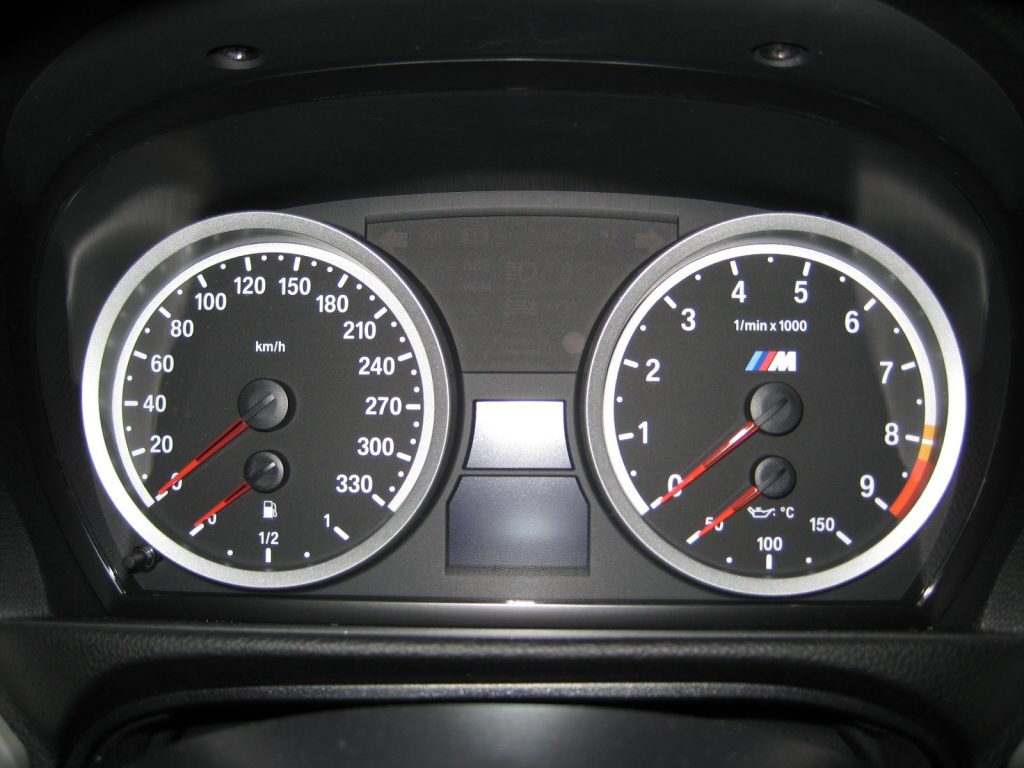
    Sure, our weather never gets that cold — and that is part of the good news — but don’t forget that we also make fairly short or stop-and-go trips in our small country. The engine oil may not reach its operating temperature most of the time. Most cars have only a water temperature gauge; the water (coolant) can reach operating temperatures (~90 degrees C) within 10 minutes of driving. However, the engine oil takes much longer to reach operating temps — sometimes up to 30 minutes. If your car has an engine oil temperature gauge, keep an eye on that.

    How to tell if your car is showing coolant or oil temp: If the symbol at the temp gauge is a thermometer in liquid, it is coolant. If the symbol resembles an oil can or watering can, it is oil.

    Here’s a picture of the dashboard from a BMW M3 Coupé showing oil temperature below the tachometer:

    BMW E92 M3 Coupé Dashboard

    It is true that oil gets thinner with heat, but most of our cars — even in our hot climate — maintain internal engine oil temperatures between 100-120 degree C. Our engine cooling systems are more capable than we think. At the operating temps, all engine oils would be at their rated viscosities, and the engine manufacturer has requested that we use a specific oil viscosity at those temperatures.

    I drove my coming 10 years old Subaru Impreza 1.6A up to Sepang International F1 circuit. The car was in fully stock condition and 0W-40 engine oil, except for upgraded brake pads (stock pads were really crappy). I drove for hours to Sepang, then pretty much ran at full throttle all the way around the circuit (it was a slow car, and required little braking on a big F1 circuit) and the engine never overheated; in fact the water temp gauge never went above the center line. This shows how efficient the engine cooling system is.

    So here’s some food for thought: If we do not drive long enough distances to warm our engines up, shouldn’t we use thinner engine oils instead?

    For more in-depth reading, continue to this article.

  • Truth about automotive leather maintenance

    Truth about automotive leather maintenance

    Leather treatment/conditioning is a big automotive detailing fad. In cars built in possibly 1990s, and definitely 2000s and beyond, all automotive leather have a clear coat (read: plastic) applied to a treated, dyed and artificially textured leather. The clear coat makes the leather water proof, otherwise the leather would have stained when it comes into contact with water and sweat. If you have uncoated leather products (bags, wallets, etc.) you will know what I mean.

    The only exception is if you have a vintage car, or a really premium leather in an expensive car. AFAIK, even the leather in Rolls Royce are treated the same way.

    There’s no need to spend good money on leather treatment/conditioners. Some leather “conditioners” offer UV protection which may help prevent light coloured leather from discolouration, but it is likely a waste of money.

    Apart from long term wear and tear, the reason why leather in our cars crack and fade is largely because of poor care/maintenance. Not regularly vacuuming and cleaning the leather causes dirt and sweat (acidic) to accumulate and abrade/damage the clear coat. Once the clear coat is gone, the exposed leather underneath is left to face the environment and deteriorates quickly.

    How should automotive leather be cleaned

    You’ll need:

    1. Two pails – one for soapy water, one for clean water.
    2. A vacuum cleaner.
    3. A bar soap. You can also use hand soap, etc. but so far Dettol bar soap works best for me.
    4. Two cloths. One wet, one dry.
    5. A brush. I use the Kiwi Shoe Brush (used for leather shoes — Army guys should be familiar with this).

    Steps:

    1. Vacuum to remove dirt, especially between the creases. Dirt is abrasive, so you really want to get as much out as possible.
    2. Prepare a bar soap, water and a brush in the 1st pail. Wet your hands and rub some soap on your palm, then apply the soapy mix on your seats and start brushing!
    3. It is important to clean one section at a time, e.g. start with the seat bottom, then proceed to seat bolsters, then proceed to seat back. Never let the dirty soapy water dry on the leather.
    4. With clean water in the 2nd pail, wet a cloth, twist it so it is damp and not dripping wet, then wipe away the soapy mix. You will be surprised how dirty the cloth is. Rinse and repeat until you’ve gotten soapy water off the seat.
    5. Continue cleaning the rest of the seat until you have covered the entire seat. Do a final wipe down using cloth with clean water, then dry seat with another cloth.

    Extra tip: Do NOT use the brush on the steering wheel. Steering wheel leather is more delicate. Simply apply soapy water and use a cloth to wipe it down. Do this several times.

    What if my leather is already worn/cracked?

    Never, ever have your leather filled and resprayed. Sanding down the leather to prepare for filling and respray effectively removes the protective top coat. Leather usually cracks at the areas where it sees the most abrasion, e.g. seat bolsters, steering wheels, gear shifters. Filling and respraying in those areas will only last a short while, and once the paint wears off it will reveal the filler — usually white in color and that is really ugly.

    The only way, unfortunately, is to get the leather replaced.

  • What I think about the Singapore Property Market in 2016

    What I think about the Singapore Property Market in 2016

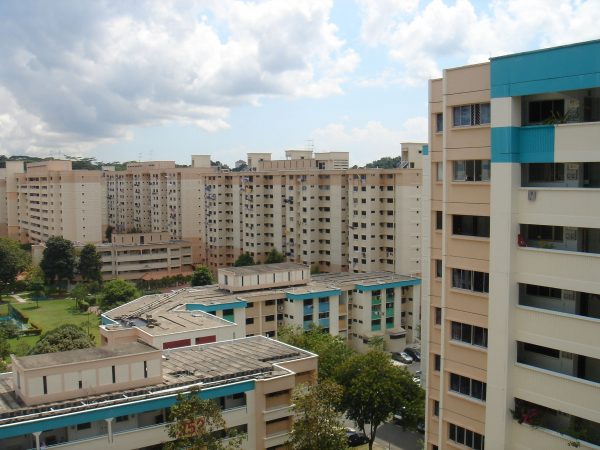
    Here’s what I think of the Singapore property market in 2016 (and beyond). I’ve just sold my HDB and am renting temporarily waiting on the side to jump in. If you’d like me to summarise in one sentence, I think the market has not softened enough. At the moment only the super luxury properties in Core Central Region (CCR) ~$5m and above are feeling the pinch. There are also some condominiums in Rest of Central Region (RCR) with prices above $2m that are feeling some pressure because at $2m the buyer pool starts shrinking. However,  anything below $2m is still quite resilient because many owners are still holding on to their prices with hope that the cooling measures may be relaxed soon.

    Let’s start with HDBs

    HDBs prices in general have tanked quite a bit due to the flood of BTO in the last few years. However, BTO represents only a fraction of the overall Singapore property buyer population as BTO/DBSS flats are only eligible for [married|single>35yr] Singaporeans. There is still demand from PRs and foreigners going to resale HDB and condos.

    By H2 2016, many BTO/DBSS flats especially those in Choa Chu Kang, Punggol, Sengkang would have obtained their temporary occupation permit (TOP) and would be ready for occupation. Once these BTO flats are ready, there will be landlords losing their tenant(s) and parents potentially downsizing after their kids have moved out. This will lead to another depression in property prices. There are many more HDB flats TOP-ing in 2017 in more areas like Woodlands, Yishun and Sembawang and the numbers are scary; I’ll leave you to do your own research here.

    PRs can only buy resale

    As of now (2016) the HDB resale market is still being kept afloat by PRs. There’s also decent foreigner rental demand for cheaper HDB flats/rooms, but that said, the price gap between a HDB and Condo room rentals have narrowed as Condo landlords are facing the pressure and lowered their expectations.

    2021 and beyond will be the bloodbath years

    Here’s the interesting part: I think that in 2021 (5 years from now) when all the newly built flat owners fulfil their HDB minimum occupation period (MOP), there will be a flood of resale properties in the market. The competition for resale HDB will be interesting to watch. My personal opinion is that you should consider selling your properties now if you live in any of the towns that have more than 2,000 units TOP from 2016 and beyond.

    Condominiums below $2m still hot

    Condos are still a lifestyle dream for most Singaporeans. Most people I know sold their HDBs to upgrade to a Condo, otherwise they would simply stay put for good. There’s still decent demand for Condos right now, especially in the Outside Central Region (OCR) where decent sized 99-year leasehold condos can be had by young families for ~$1m or less to enjoy the facilities and prestige.

    The amount of investing and rental activities have dropped quite drastically, however, partially caused by weak market affecting (foreign) employees and investors.

    Like I mentioned earlier, condos above $2m are feeling more pressure because at that quantum, the number of real buyers, i.e. people buying for own stay, are significantly lesser as such amounts can fetch a decent landed property (more on that later). Rental yields also start to diminish at above $2m.

    Seller stamp duty is a deterrent and is keeping resale condo prices high

    There are also many condos TOP-ing this year and the next few years. This will cause a dip in condo rental prices within the next few years, but my gut feel is that condo resale prices will stay for now because the seller stamp duty (SSD) is a deterrent; if sellers want to make a profit, the SSD would be factored into the sale price causing resale condo prices of newly TOPed projects to actually increase. This is the primary reason why I said in the opening paragraph that the market has not softened enough — we need to ride out the SSD period.

    Location, location, location

    Another general observation is that there’s also less price gap between 99, 999 and freehold condos as most investors look at rental yield as a baseline for their return on investment. As with all properties, location is the key to price.

    For condos, expect to see drop starting in 2018 and hitting hard in 2021

    Similar to HDBs, I think 2021 will be a big bloodbath. Why? Seller stamp duty (SSD) takes 3 years to taper off, so many newer projects that TOPed within these few years would have been free of SSD by ~2018 and the would be a flood of condos on resale. Then, as HDB MOPs are fulfilled in 2021, thousands of properties would be up for resale or rental. The HDB sales and rental competes directly with condos for the PR/foreign buyers/tenants.

    So the big question is, can you wait?

    If are intending to upgrade to a condo and bought your HDB in 2009/2010 and recently just fulfilled your MOP, you can probably still sell your HDB now for a decent profit (20-30%) from 2009/2010 prices. Assuming you bought your property for $300K, that would be close to $90K in profits. Rental market is soft now, so assuming you rented a decent HDB for around $1,800 per month, the profits can hold you through ~50 months which is more than sufficient for you to ride the tides to a lower point before buying again.

    Don’t forget also: meanwhile your CPF account is not paying mortgage, so all the money (and profits) that went back in your CPF is collecting a handsome 2.5% interest for your next property purchase instead of getting stuck in the current rising interest rate environment. You could easily save yourself several hundreds of thousands in dollars from current condo prices.

    What about landed properties?

    In general, freehold landed properties will still hold good value as the number of land plots are truly limited. It has not much direct competition from HDB or Condos as people buying landed are seeking different lifestyles and priorities. Landed properties generally do not generate good rental yield. Also note that only Singaporeans can buy landed; PRs can apply with Singapore Land Authority (SLA) but I heard that it can be difficult to obtain approval. The downside to landed property is low liquidity as the buyer pool is smaller. If you decide to plonk all your life savings into a landed property, be sure you can afford to hold it.

    99 year landed properties will generally remain stagnant unless the location is good, simply because it does not provide better rental yield than condos in general. It is OK to buy for own stay and house multiple generations under one roof, but I personally would avoid it as an investment vehicle.