http://roomfordebate.blogs.nytimes.com/2009/08/03/what-do-school-tests-measure/#comment-127279
Busy at the moment. Will blog later. Link for your reading pleasure.
http://roomfordebate.blogs.nytimes.com/2009/08/03/what-do-school-tests-measure/#comment-127279
Busy at the moment. Will blog later. Link for your reading pleasure.
Two news stories on Straits Times caught my attention. You should check them out too.
WASHINGTON – THE US debt is on track to hit a congressionally proposed debt ceiling of 14.3 trillion (S$60.6 trillion) by the end of February, the Treasury said on Wednesday, a day ahead of a key vote to raise it to that level.
NEW YORK – BAILED out US insurance giant AIG, now 80 per cent government owned, will distribute about US$100 million (S$141 million) of bonuses to employees on Wednesday, a person close to the matter said.
Wow, maybe the US should be charged credit-card rates for the money they owe and the Treasury folks should contact our National Council on Problem Gambling.
And whatever the rest of the story is about justifying the $100m in bonuses is just pure BS.
US is going downhill. Some other country will take over the world soon. They are in shit. Deep, deep shit.
I’m not really graded, so this means I can be a bit pai kia and not blog on a specific app that was presented. Unfortunately, I’m not 14 years old.
To be honest, I didn’t do anything for the Facebook Application Seminar project, that’s why I decided to do some community service and take photos instead. The project discussions were done over the weekend and I was packed with all the random things to do, like visiting the in-laws, visiting my parents, attending KHCO‘s 35th Anniversary dinner and of course spending time with my wife who’s almost about to twist my ears off for reaching home past midnight this morning. What’s with women and being alone at home? 😛
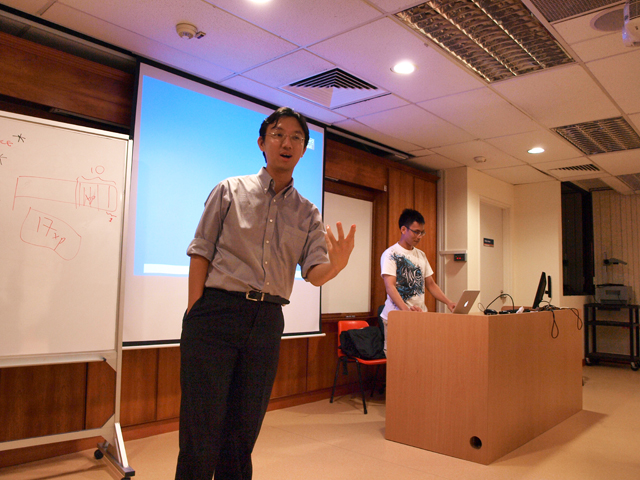
I’m very impressed by all the presentations yesterday. To be honest, they are way better than about 90% of the business presentations I’ve seen. BTW, what’s that tool that some teams were using? It’s like a huge template that’s sliding around. It’s not PowerPoint – it looks web based. Somebody please enlighten me.
Basically as many have observed, the most popular apps might not be the prettiest or the easiest. There’s many factors around which an app can be successful. It is important that CS3216 students see beyond their academic scope and realize that the world is not so simple. Jonathan’s presentation made this point even more obvious.
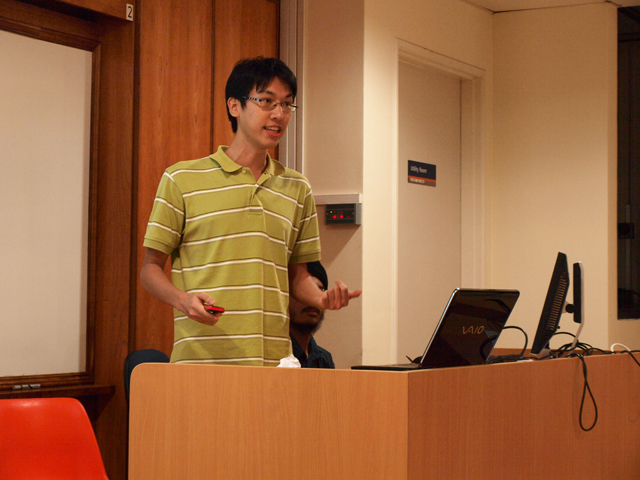
Unfortunately for the most of us who believe in doing good, doing business is not really the same. It’s quite a tough balance of being God and Satan. Why? I think because humans are selfish in one way or another – it’s our natural survival instinct!
Just to cite an example. Google is well known for it’s motto “Don’t be Evil“. However AdWords survived quite a while with click fraud until they got sued. It’s not entirely their fault – they didn’t do it deliberately – but they knew it was happening and was making them money, so they didn’t really stop the fraudsters; not at least until they got their ass under fire.
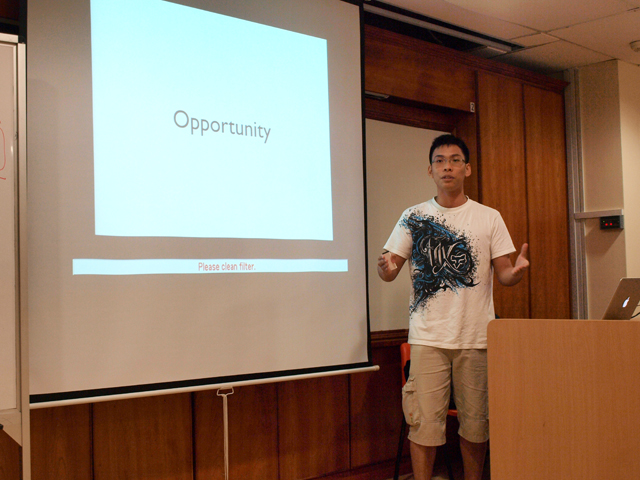
The second part that got me thinking was the presentation on Prediction Markets. Facebook has over 300 million users. Although this is not larger than the population of China or India, it is certainly a substantial population where a good sampling of information can be obtained. If there’s a great app to build, it would be one that analyzes social behavior for market intelligence. Food for thought.
I’ve been puzzled for quite a while now why the web UI keeps crashing on one of my VMware servers here, and I finally decided to kick my lazy ass and get down to work.
I found out that it was the vmware-hostd process that hosts the web UI ports (HTTP on TCP/8222 and HTTPS on TCP/8333). A quick search on Google gave me just what I was looking for.
So it seems the new glibc version in CentOS 5.4 breaks VMware Server 2. If you’ve already upgraded your server, here’s how you can downgrade glibc:
/etc/yum.repos.dCentOS-Base.repo to CentOS-5.3-Base.repoCentOS-5.3-Base.repo and rename all the headings in the [brackets], e.g. [base] -> [base53]$releasever with 5.3yum clean all then run yum downgrade glibc glibc-commonvmware-config.pl/etc/yum.conf and add exclude=glibc glibc-common glibc-devel glibc-headers glibc-utils nscd on a new line to avoid future update issues, at least until VMware decides to fix it.Before I slept last night, I thought, “Apple ain’t stupid.” They wouldn’t do something like not install OS X, so I went to bed, tossed and turned a bit, woke up this morning and saw some light.
The iPad (urgh, I just feel wrong typing this name) is essentially a full screen touch device. Actually, they aren’t the first to build such devices. Tablets have been around for a while, and they weren’t very successful in selling. What was the problem?
Windows. When Microsoft designed Vista, they had touch devices in mind, that’s why the sideways expanding Start Menu disappeared and was replaced with a scrolling design with larger icons. The user interface also had larger scrollbars and minimize/maximize/close buttons.
But that was not the point. PC software was not built for touch devices in mind. Not that Microsoft designed Windows badly, but developers will naturally build apps for the larger majority – the regular PCs driven by a mouse and keyboard.
So I think you get the idea now. Apple have had great success with the iPhone/iPod Touch’s software model and created the new multi-touch interface paradigm. They’re bringing this wisdom to the new iPad. If they had put OS X on this thing, people would go around installing regular OS X software and the user experience would be completely messed up – imagine hideous titlebars in the Aqua UI just so you can touch the minimize/maximize buttons.
I’m going to bet my hard earned money on this one and buy an iPad when it’s launched.
BTW if you read this post on Gizmodo, I’d agree no multitasking sucks, but the comment on the ugly bezel is irrelevant – you need a place to hold the iPad without interfering with the touch sensitive areas of the screen.