Category: Society & Education

  • Looking back

    Looking back

    It’s December again. How time flies. Next year marks the 10th year of my “official” life as an economic hamster. It’s starting to become obvious that the “wheel of fortune” keeps spinning, but you seem to get nowhere — until you jump off.

    I have tons of work and business related commitments. Now that I have a child, I have even less time for myself. I’m very tired and worn out.

    To most of my peers, I would probably seem to have “made it”. I may have some wealth, but at this juncture I’d really love to have some time instead to do the things I want and spend more time with the people I love.

    I never set out to work with the aim to become filthy rich. All I set out to do was to make some money so that I could do or buy the things that I want and then set aside some money as savings. Not that saving up is bad, but mindlessly hoarding money can also get out of hand pretty quickly. FYI, I found out that obsessively hoarding money can be some rich people’s hobby — some rich people don’t spend; they just store more and more to an extent they have so much money that they do not know what to do with it.

    When I first set out to work, I made barely enough for myself to get by. However, I spent my time (and money) on things that I enjoyed, such as R/C helicopters, computers, gadgets, music, games, books, etc. It may sound absurd, but these little things also helped build some of my knowledge/skills and even my (social) network. It was also one of the best times I’ve had — I would stay up on Fridays to repair my R/C helis and wake up early on Saturdays to meet friends at a “fun fly” where a few enthusiasts would gather at an open field to chit chat, share knowledge, and watch each other fly our R/C helis, crash them, then spend our Sundays buying parts and repairing them, then the week starts all over again. The point is: having something you love/are enthusiastic about makes your life meaningful and keeps your energy (“qi”) flowing.

    But I had no savings. That was the only miserable part.

    These hobbies started to take a backstage as I got busier with business and work. I knew that having no savings was bad and I have definitely come a long way from then. Today, I no longer struggle to pay my bills; I can easily afford the gadgets I want, and can even afford to have people clean my house on weekends — a luxury to most people. I’m no where near to being a millionaire of course, but the point is that I do not feel poor either.

    But what have I given up? Time. Lots of it. I have given up lots of hobbies and personal projects. I know that I am losing traction trying to keep up with technology —  the core of my livelihood. I don’t have much time with friends, and likewise they don’t have much time for me either.

    The worst part of all this is that it’s hard to get out of the spinning hamster wheel. If you jump off, you may fall and hurt yourself. The hamster wheel may also be spinning so fast that you may never be able to get back on. Slowing down is the hardest thing to do.

    I went to KK last weekend for grandma’s funeral and during my stay there I took my mind entirely off work. I spent a day chatting with my cousin whom I probably have not spoken with in 10 years. He shared about his small business (in Sarikei, East Malaysia) and how he makes just enough to get by. RM2,000 every month (S$700) would allow one to live very comfortably in his opinion. He spends his free time with family, friends and church. It seems to be the way he is going to live the rest of his life. It struck me that in a small town where life is simpler, people were indeed happier because they found the right balance between money, time, and spiritual dedication and that is the way life should be.

    It is ironic that we all trade our time to work for money, and once we have (some) money we want to trade it for time. Some people, though, use money for things that consume all their time instead (in an unfavourable manner) and that is when it gets really fucked up, and I hope none of my friends are doing that.

    Every Chinese New Year I clean my house and pull out my old R/C helis and camera equipment. I pack them in nice boxes, hoping that some day I will find time to play with them again. Year after year, I never did. Once reality sets in, you will see some of these items on Carousell.

    Right now I just want to get things I need to do done and over with so I can get them out of my head. I will use the rest of December 2015 to think through what I would like to do for 2016 and blog about it when I have a better idea.

  • 2016 COE trend and illogical used car prices

    2016 COE trend and illogical used car prices

    Why are used car prices so ridiculously high when COE prices are down? It does not make sense, or does it?

    New cars are actually cheaper (in depreciation) now

    A brand new VW Golf (Mk7) 1.2 TSI was going for $98.8K over the weekend. This translates to a depreciation of approximately $9.5K/yr. If you do a search for VW Golfs on the second hand market now, there’s nothing below $11K/yr, and most are averaging $12K/yr — even the Mk6 1.2 TSI ones.

    A brand new Subaru Forester 2.0 (non-turbo) was also going for $116.8K. This translates to a depreciation of only $11K/yr for a brand new feature packed car. If you look at the second hand market, there’s nothing below $12K/yr for a Forester.

    So what has caused used car prices to go topsy-turvy?

    Here’s what I think is happening:

    1. The loan curbs (min. 5 years + 40% downpayment) priced many people out of the market. The high downpayment meant that people with less cash could only buy older cars. 5 year old cars seem to be in a sweet spot.
    2. People are adopting a wait-and-see attitude in hopes of further COE drops, so they are buying used cars with short lifespan to hold out for another year or two before they get a new car in 2017-2018, the predicted the “COE tsunami” years.
    3. Rising interest rates and weakening global economy in general deters people from spending on cars or luxury items.
    4. Old cars with 1-2 years left are being bought by rental companies turning them into private Uber fleets.

    The Uber-iztaion of Singapore

    In mid-2013 — when COE was some $60-70K — I bought a Subaru Impreza 1.6A with slightly over a year left of life at just below $5K/yr. If you look at the second hand market now, Imprezas are going for around $10K/yr. That’s a whopping two-fold increase. There’s practically no automatic Japanese sedans below $7K/yr right now.

    This whole Uber thing took off in the last 1 year or so, i.e. some time around mid/late 2014 till present. I strongly believe this is what wiped a lot of 8-9 year old cars off the market. These old cars were the best targets for rental because the risks are low — if the car is problematic or destroyed in an accident, just scrap it.

    Uber, renew or buy?

    I’m being asked quite often: Should I sell my car and go public transport/Uber, or renew COE, or buy a new car now?

    If you can live with public transport or Uber, why not? It will be cheaper than any form of car ownership. I’ve done my math and any basic car ownership right now would cost you somewhere between $14K-16K/yr for the car, road tax, insurance, fuel, parking, etc. If you have a $1K/mth budget for Uber, I’m sure you’ll be going places comfortably.

    But if you really need the convenience of a car, and — here’s the important part — you have the cash to spare, you can either renew 10 years provided your car is in good mechanical condition, or buy a brand new car with better technology, fuel economy, warranty, etc. Used cars are just so ridiculously priced right now that it doesn’t make much sense.

    If you are thinking of selling your 5-year old car and going Uber till COE drops, IMHO, now is the time.

    Where will COE be headed?

    I think COE will still continue to fall a little bit over the next 1-2 years, but I think it should bottom out at around $40K+. There’s a general resistance around that point, because at $40K+ the entry level Japanese / Korean cars could be going for around $70-80K and that seems comfortable for most people (and spells trouble for a lot of used car dealers).

  • Life changing experience

    People tell me that parenthood is a life-changing experience. I don’t think I doubted that, but it did not exactly change my life the way I thought it would have — at least not yet.

    It is certainly tough caring for a newborn since the usual sleep/eat/poop cycle is approximately bi-hourly. I am not the type who can nap; I will wake up from a short nap feeling terrible. I cover night duties, so as a result I do not sleep until day break. If I am lucky, I get to sleep at 5 a.m.

    I end up sleeping very little each day. But just being tired is not what I would call life-changing. I have certainly been through times where I slept very little. Like going to Army/BMT, the time comes and you suck it up.

    Before the baby, most of my nights were spent working late, having dinner with friends, watching TV, busybody-ing on social media, etc. The arrival of baby meant I had to be home early and stay home for most parts of the evening. There’s only so much TV and social media I can feed on before I get bored, so I decided to spend my waking moments learning new things.

    During my army days, I spent free time reading books/online articles or creating stuff — software, music scores, etc. I learned a lot.

    So over the past month I started making a list of things I wanted to try/learn, and attempted them one by one. Baby time is great for reading or watching training videos because my hands are usually busy carrying or feeding the baby.

    Some of these action items actually required money, i.e. I had to buy/pay for stuff, and that was the biggest difference from my army days when I was broke.

    Money probably made some of those things easier/faster; but irregardless, I believe progress can still be made.

    Social time can really dilute you. I probably learned more (apart from parenting) in the last month than I have in the entire of last year.

  • The coin toss

    There are always two sides to a coin. In a debate or discussion, the narrow minded will only try to reinforce a single-sided discussion. Pay attention to those who see both sides of every coin and have an opinion on both. Such people are usually razor sharp in their thoughts and observations. Learn from them, because these people go far.

  • Continuation to the CPF MSS Debate

    Here’s a continuation to the big CPF Minimum Sum Scheme (MSS) debate that made a record 128 comments on my Facebook wall post.

    The entire debate broke up into two topics of discussion. One of them is whether CPF is good for us (vs. a welfare system) and while I do agree that CPF is generally better than having to pay high taxes for the general welfare of another misbehaving person, the other part I’m going on and on about is that the MSS is way too, urm… stringent (for the lack of a better word)?

    Based on my extrapolation there is a possibility that the MSS becomes so high that a graduate making the maximum possible CPF contribution from the day he starts work at the age of 25 may never meet MSS despite not spending a single cent on property. This will continue to hold true unless some variables are changed, such as raising the $5K cap, or raising the age at which MSS computation is taken.

    What happens after 55 (till 65)?

    There’s a period between the time we are 55 to 65 that we’ll likely have little or no money left in our CPF OA because it all went to our RA. If people aren’t able to meet the MSS it means that *all* their OA balance will be transferred to RA and they’ll have to cough up cash for property at 55 years of age.

    There is a workaround, however, and that is to fully pay off the property with any balance in the OA before one reaches 55 but not many are aware of this option.

    This period between 55 to 65 is also a pretty harsh period for most people as their kids would have just entered tertiary education at around 20 years old (expensive fees) and their parents are probably also getting really old at around 80 years old (expensive healthcare). Adding a sudden property commitment could be disastrous for a family that’s already tight on financial resources.

    Mortage repayments will go beyond 55

    Most people around me are buying properties in their very late 20s and across their 30s. This means that their 30-year mortgage commitments will extend beyond the age of 55 and the MSS will definitely affect a lot of people.

    I could continue to argue that had CPF not been allowed for property purchases, property prices wouldn’t have been this high. After all it’s money we can’t use in the near term, so people willingly spend it all on a property. However, it is also true that some people with literally no cash savings will never be able to buy a property. It’s a double edged sword, and that’s a discussion for another day.

    So what good is a payout from 65 to 85 that when those who haven’t had sufficient cash savings (presumably that’s the group that the government is trying to save from dying of hunger) aren’t even sustainable 10 years prior?

    Leopard will never change its spots

    The second part about MSS is the question of how useful would a payout of $600+/mth be (at current MSS of $155K). I know of people who will receive $600 for the week and blow it at a horse race. Assuming if the MSS is raised to provide a payout of up to $1,000/mth, nothing would change. If they didn’t have enough money they’ll take a loan, and I’m sure moneylenders, legal or illegal,  would be glad to make a hefty interest by advancing these old folk’s government payouts. Whether it is paid annually, monthly, or daily, there’s no solving this problem, really. Old habits die hard and the burden will continue to be on their children/spouse/siblings/country/state.

    Those who are financially prudent will likely meet and exceed the MSS, so why let that money get stuck in CPF while they could have used it for something more important, like their kid’s education, or to fund a new business venture, or if they’re feeling generous even donate it to charity?

    Thoughts on alternatives

    If the MSS was meant to help those in need, then there should be criteria established to qualify for withdrawal of lump-sum CPF monies. One such example would be for emergency healthcare. If a person had cancer — a very common disease at older age, he/she should be eligible to withdraw a reasonably large percentage of all his RA monies to fund for his treatment. Similar to any form of health insurance scheme, one could surrender early — albeit possibly at a loss, but at their own discretion because not all types of diseases are covered by general health insurance schemes.

    Those who are prudent and have sufficient cash savings could possibly present proof, such as a bank statement, to allow withdrawal of their CPF savings for other purposes, such as for investments, children’s educational funds, or simply to immigrate and live in a peaceful island away from Singapore. In this manner, it would also encourage people to save sufficiently before 55. Cultivating the habit of financial prudence does not occur overnight.

    P.S. I just found out that there is indeed a way to exempt yourself from the MSS. To do so you must have have purchased your own annuity program or have a pension payout that is equal or more than the current MSS monthly payout. But what isn’t clear at this point (to me) is whether I am eligible to receive my CPF monies in full cash once exempted, or if there are other fine prints.

  • CPF Minimum Sum at $155K?!

    The government just announced that the CPF minimum sum will be raised to $155K this year. Back in 2003 the min. sum was $80K.

    Minimum sum will be $600K by 2037

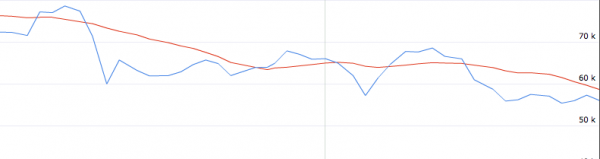
    Looking at this chart I came up with a very conservative 6% compound per annum, the min. sum will be almost $600K by the time I’m 55!

    I (personally) wouldn’t have met the min. sum

    Provided that I continue working till I’m 55 and am paying off my flat with CPF, I would have only accumulated approximately $370K by the time I’m 55 (including CPF interests). I’m no where near the minimum sum projection.

    The $5K max contribution limit will be raised very soon

    I strongly believe that the current max of $5K will be increased very soon because the sums just do not work out. Here’s a fictitious example of a highly paid young and energetic local graduate drawing a salary of $5K/mth so he can make the maximum possible CPF contribution from day one.

    Edit: I made some mistakes in the calculations earlier, this is an updated sheet.

    (I’m having trouble uploading graphics, will do so later.)

    He would have around $807K in his OA + SA by the time he’s 55, but check out his minimum sum! That’s provided if he doesn’t buy a property.

    But I’m sure he wants to get married and buy a flat… and have kids… the government strongly encourages that!

    He’ll have no money left in CPF if he bought a condo

    So after working for 30 years and paying for a flat together with his spouse, it is fair assumption that this bloke would have $300K less in his CPF for a decent HDB flat at current prices ($600K for a flat including interests divided equally between husband and wife).

    If the couple buys a million dollar, they will have nothing left in their OA.

    If his wife gets pregnant and stops working we may find another dead body in Bedok Reservoir/Singapore River.

    Singapore tax rate is effectively >36.5%

    Given that our current CPF rate is 36.5% (20% employee + 16.5% employer) our income tax rates can be considered to exceed 36.5%. Just as an example, the highly-paid graduate above would pay about 3% income tax for a salary of $60K/yr. This would add up to around 39.5% in taxes. This is higher than many developed countries. Even in US the highest tax bracket in the most expensive state is around 40%.

    What the hell are we still contributing to CPF? We should be contributing as little as possible.

    On hindsight, maybe it is a good idea to spend all your CPF money on a property since you’re never ever going to get it back.

    The other question would be why are we even buying older and shorter tenure properties for more money?