Blog

  • Motoring tips for wet Singapore roads

    It’s the time of the year again. Singapore gets an average of 19 rainy days and about 260-290mm of rainfall in November and December1. Flash floods and accidents are reported everywhere, as if our traffic isn’t already bad enough!
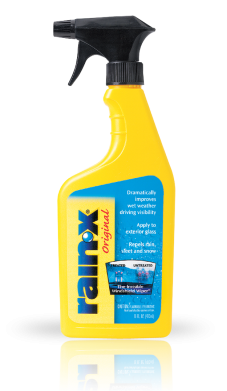
    There’s two things all drivers can do to help yourselves and help other road users.

    First, get yourself a bottle of spray-on Rain X. Don’t be one of those driving at 20km/h with hazard lights, fog lights and high beam on. It only slows traffic and makes visibility worse for other road users.

    All you need is a few pieces of newspaper. Go to a sheltered carpark. Wipe off any water with a sheet of newspaper first. Spray on Rain X generously on the front, front sides and rear windscreens. Spread/apply with newspaper. Be sure to cover the entire windscreen. Wipe clean with a new sheet of newspaper. Repeat and apply/wipe off one more time. Also apply some on side mirrors. You’ll be set for the entire month.

    Next, this is the time to get your tyres replaced if they are balding. Please don’t buy cheap or eco tyres — they have poor grip, that’s why they’re eco! Friction and fuel economy are inversely related. A lot of eco tyres are made for comfort and longevity and barely saves you any more fuel than a properly inflated tyre. Never compromise your safety for a few dollars in savings or fuel economy.

    Some tyres that are relatively quiet and known to perform well in the wet are Michelin Pilot Sport 3 (PS3) or Goodyear Eagle F1 Asymmetric (v1 and v2).

    The next thing you should check is your tyre pressure. A properly inflated tyre can make a significant difference in aquaplaning and braking performance.

    For FWD cars that are nose-heavy, I usually increase the front tyre pressure by 2-3 psi above the manufacturers’ recommended cold pressure (found on the door pillar or fuel filler cover). Most FWD cars have lower front tyre pressures to induce understeer to make their lawyers happy, but an under-inflated tyre is not good for the wet.

    A good mechanic once told me that if there’s anything you shouldn’t save on, it’s tyres, suspension and brakes.  Each tyre makes a contact patch no larger than the size of your hand. Added together, the total contact patch is no larger than an A4 sheet of paper. That’s the amount of rubber holding your 1,400kg car to the road.

    Safe motoring!

    P.S. I’ve heard people say Rain X damages wiper, etc. Seriously, wipers costs almost nothing to replace compared to a weekly tank of gas. If you keep your windscreen clean and just give your wipers a wipe down often, they should last very long. Our hot tropical climate damages wipers quickly especially when it sits under the hot sun against a dirty windscreen.

    1 Source: Climate of Singapore, from http://en.wikipedia.org/wiki/Geography_of_Singapore
  • Where have the peaceful HDB estates gone?

    I haven’t been blogging for a while, so this really means something I feel strongly about to have me start writing again.

    Wifey was down with high fever over the long Hari Raya/National Day weekend. Her fever persisted for four days. It went as high as 39.5 deg C.

    Earlier this morning her fever was up again at 38.2 deg C even after a half-dosage of Panadol. Fearing it was dengue or some avian-flu thing, we drove to NUH A&E at 4am to have her X-ray and blood tests done.

    As usual it took several hours to have tests done. By the time we returned home it’s already 7am; dengue tested negative, thankfully.

    Wifey took her meds and laid down to rest while I headed downstairs for breakfast.

    Just as I got home from breakfast all ready to do some work, lo and behold, all the pounding from neighbouring renovation works started. Adding on to the pain I still have my stomping neighbour upstairs randomly banging shit around the house at night — especially over this long weekend.

    In short, I have practically no peace at any time of the day. It does not matter if I’m trying to do some work or trying to sleep after taking meds.

    This is not the first time.

    A headache was brewing from all the noise. My skull felt like a cracked egg.

    I even made a recording with my phone. Playing it back appalled me. (Question: How can I share it?)

    Where have the peaceful HDB estates gone? I don’t remember hearing neighbours stomping, renovations for weeks on end, pounding/chopping boards from housewives or noises from bamboo poles hitting against (stupid HDB design) metal railings. These are all noises I hear only after I moved to my new flat.

    I was rarely woken by external noises at my parent’s flat. The loudest thing would be my mum yelling at me to wake up, the kranguni man or the hum from the vacuum cleaner. Occasionally there would be renovation works, but not once every two months!

    Right now I can hear (if you have some faith in a musician’s trained ear) three concurrent pounding/drilling works going on.

    What is wrong with our houses? Why do people have to tear them apart and put them together over and over again. Why are people moving houses again and again? Not tired meh? Not expensive meh?

    With 20 to 30 storey HDBs built in closer and closer proximity to each other I foresee these noise issues to be even worse in newer estates.

    All these made me wonder if I should just suck on it and save up to buy a landed property with my parents or simply leave this country because of the ridiculous property and car prices.

    What good is life with no peace? Can’t work without peace, can’t sleep without peace. Heck, tell me if you can make out with your neighbours drilling. Baby bonus my ass.

    The government needs to recognise that noise pollution is a major issue in densely built up areas. Our kampung era policies don’t work anymore. If they don’t work on doing something about this and leaving it all to “community mediation” we’re going to have neighbours burn each others houses down soon.

  • Building another Joomla or WordPress site?

    Looking to build a website for your business? You have been warned.

    Somebody I know had her company’s site done by one of those companies selling Joomla or WordPress ‘packages’. When she saw the end result, she face-palmed. When I saw it, my reaction was pretty much the same. The site was riddled with horrid mix of serif and sans-serif font, bad alignment, varying font sizes, etc.

    For about $2,000-$3,000 dollars you can have these people build you a Joomla or WordPress site, but you really pay only about $800 for it because the government is helping you pay the other 60%, or about $1,200 via the Productivity and Innovation Credit (PIC).

    No, this is not a blog entry to advertise the PIC. There’s rampant abuse of the PIC scheme, and it has actually created a lot of crappy work (and IMHO, crappy jobs). Not to mention photocopiers selling for $15,000 with “cashback”.

    A lot of these web “design” companies are selling you nothing but pre-built templates reused over and over again. No surprise all their client’s websites look pretty much the same. With some changes to color and images, bingo! They’ve transformed the template into your website.

    But wait… it still looks like crap. Why?

    A lot of ‘designers’ are really just ‘developers’. Designers come from art school. Developers come from IT school. A lot of these designer-developers don’t even understand basic typography, let alone color theory, or help you with illustration or photography. And if they aren’t good in English, expect your site to be riddled with grammatical and spelling errors.

    When you engage a proper web design firm you actually are paying for a lot of things. A good company will actually advise you on the kind of content or site structure you should have, and also be able to provide additional services like copywriting, photography, illustration, etc. A proper design firm needs to hire both designers and developers, and they’ll also need somebody to manage these two very different groups of people and ensure they don’t kill each other.

    If you are really looking for a cheap solution you can actually buy beautiful templates off sites like Template Monster for a fraction of the money, then engage a freelancer to help you add content and deploy it to a hosting provider.

    You’ll want to choose a template with the similar color theme and typography as your corporate brand. You don’t want to mess with colors or fonts — that’s a job for designers.

    Nowadays the first impression people have of your company is through your website. Don’t underestimate the impact a website might have on your business. Messing a website up is as good as messing with the signboard and interior design of a retail shop.

    One final word of advise — make sure you get a company that can support you through upgrades and security patches of the CMS you use (WordPress, Joomla, Drupal, etc.) preferably one that provides hosting service as part of the package. Most people with Joomla sites built a few years back would have had their site ‘hacked’ by now due to security issues (I’ve dealt with a lot of these cases). If you must, choose WordPress. It’s better than Joomla in terms of security.

    It’s really 一分钱一分货.

  • Peer to peer car sharing in Singapore – is it really working?

    I’ve always wanted to make car sharing possible – there are two ways to go about it.

    First method: I would announce my travel plans and pick somebody going the same way as I am. In return I will get paid a token sum to ferry my passengers. I call this “Taxi style”.

    Second method: I rent my car out for profit. In short, it’s plain old private car rental. This is actually working in the US, see RelayRides.

    One problem with private car rental in Singapore is legislative restriction. At present, private car rental is only allowed on weekends or public holidays.

    The other problem is insurance coverage. Both methods of car sharing I described are classified as using the car for hire or reward. Hire/reward is explicitly prohibited on almost, if not all, private car insurance policies.

    Believe it or not, I called almost every insurance company in Singapore trying to see if rental coverage was possible. The answer was NO. Some did cover rental fleets, but the fleet size had to be considerable and it had to be a business.

    iCarsclub collaborated with DirectAsia to get the insurance problem resolved, so it is really very interesting.

    I decided to conduct an experiment.

    I signed up as a car owner. I did some research, and listed my car up at a very reasonable rate – $7 per hour, or $55 per day.

    My friend wanted to rent my car for the weekend, so he had it for 3 days on this long weekend (May 24 to May 26).

    The catch is this – fuel costs are borne by the car owner. iCarsclub in return charges the renter for mileage ($0.30/km). The renter also needs to pay for insurance coverage ($0.40/km).

    At the end of the rental, the bill came up to $326.83. The breakdown as follows:

    • Mileage traveled: 232 km
    • Booking fee: $2.00
    • Rental fee: $165.00 ($55/day x 3)
    • Mileage charges: $69.60
    • Insurance: $86.80
    • GST: $3.43

    iCarsclub takes a 20% commission from the rental fee.

    Insurance premiums are paid to DirectAsia.

    As a car owner I would only receive rental + mileage = $201.60.

    I also had to pay for the fuel, estimated to be about $60.

    On top of that, I have to pay for the SIM card in my car tracking device. That costs $39/mth.

    The result?

    • Car owner earns: $102.60 (31%)
    • Petrol company earns: $60.00 (18%)
    • Telco company earns: $39.00 (12%)
    • Insurance company earns: $86.80 (27%)
    • iCarsclub earns: $35.00 (11%)
    • Government earns: $3.43 (1%)

    It seems like businesses are the ultimate winners here. The owner actually receives less than a third of the amount.

    As a renter, there’s no price advantage. My car is already priced very low. My friend could have rented a similar car from a rental company for equal or less without worrying about the mileage based charges killing him.

    And because of the fixed mileage charges, it gives the renter no incentive to save fuel. He could go full throttle on the car all the time, or even abuse the fuel card.

    As a car owner, I am not sure if the amount risks I expose myself to would justify the $100+.

    Every car owner would have to sign a 2-year contract with iCarsclub, so my car would remain in their inventory for another 2 years. There is also a refundable deposit of $300 I had to pay. Breaking the contract would forfeit my deposit.

    Right now I think the pricing scheme needs to be tweaked. I am trying to get in touch with them to see how it can be improved. I am also hoping LTA’s announcement to liberalize private car rental on weekdays would come true.

    I am not discouraged yet and will continue to rent my car out to see how this whole scheme works out.

  • Why hybrids aren’t selling

    I’m not going to talk about EVs because they present a charging and power distribution challenge.

    However, there are quite some hybrids on the road now. But why hybrid cars still aren’t selling as well as traditional gasoline?

    First, batteries don’t last very long, are expensive to replace, are very heavy and also may potentially have safety issues in a crash (due to short circuit). And we really don’t know how much environmental damage is done actually making batteries. So now there’s 10 year warranties and all, but all that extra money just to put heavy batteries in a car? Really?

    I know about all that alternate fuel thing, so yes fossil fuels are running out, we’re all going die (not because of the lack of fuel but likely to war over fuel), and we need to find alternative energy.

    Okay, never mind. Here’s what I think is the biggest problem with hybrids: they simply all look like crap.

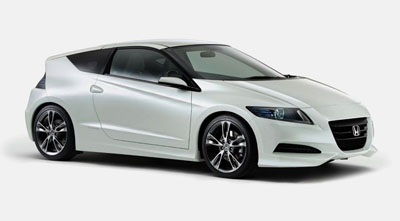
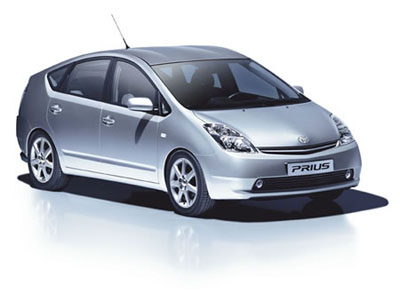
    Here’s a few we all know. The Toyota Prius and Honda CRZ.


    Why do hybrids have to look like that? Were they designed out of function (they need space for big batteries) or were the Japanese thinking of fancy looking hatches to attract the “save the world” folks? Hey, those “green” folks don’t wear weird clothes, do they?

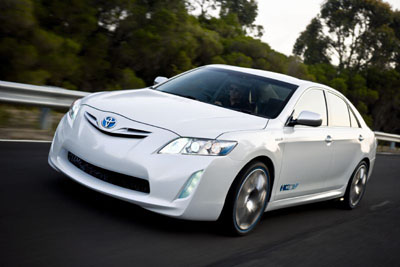
    What about the hybrid models of existing sedans? Why do they have to make something glow in blue, like the logo of the Camry?

    Or even BMW, why does the ActiveHybrid 3 have such ugly wheels? For aerodynamics – really? After adding a few hundred kilos of batteries?

    Why can’t the BMW 5 series hybrid be called the BMW 535ih instead of ActiveHybrid 5? That badge looks like crap.

    At least Fiat is doing it right… the Fiat 500e looks awesome.

    Car makers — why can’t you make a hybrid look like a normal car?

  • Buying insurance

    Most of us would have purchased some insurance policies by now. If you haven’t, you need to start looking!

    Basic healthcare insurance in Singapore is relatively inexpensive and can even be paid with CPF money, but some of us may end up buying endowment or investment-linked policies as insurance agents would put it — to “beat inflation”.

    Well, it’s not all that bad to start saving up early, but the fact is most people do not really understand what they are buying into, myself included. Insurance policies are extremely complicated and every company and policy is different.

    However there’s some things that I’d like to caution you about.

    Endowment maturity and break-even

    Endowment policies typically have a maturity date that is relatively long, e.g. 15 years. The break even point is usually quite far ahead, say at the 12th year.

    Consider this: A person purchased an endowment policy with a premium of $100 per month. If he loses his job before the break-even point and fails to pay up his monthly premium, he would be at a financial loss. To break-even, he/she would have to pay up at least $100 x 12 x 12 = $14,400 before realizing any form of financial gains without even factoring inflation.

    It is OK to buy some of such products, especially if the interests are guaranteed, but do consider the long payment tenure. One should set aside funds to keep the policy rolling. Don’t ever let a policy lapse!

    Investment-linked policies

    Investment-linked insurance policies are no different. Every dollar placed into investment-linked insurance policies have an overhead of around 5-10%. This is used for a basic life insurance coverage and of course your agent’s commission! That’s how they earn your money!

    Besides the risks that investments carry, the overheads would mean that every dollar you “invest” on a monthly basis would take at least 1-2 years to see any gains assuming the investments return 3-5%. And if you are making monthly payments this is taking 5% from you every month, effectively rolling your break-even point forward!

    In addition, the management of these fund baskets aren’t exactly transparent. I never knew what exactly was invested and it changes over time. Every year they send me a thick booklet with all the funds and fanciful charts, but who the hell reads that stuff?

    Switching funds

    If you already have investment-linked policies meant to hedge against inflation, right now the best bet is probably to switch to bond funds as interest rates have been historically low. Buy into a bond fund that has less probability of default, e.g. Singapore.

    Why do I recommend bonds? Because bonds are secured, less volatile than equity, and to buy a bond requires typically in excess of $50,000 so I see it as a form of positive leverage.

    The non-savvy investor

    In my opinion, endowment and investment-linked insurance policies are for the uninformed or non-savvy investors looking for an easy way out. After all, insurance companies are a business; they need to make money.

    I would actually consider outstanding endowment payments to the date of maturity as a debt! If you have read my article on net worth, this means lower or even negative net worth!

    For most of us, some basic healthcare and life insurance coverage is enough.

    Know and manage what you invest

    Many people think that these insurance-linked investments are long term “invest-and-forget”. After putting my hard earned money into these products, I can only say with a great amount of certainty that every investment requires time and attention and that never let somebody else manage your money for you.

    Explore stocks, start a business, or just save up

    Spend some time to understand stock/equity trading and the returns may potentially be higher. In addition, you will have control of what you want to invest in, and you will also learn from it especially when it comes to human behavior. Somethings in life you really need to put money into before learning 😉

    Otherwise, start a business or just save the money. Sometimes your time is more worthwhile than staring at stock counters all day long.

    So if an agent comes up to you again to tell you that you need to beat inflation, beat the agent instead. 😉

    P.S. Sorry, Loy if you are reading this! This is like an article out of “Hard Truths”, but being a naive investor I do not blame anyone. You have been a good agent!