Category: Property

  • 10 years have passed

    10 years have passed

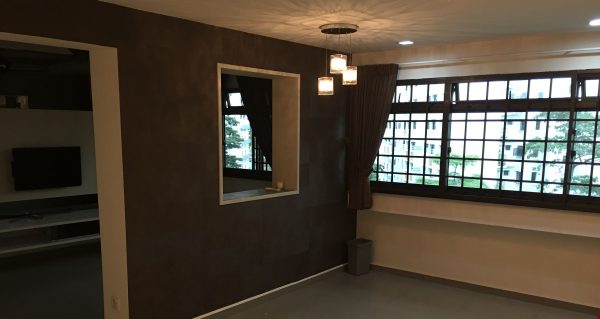
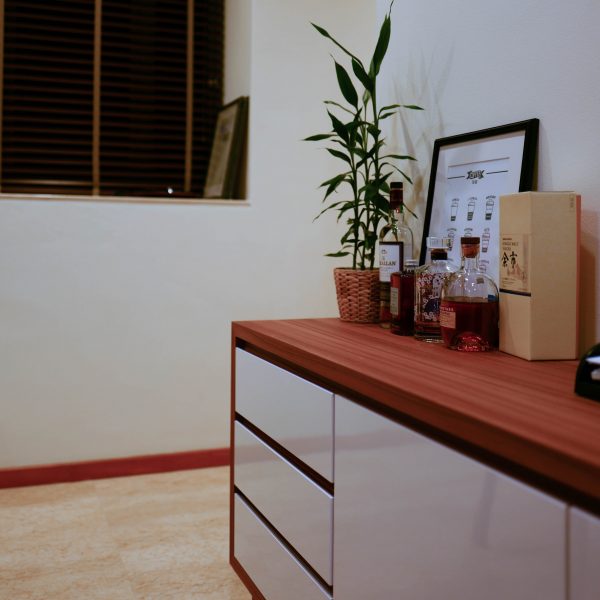
    2019 marks the 10th year since my first property purchase – a resale HDB in 2009 (image above of my vacant HDB before I sold it). Back then, the supply was extremely short, and after several failed BTO attempts and skyrocketing prices month after month, we bought a resale flat in Bukit Panjang from the open market.

    “I thought that would be my first and last property.”

    I thought that would be my first and last property. I dreamed my home as a place for me to unwind from the hustle and bustle; a place where I could sit in a corner and read a book, or listen to music, or tinker with my hobbies, or write code. Never did I know I would eventually spend 6 years living in agony with a noisy neighbour upstairs, and later on also another one next door – yes TWO noisy neighbours, what luck?

    As a musician, I am extremely sensitive to sounds. It seemed almost impossible for people to understand how much sound noise would affect me. I was frustrated and stressed because the noises from the neighbour upstairs would persist late into the night (3am~4am). I had interrupted sleep several times a week, which then affected my health and work. My blood pressure regularly rose above 140/100. At a certain point I was even depressed. I spent a lot of time and effort trying to retaliate, because the police, MP, etc. were of no real help – retaliating was the only way I could get peace for a short while before the noises returned. But retaliating took effort, energy, anger, time – which was supposed to be when I should be relaxing, recuperating, meditating, sleeping. I was at such wits’ end that I even started a Facebook page “Singapore Noisy Neighbours” which got 100+ members sharing similar issues, but even with so many of us, none of us had a solution because there are no real laws on our side.

    I was thankful, though, that during this period the people who could help did come forward to offer their help. However all the help eventually still led to the police, MP, HDB and mediation – which were mostly useless.

    “Why do I have move, to suffer the consequences twice as a victim?”

    I was told to sell my HDB, to move away from this madness. I couldn’t believe it: why do I have move, to suffer the consequences twice as a victim? The HDB resale market had already started to dip in 2013 thanks to the cooling measures. I already spent my life savings (at that point) buying the house and renovating it. I may not recover the costs of my renovation, which was modest by modern standards ($40K).

    But I couldn’t take it anymore – in 2013, the 4th year of my ownership, before the Minimum Occupation Period (MOP) of my HDB – I wrote in to HDB to request for a waiver of my MOP so I could sell. HDB approved my request, but with many preconditions, such that I could not choose anything other than another HDB within Bukit Panjang. Part of the reason was because I had obtained several grants, including one for living near parents.

    I had almost given up, until one day I saw a Facebook advertisement for learning how to “invest in properties”, how to “buy 2 condos with no cash”, how to “earn passive income”, how to “retire early” – it sounds like a total scam, but I was already hopeless, tired and vulnerable. I went for the free “preview”, and then later paid $3,000 for the “course”.

    I always believed I had to be debt-free, cash-rich and would pay of my HDB and then accumulate cash to retire…

    Turns out this “scam” was the best $3,000 spent, because I saw through some of the scammy bits of it, and took in the other non-scammy bits. The “course” mainly taught how to manage credit-worthiness and how to properly apply financial leverage – which are key to property purchases. I always believed I had to be debt-free and cash-rich; to pay of my HDB and then accumulate cash savings – but I wanted to move so badly that I convinced myself to buy a condo, and because I now believe strongly in the potential demographics of my neighbours, I picked a prime area. My parents thought I was crazy to pay $1,500psf for a tiny unit. Coming from Malaysia where they grew up in landed houses, they were in disbelief that I would pay such hefty prices to squeeze my family in a tiny space.

    After settling down from my first child in 2015, I started planning and sold my HDB plus many of my large furnitures in 2016. I rented an apartment from a friend for a year while I searched for a new home. It took me almost 3 years of planning, relocating twice before settling down in my current condo in 2017. I never looked back; apart from finally having my deserved peace, the location is fantastic, and the vicinity around the property is beautiful. There are also dozens of childcare centers with vacancies around my area.

    All I need now is a house full of people, not a house full of things. There’s a world out there. The Singapore life is all about a city life.

    I then realised that I don’t need to be at home to do the things I want to do, and I really don’t need a big house: when I was young, a huge part of my room was occupied up by bookshelves and computers. Now that almost everything is digital and computers are tiny, we start to fill these spaces up with modern day consumerism – branded goods, useless gadgets, etc. All I need now is a house full of people, not a house full of things. There’s a world out there. The Singapore life is all about a city life.

    I’ve started recycling my daily waste too, cleaning and sorting them into paper, plastic, metal and glass – because the limited space I have forces me to get rid of packaging material, boxes, containers, etc. that I might otherwise keep. Doing so also makes me more conscious of the amount of waste we are generating.

    I’ve also spent a lot of effort on decluttering – way before Marie Kondo.

    So what have I learnt in 10 years? Less is more.

    P.S. This story also explains why I hate open concept offices – noises affect me a lot.
  • Lessons from Downsizing

    Lessons from Downsizing

    Some friends were in shock when I told them that I’ve moved to an apartment that is slightly less than 900 sqft in size with my wife and my (now) 2 year old son. Yes, you heard that right — I went from a 1,200 sqft “5I” HDB apartment to a 900 sqft 2-room private apartment.

    “Can stay meh?”

    “Not very small meh?”

    I didn’t think much of it until I moved in. And when I did, I thought: Jit bai siao liao. (I’m in trouble now.)

    It was easy to go from a bedroom at my parents’ (approx 150 sqft?) to a 1,200 sqft apartment all to myself (and wife), and I thought downsizing to 900 sqft with a additional human being occupant (the baby) shouldn’t be a problem. In fact, it was such a challenge that it made some significant changes to my/our lifestyle. And I think to myself: How could I have amassed so much material junk in a short span of seven years that I can no longer fit all my belongings in a house even though it is easily 4 times the size of my old bedroom? It is scary.

    “How could I have amassed so much material junk … that I can no longer fit all my belongings in a house even though it is easily 4 times the size of my old bedroom?”

    Let me also, for the record, just point out that this has got nothing to do with money or being wealthy — a person of low or average income can also hoard enough to fill a 5-room flat.

    I have been on a mission to minimise since 2014, possibly even a little bit earlier. It first started with clearing out old hardware at my parent’s office, where I realised that it was actually more difficult to get rid of things than to acquire them. I wrote another blog entry in 2015 after continuous effort to minimise seemed futile, and then again in 2016 detailing all the crap I had unearthed from moving to a temporary rental apartment.

    In spite of the multi-year effort to reduce, I still had loads of junk with me as I move once again in early 2017 into my new tiny apartment, and this is when I also realised that part of the problem with our rampant consumerism is the abundance of seemingly permanent storage spaces. (My USA friends be like: “Really? We have an entire basement/garage.”) Most Singaporean families buy instead of rent their homes which means people feel more settled and are more willing to buy things to keep/hoard. Our apartments aren’t getting any bigger, though, so some of this mentality needs to change.

    “… part of the problem with our rampant consumerism is the abundance of seemingly permanent storage spaces.”

    So moving into a small apartment forced me to really downsize. I more than halved my wardrobe. I threw and donated a bunch of stuff away. I actually felt bad, because it seemed wasteful to throw useable stuff away, or unkind to donate crappy items that the poor volunteers at Salvation Army have to sort through. I also sold stuff away on Carousell — usually things of higher monetary worth such as furnitures, gadgets, car parts, collectibles, crap, crap and more crap.

    Because of all the trash I threw out, I actually started reading up on waste management in Singapore and found out that we generate a shocking 8,559 tonnes of waste per day in 2016! That is 8+ million kilograms per day! Where the hell does all these go? Before we run out of space to build houses, we probably run out of space to dump waste! And I am not proud that I am contributing to this. In fact, I think the government may need to introduce an initiative to reduce waste.

    “… we generate a shocking 8,559 tonnes of waste per day in 2016! That is 8+ million kilograms per day!”

    There was also a blessing in disguise — the building where I temporarily stashed my stuff was on fire. The corner where my items were was not burnt, but SCDF flooded the entire building with about one inch of water on every floor to cool it down and several items sitting on the floor got damaged in the process, so I took the opportunity and wrote some items off (even though some were not really damaged) and got an insurance payout.

    But I’m not done yet. When I renovated the house, I designed it to have as much storage space as possible but I still have so much stuff that I rented a warehouse to store things that I do not need on a regular basis.  I am paying close to $2K a year for a warehouse to store items that may possibly not even sell for that amount of money in total.

    “I pay close to $2K a year for a warehouse to store items that may possibly not even sell for that amount of money in total.”

    So my friends were somewhat right — can stay meh? Can. Only if I change my way of life.

    I was used to buying things and just storing them away hoping to use them later, “just in case” — like a piece of furniture, or some gadget, or a tool, etc. I would also buy things in bulk due to bulk discounts and there’s nothing really wrong with that, except that I sometimes stash them away and forget what I have and end up buying them again. My parents recently renovated their house and in the midst of packing found out that they have so many boxes of tissues that  could probably last them an entire year!

    “… I sometimes stash them away and forget what I have and end up buying them again.”

    And then of course, I am used to a house full of things I could just reach out for. All this had to change.

    I am now extra careful when making a purchase; as a result I spend less money. You may think that’s something probably insignificant, but it adds up. A small house is easier to clean. Less stuff means less work taking care of, dealing with, cleaning, or fixing them. I also indirectly channel extra time (and money) on people and experiences instead of things.

    I think we can also teach the young a thing or two about consumerism and materialism. I have a friend who says as kids grow up they’ll need space at home and he actually dedicates a room for his kid’s toys and stuff. I don’t really agree. Kids need only the same basic stuff adults need. For anything else such as sports or  hobbies, they should seek other places to enjoy them and make friends in the process — not lock themselves at home.

    If I had a choice, would I want a bigger house? Yes, only if I needed extra space for another kid. But if I had a bigger house, it would be to have more open spaces, not storage spaces. With that, the one piece of advise I’d like to share with friends who are buying their first homes — it is OK to start small.

    “With that, the one piece of advise I’d like to share with friends who are buying their first homes — it is OK to start small.”

  • 3 biggest mistakes you should not make with your HDB

    3 biggest mistakes you should not make with your HDB

    Here’s the biggest problem with the baby boomers generation (now turning retirement age) — they have been sold the idea of an asset by buying into a HDB, and many are hoping to cash out upon retirement. After all, their HDBs should have been paid off by now after having serviced the mortgage for more than 30 years. But the question is: Can they really cash out?

    I’ve seen enough cases of old folks with flats they bought for maybe under $100K, worth close to maybe $500K right now. If they are lucky, some place like Duxton can get them closer to $1m.

    But the question is, can they sell? The house is in a constant state of mess after some 20-30 years of not having a chance to properly renovate with 3 kids and a ton of stuff in the house. What is not reported in the news is that a lot of these houses fetching good money are likely well renovated.

    Even if they sell, what can $500K of proceeds do? If they sell the place, they’ll have to find a new place. How long can it sustain them? For Healthcare? Paying insurance premiums? Travels? I’m not even going to talk about CPF accrued interests here, which will return to their CPF Retirement Account (RA). After 30 years, this can be a hefty sum.

    Houses, in general, are getting smaller, and it is becoming harder for multi-generations to live under one roof. If they get to live with their children — which is the best scenario — they can rent out the entire flat. Otherwise, they may sub-let a room or two to get constant cashflow from rental. It is true that HDB has the best rental yield of all properties in Singapore, but how many old folks really want to live with a tenant? After all, it’s time to enjoy a peaceful retirement.

    Yes, HDB is a great initiative by the Singapore government to give everyone a home; it is also a great stepping stone that many fail to utilise. I’ve been telling my friends not to make the mistakes their parents made, but I think writing this into a blog might save more people.

    1 – Keeping the HDB “till you die”

    National Development Minister Lawrence Wong has already clarified that not all HDBs are eligible for SERS. What this means is that you are at the mercy of HDB to en-bloc your flat. If it does not get selected for en-bloc, it will continue to rot till it is 99 years old, and then the value of the property goes to zero.

    Private 99-year properties are different in that they can call for a private en-bloc, which is more in control of the private owners.

    It is OK to buy a BTO or a resale and be thankful for all the discounts and grants from the government. But don’t sit on those money. Keep it moving. Money that is stagnant does nothing. Buy with a plan to sell or upgrade (i.e. buy another) in 5, 10 years — this is important, because you will then also upkeep your property in a state where it is sellable/rentable. Remember this!

    2 – Waiting too long to upgrade

    Seek to continually upgrade from a HDB, and do that early. In a lifetime, we probably get two chances at an upgrade before we hit an age where we cannot leverage further. Each cycle is typically 5-10 years.

    Always bear in mind that you can not leverage past the age of 65, which means that when at the age of 35, the amount of tenure you get out of a mortgage is at its maximum (30 years). At current interest rates in Singapore, it would be silly not to leverage. Although this may change, it is still low enough.

    3 – Cashing out too early

    It is quite often that I hear about people downsizing and cashing out on their current properties; I have had friends who moved from Serangoon, to Kovan, to Sengkang just to cash out on their existing property all too early. They (or their parents) will soon realise that they are out of options pretty quickly.

    While it’s a good idea to cash out while the market is hot (e.g. sell your Clementi HDB for a million dollars, why not?) it is always a better idea to use such opportunities to upgrade or acquire additional properties for constant rental cashflow in future.

    Happy property hunting.

  • What I think about the Singapore Property Market in 2016

    What I think about the Singapore Property Market in 2016

    Here’s what I think of the Singapore property market in 2016 (and beyond). I’ve just sold my HDB and am renting temporarily waiting on the side to jump in. If you’d like me to summarise in one sentence, I think the market has not softened enough. At the moment only the super luxury properties in Core Central Region (CCR) ~$5m and above are feeling the pinch. There are also some condominiums in Rest of Central Region (RCR) with prices above $2m that are feeling some pressure because at $2m the buyer pool starts shrinking. However,  anything below $2m is still quite resilient because many owners are still holding on to their prices with hope that the cooling measures may be relaxed soon.

    Let’s start with HDBs

    HDBs prices in general have tanked quite a bit due to the flood of BTO in the last few years. However, BTO represents only a fraction of the overall Singapore property buyer population as BTO/DBSS flats are only eligible for [married|single>35yr] Singaporeans. There is still demand from PRs and foreigners going to resale HDB and condos.

    By H2 2016, many BTO/DBSS flats especially those in Choa Chu Kang, Punggol, Sengkang would have obtained their temporary occupation permit (TOP) and would be ready for occupation. Once these BTO flats are ready, there will be landlords losing their tenant(s) and parents potentially downsizing after their kids have moved out. This will lead to another depression in property prices. There are many more HDB flats TOP-ing in 2017 in more areas like Woodlands, Yishun and Sembawang and the numbers are scary; I’ll leave you to do your own research here.

    PRs can only buy resale

    As of now (2016) the HDB resale market is still being kept afloat by PRs. There’s also decent foreigner rental demand for cheaper HDB flats/rooms, but that said, the price gap between a HDB and Condo room rentals have narrowed as Condo landlords are facing the pressure and lowered their expectations.

    2021 and beyond will be the bloodbath years

    Here’s the interesting part: I think that in 2021 (5 years from now) when all the newly built flat owners fulfil their HDB minimum occupation period (MOP), there will be a flood of resale properties in the market. The competition for resale HDB will be interesting to watch. My personal opinion is that you should consider selling your properties now if you live in any of the towns that have more than 2,000 units TOP from 2016 and beyond.

    Condominiums below $2m still hot

    Condos are still a lifestyle dream for most Singaporeans. Most people I know sold their HDBs to upgrade to a Condo, otherwise they would simply stay put for good. There’s still decent demand for Condos right now, especially in the Outside Central Region (OCR) where decent sized 99-year leasehold condos can be had by young families for ~$1m or less to enjoy the facilities and prestige.

    The amount of investing and rental activities have dropped quite drastically, however, partially caused by weak market affecting (foreign) employees and investors.

    Like I mentioned earlier, condos above $2m are feeling more pressure because at that quantum, the number of real buyers, i.e. people buying for own stay, are significantly lesser as such amounts can fetch a decent landed property (more on that later). Rental yields also start to diminish at above $2m.

    Seller stamp duty is a deterrent and is keeping resale condo prices high

    There are also many condos TOP-ing this year and the next few years. This will cause a dip in condo rental prices within the next few years, but my gut feel is that condo resale prices will stay for now because the seller stamp duty (SSD) is a deterrent; if sellers want to make a profit, the SSD would be factored into the sale price causing resale condo prices of newly TOPed projects to actually increase. This is the primary reason why I said in the opening paragraph that the market has not softened enough — we need to ride out the SSD period.

    Location, location, location

    Another general observation is that there’s also less price gap between 99, 999 and freehold condos as most investors look at rental yield as a baseline for their return on investment. As with all properties, location is the key to price.

    For condos, expect to see drop starting in 2018 and hitting hard in 2021

    Similar to HDBs, I think 2021 will be a big bloodbath. Why? Seller stamp duty (SSD) takes 3 years to taper off, so many newer projects that TOPed within these few years would have been free of SSD by ~2018 and the would be a flood of condos on resale. Then, as HDB MOPs are fulfilled in 2021, thousands of properties would be up for resale or rental. The HDB sales and rental competes directly with condos for the PR/foreign buyers/tenants.

    So the big question is, can you wait?

    If are intending to upgrade to a condo and bought your HDB in 2009/2010 and recently just fulfilled your MOP, you can probably still sell your HDB now for a decent profit (20-30%) from 2009/2010 prices. Assuming you bought your property for $300K, that would be close to $90K in profits. Rental market is soft now, so assuming you rented a decent HDB for around $1,800 per month, the profits can hold you through ~50 months which is more than sufficient for you to ride the tides to a lower point before buying again.

    Don’t forget also: meanwhile your CPF account is not paying mortgage, so all the money (and profits) that went back in your CPF is collecting a handsome 2.5% interest for your next property purchase instead of getting stuck in the current rising interest rate environment. You could easily save yourself several hundreds of thousands in dollars from current condo prices.

    What about landed properties?

    In general, freehold landed properties will still hold good value as the number of land plots are truly limited. It has not much direct competition from HDB or Condos as people buying landed are seeking different lifestyles and priorities. Landed properties generally do not generate good rental yield. Also note that only Singaporeans can buy landed; PRs can apply with Singapore Land Authority (SLA) but I heard that it can be difficult to obtain approval. The downside to landed property is low liquidity as the buyer pool is smaller. If you decide to plonk all your life savings into a landed property, be sure you can afford to hold it.

    99 year landed properties will generally remain stagnant unless the location is good, simply because it does not provide better rental yield than condos in general. It is OK to buy for own stay and house multiple generations under one roof, but I personally would avoid it as an investment vehicle.

  • Spring cleaning surprises

    Spring cleaning surprises

    I wrote two entries towards the end of 2015 about slowing down (a.k.a. work-life balance) and de-cluttering.

    Enter 2016 + Chinese New Year spring cleaning. Spring cleaning this year it is a big affair because I am moving house, so almost every corner of my house gets packed.

    Here’s the top three surprises I’ve found in my home:

    1. There are more kitchen appliances than you can ever imagine. The kitchen already has a hob and a built-in oven, but then there’s also an air fryer, mini toaster oven, microwave oven, juice blender, food blender, handheld blender (for baking?), pots, pans, more pots, even more pans, tea sets, even more tea sets (I don’t even drink tea, so they have been in storage for eons), dozens of cups/mugs/salt+pepper shakers from events or weddings.
    2. There’s more gadgets than you can ever use in a day. Air filters. Fans. Radio… speakers… more speakers big and small. Earphones/headphones… lots of them. Old MP3 players, iPods, old iPhones, iPads, cameras. USB cables, power cables, even more USB cables. TVs — two of them. Ugh!
    3. There’s more cleaning products/gadgets than you ever need. Vacuum cleaners, steam cleaners (this was really a bad purchase on my part), traditional mop, high-tech 3M mop. Long brush, short brush, big brush, small brush, weird shape brush. Febreeze, Dettol, Lysol, Clorox, 3M and about a dozen other cleaning solutions.

    It’s NUTS! All the crap I bought. All the things I was made to believe work wonders when in fact all I really needed was probably a third or less of those. I sold/donated/threw a bunch of stuff away, and it was really hard to make some of those decisions, but I had to because the harder the decision, the stronger the memory. I am also making it a point to blog about this so I will never repeat the same mistakes.

    But what really surprised me was my OCD tendency to keep track of all my bank statements, bills and other documents. To my surprise, I have every single one of my bank statements since 2007. Looking back at them reminds me of my past, and tells a better story than I can even recall myself:

    I was living paycheck-to-paycheck back in 2007 and had close to no savings. I had maybe several hundred dollars balance at the end of every month (and it never grew). I remember I would look at my bank statements and make a note beside every transaction trying to figure out what it was for or where I spent my money, but a large bulk of it would be cash withdrawals at the ATM, so it was not clear if it was food, fancy restaurant meals (did not have credit card back then), cab fares or maybe even shopping.

    The turning point was when I started tracking my expenses in detail. Having an iPhone 3G (2008) and an app was key. I tracked close to every single cent I spent and saw that food expenses made up around $600/month. I tried to reduce, but it was hard because I worked in CBD, and food was (is) generally expensive. I also ate out most of the time — including dinner. My transport expenses were also high, because I occasionally cab or drive to work and had to pay crazy parking rates in town.

    I switched jobs in 2008. I worked outside of CBD but I drove to work daily and still had to pay for pretty expensive parking (averaging around $400/month) because I could not get season parking and had to pay hourly. However, food was cheap and I ate chye png almost every day for lunch and that brought my total expenses down. Together with an increase in salary, I started to see some savings, and with some excess money, I also bought basic life and health insurance.

    The rest of the story will be for another day. Anyway, as I flipped through my bank statements, I saw how this similar pattern added on to my savings bit by bit. My income has risen over the years of course, and my lifestyle may have also gotten more expensive, but the key was that my lifestyle expenses grew less than my income, and I think this is really important. Hopefully, an old friend is reading this — YOLO is not the way to go.


    I said in an earlier post that I would write about my resolutions for 2016. So here it is.

    Be grateful. I am grateful for all the people whom I’ve met along this journey, good or bad because all that has happened made me where I am today. I do hope to continue having more exciting years ahead.

    Reduce. Consumerism is scary and it will suck the life out of you. The next time I whip out my credit card, I need to think thrice. As a result, I’ve also reduced all my credit card limits. Banks are really insane these days to give out 4x your monthly salary.

    Focus. I had little distractions during the early years of my work life and it allowed me to focus on what I had to do, so I could do it right. I’ve found this very important, and the lack of focus is the reason why a lot of people fail. Not being arrogant but I do get quite a fair bit of “noise” with people approaching me to become a tech co-founder. Do not take offence if I reject you because I can’t do so many things at once; if I were your co-founder, you’d want me to focus on your stuff too.

  • Planning your property purchase

    Many people do not know that planning for a property purchase can take up to a year or more. Without proper planning, many people are stuck after making the wrong move.

    Here are some common mistakes: –

    Buying a property before knowing your budget.

    The biggest hurdle when purchasing a property is usually the loan. Not many people I know have a million bucks floating around. Most people fail to get this right because they assume they are able to obtain a loan.

    Using the current LTV of 80% and TDSR of 60%, the income required to buy a $1m apartment ($800K loan over 30 years) is around $6K assuming no other commitments. If you have some credit cards and a car loan, this figure could easily balloon to $8K.

    So what happens if you bought a new property and paid the 1% option-to-purchase (OTP) fee ($10K for a $1m property) and is unable to obtain a loan? The answer is simple: you’ll forfeit the 1% and the seller can now throw a party.

    Buying a new property before selling the current one.

    This is very common. What happens if you can’t sell your current property in time? You will be made to pay the additional 20% downpayment (your LTV is reduced to 60% from the original 80% you were expecting).

    For those hoping to apply for an ABSD remission, sorry. It’s gone.

    So why does a property purchase planning take up to a year?

    That’s because if you are unable to obtain a loan (especially self-employed), it will take up to a year to get your year-end tax filings corrected. A typical loan approval-in-principal process can take up to one month. Then you’ll start selling your current property before buying a new one to avoid any of the pitfalls I mentioned above.

    Happy house hunting.