Tag: COE

  • Where is COE headed in 2018?

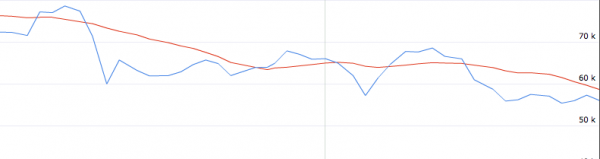
    Where is COE headed in 2018?

    Several car salesman told me: “Next year price will go up! Buy NOW!”

    Well done. All the fear mongering will actually lead to a COE plunge. There was a run up prior to the end of this year because of all the panic buying, then it will stop as people adopt a wait-and-see attitude. By then, the car salespeople will tell you that COE is low, and it is the best time to buy. No matter COE high or low, they will spin a story to sell their cars.

    My guess is that sometime in Q1’18 will be the best time to renew COE, where it should plunge back to $40K or even $30K+ levels (for Category A).

    Yes, the new Euro 6 CEVS will affect car prices, but the market will adapt. It’s not like this is the first time the Government has introduced changes to CEVS or COE (e.g. the horsepower categorisation). Eventually the whole system will net itself to zero, i.e. COE drops + CEVS goes up. Car prices will probably just remain the same, and for a while until manufactures catch up with Euro 6, then the regulations will likely change again when majority of vehicles qualify for CEVS discounts.

  • MAS eases curbs; where is COE headed

    MAS eases curbs; where is COE headed

    If you’ve been following the news, you should have heard about MAS easing the loan curbs. So where is COE headed? Most people say it will go up, but I think it will only inch up marginally.

    Reducing downpayment by 10% will help buyers reduce their upfront commitment by around $8K (for a $80K car). If COE shot up in excess of $10K, e.g. an $80K now costs $90K, it would defeat the loan curbs ($32K vs. $27K downpayment).

    The extension of loan tenure from 5 to 7 years makes monthly commitments easier on the pocket, but right now most buyers waiting on the sidelines are likely more cash strapped. Remember: it is supply and demand that causes COE prices to move.

    Also, the number of COE quota available right now actually meets or exceeds that of 2008 when COE was <$20K. With so many cars going to the scrapyards, we will see this quota sustain for quite a while. I believe this is the primary reason why the loan curbs were eased — otherwise we may see $20-30K COE by 2018. I believe the loans will be further relaxed in 2017 (to 80% + 8 years) if total quota exceeds 2,500 in each bidding. If the quota remains fairly constant, then there will be no change.

    In summary, I think COE prices will not move much… it may rise a little bit, with a little spike in the short term due to sudden demand, but should eventually stagnate around $50K for both Cat A and B.

    P.S. I can’t help but feel that LTA really screwed up on Cat A vs. B differentiation even when they had the one opportunity to do it right.

  • 2016 COE trend and illogical used car prices

    2016 COE trend and illogical used car prices

    Why are used car prices so ridiculously high when COE prices are down? It does not make sense, or does it?

    New cars are actually cheaper (in depreciation) now

    A brand new VW Golf (Mk7) 1.2 TSI was going for $98.8K over the weekend. This translates to a depreciation of approximately $9.5K/yr. If you do a search for VW Golfs on the second hand market now, there’s nothing below $11K/yr, and most are averaging $12K/yr — even the Mk6 1.2 TSI ones.

    A brand new Subaru Forester 2.0 (non-turbo) was also going for $116.8K. This translates to a depreciation of only $11K/yr for a brand new feature packed car. If you look at the second hand market, there’s nothing below $12K/yr for a Forester.

    So what has caused used car prices to go topsy-turvy?

    Here’s what I think is happening:

    1. The loan curbs (min. 5 years + 40% downpayment) priced many people out of the market. The high downpayment meant that people with less cash could only buy older cars. 5 year old cars seem to be in a sweet spot.
    2. People are adopting a wait-and-see attitude in hopes of further COE drops, so they are buying used cars with short lifespan to hold out for another year or two before they get a new car in 2017-2018, the predicted the “COE tsunami” years.
    3. Rising interest rates and weakening global economy in general deters people from spending on cars or luxury items.
    4. Old cars with 1-2 years left are being bought by rental companies turning them into private Uber fleets.

    The Uber-iztaion of Singapore

    In mid-2013 — when COE was some $60-70K — I bought a Subaru Impreza 1.6A with slightly over a year left of life at just below $5K/yr. If you look at the second hand market now, Imprezas are going for around $10K/yr. That’s a whopping two-fold increase. There’s practically no automatic Japanese sedans below $7K/yr right now.

    This whole Uber thing took off in the last 1 year or so, i.e. some time around mid/late 2014 till present. I strongly believe this is what wiped a lot of 8-9 year old cars off the market. These old cars were the best targets for rental because the risks are low — if the car is problematic or destroyed in an accident, just scrap it.

    Uber, renew or buy?

    I’m being asked quite often: Should I sell my car and go public transport/Uber, or renew COE, or buy a new car now?

    If you can live with public transport or Uber, why not? It will be cheaper than any form of car ownership. I’ve done my math and any basic car ownership right now would cost you somewhere between $14K-16K/yr for the car, road tax, insurance, fuel, parking, etc. If you have a $1K/mth budget for Uber, I’m sure you’ll be going places comfortably.

    But if you really need the convenience of a car, and — here’s the important part — you have the cash to spare, you can either renew 10 years provided your car is in good mechanical condition, or buy a brand new car with better technology, fuel economy, warranty, etc. Used cars are just so ridiculously priced right now that it doesn’t make much sense.

    If you are thinking of selling your 5-year old car and going Uber till COE drops, IMHO, now is the time.

    Where will COE be headed?

    I think COE will still continue to fall a little bit over the next 1-2 years, but I think it should bottom out at around $40K+. There’s a general resistance around that point, because at $40K+ the entry level Japanese / Korean cars could be going for around $70-80K and that seems comfortable for most people (and spells trouble for a lot of used car dealers).

  • How to buy a cheap(er) car: Will COE fall in 2015?

    We have an old car in the family expiring next year, and I’m sure everybody out there is wondering the same — will COE fall?

    My personal opinion is that it may fall a wee bit (Category A at around $50K) but may not fall further than that.

    Vehicle population growth rate has been reduced steadily from 3% to 1.5% to 1% and now 0.5%. I believe it may be further reduced next year, and it may possibly be capped at close to 0% growth because that’s really the limits of our infrastructure and limited land space.

    So if you are in such a situation, what’s the best way to get a cheaper car if you really need one?

    It’s actually very simple, but there’s one catch: you’ll need to pay fully in cash (no leverage).

    The trick is to buy a car with 1 year or less left on the clock, and renew when you think it’s right.

    Take for example a relatively new Jan 2013 Toyota Altis selling at close to $100K. The depreciation is about $12.5K/yr.

    If you bought an old Aug 2005 Toyota Altis at around $17K and renewed the COE (assuming current price at $66K), you will pay $17K + $66K = $83K for around 128 months of usage. This works out to a depreciation of only $7.8K/yr.

    No doubt older cars will also come with rising road tax (capped at 150%) and rising maintenance costs, and possibly even poorer fuel economy, but with the savings of almost $5K/yr you could spend that on an engine overhaul and still have spare change for a small holiday.

    If you feel that such a hefty sum of money can be better used to invest, then there’s only one way to leverage: long time owners of private properties can consider a mortgage term loan (using property as collateral) to partially finance COE renewal.

    Even if interest rates rise to 3%+ it may still be cheaper than a conventional vehicle loan because a mortgage loan is a reducing interest loan while a vehicle loan is a fixed interest loan.

    Business owners with overdraft facilities can consider too, if the vehicle is to be used for business purposes.

    I do not encourage taking a loan on the full value of COE. Although any unused amount of COE is fully redeemable, interests can get quite hefty, especially when OD interests are around 5-6%.

  • How to buy a used car in Singapore

    I have several friends asking me for advise on their car purchases — especially used ones because the process is more complicated, so I have decided to write a guide instead of having to repeat over and over again.

    Disclaimer: Buying a car is a big financial purchase, so there are many variables to consider. You must do your own due diligence regardless of my advices/recommendations.

    Know your needs

    Ask yourself these questions:

    • Do you really need a car?
    • What kind of mileage do you do every month? Are you a going to drive a lot?
    • Do you need a 7-seater for a big family?
    • Do you often carry large and tall items?
    • Will you drive into Malaysia?
    • Will you be sharing with your spouse or siblings?
    • What other uses do you need the car for?

    All these decisions will affect the type of car you purchase. For example:

    • A travelling salesman may want a fuel economical and reliable car to reduce running costs.
    • A recreational cyclist with foldable bikes may opt for a hatchback or an SUV to fit the bikes.
    • A big family of 7 may want an MPV instead.
    • A regular traveller to Malaysia may want to avoid cars popular for theft, like Hondas and Toyotas.
    • A person sharing with his/her spouse/siblings may need to consider their needs and budget.
    • A single and lonely man may want a convertible Mini Cooper to impress the ladies at the club.

    Know your budget

    Hint: At least $1,000/month.

    A car is a big purchase, so setting a budget is important. As a general rule, the overall expenses of car ownership in Singapore starts around a minimum of $1,000/month.

    Typical expenses breakdown

    Depreciation of a typical bread and butter car (as of 2014) $6,000/yr or $500/mth
    Insurance of a first time buyer with 0% no-claims discount (NCD) $2,400/yr or $200/mth
    Fuel cost of travelling approx 2,000km/month, 12km/l @ $1.75/l $292/mth
    Parking in HDB sheltered carparks $95/mth
    Road tax for a 1,500cc (1.5L) petrol car $686/yr or $57/mth
    General servicing of vehicle every 10,000 kms $600/yr or $50/mth
    ERP (tolls), parking at the office, etc. $100 to $400/mth
    Totals $1,294/mth onwards

    Other costs to consider

    It’s easy to forget that these are also daily costs of a driving a car in Singapore: –

    • Parking at home, at work, at shopping malls, at parent’s or friend’s
    • ERP in both directions of travel
    • Traffic and parking offenses
    • In-car camera — an almost mandatory accessory in cars these days
    • Battery and tyre replacement every 2-3 years or so (rubber gets hard, so do replace them even if they are not worn)
    • Other incidentals like tyre punctures, especially if you work near construction zones
    • Unfortunate incidents such as accidents, vandalism, hit-and-run and associated repair costs
    • Car wash/grooming/beautification/”zhng”


    Understand the tax structure

    Additional Registration Fee (ARF)

    Understanding how the ARF tax works is the key to understanding how to calculate the straight-line depreciation for a vehicle in Singapore.

    • Cars less than 10 years old are usually called PARF cars because they carry a Preferential ARF (PARF) value. PARF value is a percentage of the ARF (right now it is 50%) that is given back to you if you dispose the car at the end of 10 years. This is to encourage purchase of newer and more green/efficient vehicles.
    • Cars that are 10 years or older are usually called COE cars because they no longer carry a PARF value and only carry a COE value.

    Certificate of Entitlement (COE)

    Most cars in Singapore are sold with COE unless stated by the seller. If you see the terms “body only” or “w/o COE” then it would mean the price does not include COE.

    Used Import Cars

    There are also used import cars where the registration date of the car starts before the COE hence have more complicated depreciation calculations; I would recommend a first time buyer to avoid these. Used Imports are typical with high-end sports cars, as the savings can be significant.

    There’s simply too much to cover here, so please Google and read up on these terms: OMV, ARF, PARF, PARF rebate and COE. A very detailed summary is available on LTA’s website but may be too confusing for a first timer.

    Work your sums

    Hopefully a table is easier to digest. Just add these all up.

    PARF cars COE cars
    Annual depreciation formula (Purchase Price – Min. PARF) / (No. of months of COE remaining / 12) Purchase Price / (No. of months of COE remaining / 12)
    Road tax
    Same every year Increases 10% every year, maxed out at 150% (at year 15)
    Insurance Comprehensive or 3rd party (only if not under loan) cover Mostly 3rd party cover only, i.e. does not cover your own car in an event of an accident; there are some insurers that will still provide comprehensive cover for cars between 10 to 15 years of age.
    Financing Max. 5 years, or up to remaining lifespan of COE; interest rates between 1.88-2.88% Only available for cars less than 15 years of age; otherwise usually financed using personal term loans with very high interest rates (4-5%)
    Maintenance costs Increases with car age; big ticket repairs usually starts above 5 years or 100,000 kms Same as PARF cars, increases with car age, but COE cars are even older, so will run a higher bill if anything breaks; parts may also be hard to find depending on the model of the car
    Fuel economy Similar to maintenance costs, fuel economy tends to get a little poorer when the car ages, especially if not maintained properly Similar to maintenance costs, fuel economy tends to get poorer with age, but cars built before 2000 have older engine technologies that yield even poorer fuel economy
     Safety Generally better since most cars built after 2004 should have at least an airbag and ABS Generally poorer as safety technologies improved rapidly only in the last decade

    Things to watch out for at the delaer

    Unlike new cars which usually come with a 3 or 5 year warranty, used cars dealers can be dodgy. Here’s some pointers when hunting for a used car: –

    • Don’t trust the mileage. Mileage tampering is possible and is prevalent.
    • Don’t trust the paintwork. Most dealers get a cheap single-coat respray done before cars hit the showroom.
    • Look beyond the paintwork. A car is a mechanical device and a beautiful car that doesn’t move belongs to the museum.
    • Take a careful look at the interior. Interiors are expensive to replace or repair, and will tell a story of its use/care/abuse.
    • Switch off the radio during a test drive. Pay attention to knocking, grinding, squealing or other weird noises when driving; red flag if dealer does not allow you to test drive.
    • Pay a “surprise” visit. Don’t inform the dealer that you are coming; sometimes vehicles may exhibit issues when cold (especially transmission issues), so if you tell the dealer in advance they may warm up the car before you arrive.
    • Minor issues are okay, but don’t count on the dealer making repairs for you. You will be better off asking for a discount and then getting a trusted mechanic to fix minor gremlins.
    • Be sure to ask about the loan rates, the financial institution, the payment process, admin fees (aheem, salesman commission), insurance and road tax; red flag if they offer high interest rates for “in-house” loans, high admin fees (above $500).
    • Have an experienced person help check the car for you, or at minimum have it inspected for accidents and visible issues at STA — they have laser chassis alignment measurement machines.
    • Usually the buyer pays for inspection and a deposit to the dealer should not be required; red flag if dealer insists you place a big deposit before sending the car for inspection.
    • Make sure you work your sums carefully, including the downpayment, financing, transfer fees, insurance, and even road tax.
    • Take your time and shop around, don’t be swayed by sweet talking dealers; a car is a big purchase and you should shop carefully.

    Direct owner sale

    I personally prefer direct owner sales, since I will get to really know the car’s history from the owner. Be wary though, there are many dealers masquerading as direct owners to circumvent the Lemon Law introduced in 2012. One way to tell is that they are selling on behalf of friends/family member/relatives, do not have maintenance records of the vehicle and that they also offer to help with the loan and insurance paperwork. It may be a sign that the car has some serious issue(s).

    The buyer will have to source their own insurance and loan in a typical direct owner sale, but it is not difficult these days as there are insurers and banks that offer direct applications online. The whole process may be too much cover here, and I hope to cover it in a separate article someday.

    Final words

    You’ll see that a car will cost over $1,000 a month to run in Singapore. I’m sure this will turn many potential car buyers away, but if you really need a car and you can well afford it, then do consider one as it brings significant improvement to your quality of life but do not rush into the purchase.

  • BMW Buyer vs Public Transport Fan?

    I read this article and couldn’t resist my urge to bang wall.

    http://ride.asiaone.com/features/opinion/story/bmw-buyer-versus-public-transport-fan

    Comparison of extremes

    First, the example of an expensive $220K BMW 3-series is a little way off the charts as a basis for comparison against public transport. The author could have used a cheaper car, for example, a Kia Forte (which is a very decent family sedan, by the way.) He also failed to mention that a secondhand car market actually exists. Willful omission?

    And for a $2,000/month installment, assuming this is over 10 years, then $240K is the full amount including, not excluding, interests. The author seems to be clueless about the tax structure and rebates. (Business Times article, really?)

    The author also seems to have conveniently forgotten about all the recent complaints about queueing, waiting, squeezing, breakdowns, smelling people’s armpits, getting drenched in the rain, having people rub you all over, getting scolded by random aunties and having uncles with a laptop watch porn withbeside you.

    Where the hell are the taxis when you needed them most?

    Has anybody also forgotten about SARS?

    Can you or do you really want to bring a family of 5 onto a crowded bus with bags of groceries?

    What about the time and opportunity losses of the aforementioned Public Transport Fan (“PTF”)?

    There is indeed “a huge price to pay for convenience.”

    Anyway, let’s just take that as that, and that the BMW driver has a $340K hole in the bank as the author of the above article described.

    Invest, invest, invest!

    The author brought up investing! Why am I not so damn surprised?

    I haven’t seen my investments yield as much as the author has described. The truth is there are risks associated. The markets have been very volatile for the past four years, and I do not see it correcting anytime soon. All I can say is, invest with care.

    And for a regular investment of $2,000/month, a 3-4% dividend yield would return $720 every year. That is per year! Or about $60 per month.

    Condo… in Pulau Ubin?

    And as described by the author, if these dividends have been reinvested, i.e. with the effect of compound interest, the eventual sum of $999K would buy the PTF a piece of “suburban condominium” in 25 years. Really? With all the talk about investments, what ever happened to inflation?

    Anyway, I will put this theory to the test. I am investing fixed monthly sums into dividend yielding stocks starting this year. My portfolio should be growing as quickly, or even more quickly than my car installments. Unlike some book or article writers, I walk the talk.

    Will you really save that $2,000 a month if you didn’t drive a car?

    Sometimes money that goes around comes around. If you don’t spend on one thing, you end up spending on another — food, clubs, branded goods, gadgets, etc. Sure, maybe you won’t spend all of that 2 grands, but some of that is going to be spent somewhere, somehow.

    Public transport (and Taxi for that matter) will always be cheaper. Private transport is a lifestyle choice. If you are single, maybe it’s still OK. For those with a family, sometimes a car can really be of much help.

    And for those looking for a girlfriend… need I say more? 😉

    Just for laughs:

    Just for Laughs - Where's your F***ing Ferrari?