Tag: Insurance

  • Investment portfolio review

    Earlier this year I wrote about the lessons I’ve learnt and how I’ll be reshuffling my investment portfolio; the year has come to an end so it is time for my annual review.

    I’ve reduced the losses on my CPF investment. I was at -32% at the beginning of this year, and is now at -27%. This was achieved by switching out of high risk funds and then maintaining a 50/50 split between low risk Singapore-based bonds and equity funds. When the balance between them spreads ~3-5%, I use a partial fund switch to re-balance, maintaining as close to the the 50/50 split as possible.

    I’ve also significantly reduced the losses on my cash based ILF with Prudential. I applied the same technique as my CPF investments above, and will be surrendering the investment later this month as it has broken even.

    I have also had nett positive gains on my entire SGX portfolio, and will be looking to sell some positions since I anticipate another plunge early next year as oil prices fall and interest rates rise.

    I will also be reviewing my other insurance policies (for protection, not investment) this month and will write separately on this subject.

    I feel extremely comfortable now that I have established various mechanisms to track my income, expenses and assets. When I am asked specific questions about my financial health, I am usually able to provide detailed and accurate answers — this is the key to good financial management and knowledge.

    I share with my spouse, family members and close friends what I have learnt and feel happy that I am able to help others better manage their finances.

    The most important lesson learnt this year is that any form of investment requires active management.

    With that, I look forward to 2015 where I will be venturing into another major financial phase — real estate investment.

  • Investment portfolio reshuffle

    Earlier I wrote about the painful (and expensive) financial lessons I learnt over the last few years. I’ve been reading books and articles and will slowly reshuffle my investment portfolio.

    My current investment portfolio looks like this:

    • My nett investments are approx. 25% of my cash, i.e. if I have $20K cash, I would have $5K of investments (total $25K).
    • Around 30% of my investments are in Prudential ILFs and not doing very well.
    • The remainder are in SGX in various stocks and REITs.

    (more…)

  • Financial Lessons

    Several times a year for the past few years I would revisit and update a spreadsheet that I created sometime back in 2010/2011 to track my (and wife’s) financials. It tracks our incomes, expenses, investments and assets and gives a projection of savings over a time horizon. Ever since we got married and bought a property in 2009 (with a loan, of course — as most Singaporeans do) I was concerned about the $200K+ property debt I had incurred; I worry that I may not be able to pay it off — let alone “retire” comfortably although I do not really buy the idea of a retirement. I believe in a working retirement, but this will be a topic for another day.

    The intent of this blog post is to share with you several expensive and painful financial management lessons I have learnt over the years. I know that it may be too late by the time people read this (as is usually the case) but hopefully those who follow my blog will be able to share their experiences or gain some good knowledge before shit hits the fan.

    This entry will be more of a summary since I will not be able to cover everything in a single post. I will try to write detailed follow-ups in the near future, and possibly also use this to track/share my investment moves and progress over time.

    A little history

    In 2009, I bought my current 5-room HDB flat with zero — yes $0 — COV. I was lucky to have bought it during a minor downturn in the property market. Even then, it was rare to buy a flat with no COV.

    Before I purchased my property, I set aside $10K of my CPF OA monies into Prudential Investment-Linked Funds (PruLink Singapore Managed Fund and PruLink Global Basics Fund). I was lucky (or maybe not) to have done this before the government imposed a minimum balance in CPF OA before money could be used for investments. The primary goal was to prevent HDB from taking all the money from my CPF OA for the property downpayment so I’ll have some rainy-day reserve. The secondary goal was to grow my money at a better rate than the prevailing CPF OA interest rate — as of this writing, 2.5% p.a..

    In 2010, I decided to speak to a friendly financial advisor on how to grow my savings. I bought into two Prudential endowment plans (PruFlexiCash and PruSave).

    In early 2011, I received a lump-sum payout from my business and once again approached my friendly financial advisor. I invested 30% of my cash savings into more Investment Linked Funds (ILF). The funds were distributed between a mix of global equities, bonds and commodities — something I thought to be very balanced and risk averse until the markets dipped in July/August 2011 right after I invested my money. FML.

    In late 2012, I finally got my online account for Prudential working and found out that my “investments” weren’t doing very well. In fact — they were in a mess. I switched several funds around to something that was relatively stable and growing — Singapore bonds.

    In 2013, I decided to buy some shares on SGX myself after realizing my Prudential “investments” were a load of bullcrap. Listening to my old man (who by the way is not your typical uncle trading tips with other uncles at the coffeeshop; he reads lots of books, of course including Warren Buffet’s book) and his theory of “it is never the wrong time to buy for the long term”, I bought into several shares between April and May. The government announced a bunch of cooling measures that killed a large % of my real estate shares and then a big market slide in September dealt a second blow. It’s the 2011 deja-vu. How unlucky can I get?

    Fast forward to 2014

    My flat has since gained approx. 38% in (unrealized) asset value but I ain’t going to sell it just yet. However if I do sell it, the nett gain after deducting interests would probably be somewhere around 25%.

    My CPF “investment” was at -36% of its original value before I switched funds in 2012. As of this writing, it has improved but is still at a miserable -32%. This is after 5 years!

    I also learnt that my endowment plans pay hefty commission charges and may possibly not yield the projected 3-7%, but forgoing it early would mean massive losses so I’m just keeping it for the sake of keeping it. Premiums paid-to-date (after exactly 4 years) are around $26K but the current value of the policies are only around $13K. That is almost 50% of losses for early surrender.

    My cash investment-linked funds from 2011 are at -8.3% its original value as of this writing. This is after waiting it out for more than 2 years. It was even worse prior to me switching to bonds in late 2012.

    My SGX shares are at -6% of its original value as of last week when STI fell below 3,000. But after adding dividends this turns out to be not too bad — my losses are around -4% nett considering that I entered at a really bad time near the peak of 2013 when STI was >3,400. I take this 4% loss as “school fees”.

    So with 4 years of crappy financial management, I asked myself if I could have done better.

    Summary of lessons learnt

    Not all debts are bad. I believe most articles on financial prudence would advise against debt, but it is near impossible for a young working couple to own a home in Singapore without a loan.

    Don’t trust your friendly financial adviser. Even if he meant well, the training he had received may not.

    Endownment plans are bullcrap unless you are the sort who does not know how to save, then it forces you to save (somewhat).

    ILFs are the ultimate garbage. The commission charges will kill you.

    As a summary of the three points above, never trust somebody else to manage your money for you… well… because it’s not their money.

    The one thing I am not sure about yet is the stock market which I will learn about and experiment with over the course of the next one year.

    Stay tuned for further updates…

  • Buying insurance

    Most of us would have purchased some insurance policies by now. If you haven’t, you need to start looking!

    Basic healthcare insurance in Singapore is relatively inexpensive and can even be paid with CPF money, but some of us may end up buying endowment or investment-linked policies as insurance agents would put it — to “beat inflation”.

    Well, it’s not all that bad to start saving up early, but the fact is most people do not really understand what they are buying into, myself included. Insurance policies are extremely complicated and every company and policy is different.

    However there’s some things that I’d like to caution you about.

    Endowment maturity and break-even

    Endowment policies typically have a maturity date that is relatively long, e.g. 15 years. The break even point is usually quite far ahead, say at the 12th year.

    Consider this: A person purchased an endowment policy with a premium of $100 per month. If he loses his job before the break-even point and fails to pay up his monthly premium, he would be at a financial loss. To break-even, he/she would have to pay up at least $100 x 12 x 12 = $14,400 before realizing any form of financial gains without even factoring inflation.

    It is OK to buy some of such products, especially if the interests are guaranteed, but do consider the long payment tenure. One should set aside funds to keep the policy rolling. Don’t ever let a policy lapse!

    Investment-linked policies

    Investment-linked insurance policies are no different. Every dollar placed into investment-linked insurance policies have an overhead of around 5-10%. This is used for a basic life insurance coverage and of course your agent’s commission! That’s how they earn your money!

    Besides the risks that investments carry, the overheads would mean that every dollar you “invest” on a monthly basis would take at least 1-2 years to see any gains assuming the investments return 3-5%. And if you are making monthly payments this is taking 5% from you every month, effectively rolling your break-even point forward!

    In addition, the management of these fund baskets aren’t exactly transparent. I never knew what exactly was invested and it changes over time. Every year they send me a thick booklet with all the funds and fanciful charts, but who the hell reads that stuff?

    Switching funds

    If you already have investment-linked policies meant to hedge against inflation, right now the best bet is probably to switch to bond funds as interest rates have been historically low. Buy into a bond fund that has less probability of default, e.g. Singapore.

    Why do I recommend bonds? Because bonds are secured, less volatile than equity, and to buy a bond requires typically in excess of $50,000 so I see it as a form of positive leverage.

    The non-savvy investor

    In my opinion, endowment and investment-linked insurance policies are for the uninformed or non-savvy investors looking for an easy way out. After all, insurance companies are a business; they need to make money.

    I would actually consider outstanding endowment payments to the date of maturity as a debt! If you have read my article on net worth, this means lower or even negative net worth!

    For most of us, some basic healthcare and life insurance coverage is enough.

    Know and manage what you invest

    Many people think that these insurance-linked investments are long term “invest-and-forget”. After putting my hard earned money into these products, I can only say with a great amount of certainty that every investment requires time and attention and that never let somebody else manage your money for you.

    Explore stocks, start a business, or just save up

    Spend some time to understand stock/equity trading and the returns may potentially be higher. In addition, you will have control of what you want to invest in, and you will also learn from it especially when it comes to human behavior. Somethings in life you really need to put money into before learning 😉

    Otherwise, start a business or just save the money. Sometimes your time is more worthwhile than staring at stock counters all day long.

    So if an agent comes up to you again to tell you that you need to beat inflation, beat the agent instead. 😉

    P.S. Sorry, Loy if you are reading this! This is like an article out of “Hard Truths”, but being a naive investor I do not blame anyone. You have been a good agent!

  • Budget 2013 and what it means to the Singapore Car Buyer

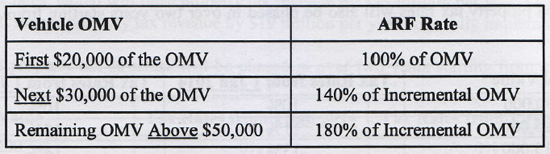
    Many interesting debates sparked off when the Singapore Budget 2013 was released, but it seems the change in regulation related to the local automotive industry made the biggest impact, especially to those who have been waiting and waiting to buy a car. Those who thought there would be high number of de-registrations resulting in more COE quota and thus lower COE prices come 2016 — it came early, albeit with a twist.

    Increase in ARF

    See article: Budget 2013: New tiered tax rates for cars, rebates for commercial vehicles

    The increase in ARF is relatively insignificant at this point unless you are buying a McLaren or Ferrari. The relative change in depreciation is only half the amount of the increase, i.e. if you are paying $10K more for ARF, the increase in depreciation is only $5K more or $500/year. This is because 50% of the ARF is refundable at the end of 10 years.

    Tightening of Financial Leverage

    See article: MAS to place cap on motor vehicle loans from Tuesday Feb 26

    No more 0% down payment and buying cars at pasar malam. Many middle income and fresh graduates are probably screaming that their dreams are busted.

    While I personally think 40-50% is quite extreme (30-40% would have been more manageable), I feel it is good that MAS placed a cap to enforce financial prudence. One should never buy an expensive car with no upfront cash.

    That said, I think there is a possibility that MAS will review these limits in another 1-2 years after the market has stabilized given the potential impact it may have on businesses.

    What about used cars?

    From my limited understanding, used cars are subject to the same terms: Maximum 5 years and at least 40% or 50% down payment (depending on OMV at time of registration). This means if you buy a 5 year old car, you can take a full 5 year loan with a 40% or 50% cash outlay.

    So what does this mean for the car buyer?

    Here’s what I think:

    • COE prices will drop by applying simple supply-demand mechanics; I am guessing to 2010-2011 levels or between $30-60K. This also means that new car prices will drop across the board except for very high end luxury cars with OMV exceeding $80K.
    • Loan interests will go up. The supply-demand concept does not work for auto loans because the demand is relatively inelastic. Recall in 2008 interest rates were 2.8% despite cars being cheap and demand being high. With the new rules banks lose up to 75% of their revenue and will find ways to recover them.
    • Cashback schemes and overtrades will be back with a vengeance. Interest rates for these schemes may go up to 6%.
    • Used car prices will also follow the drop in tandem with new car prices, albeit with a delay. A lot of used car dealers took in cars at inflated values over the past few years. They will have to let their overpriced stocks erode. So my advice is to wait a bit.
    • Relatively new cars purchased between late 2010 to early 2013 will suddenly lose their resale value as COE prices tumble. Owners of these cars will have to hold on to their cars longer before selling. Car modification workshops will huat.
    • Used cars above 4 years of age suddenly becomes very attractive. People who are tight on finances should look to buy older cars with much lesser initial outlay.
    • There is a possibility that older car prices start to rise due to the increased demand caused by lower cash outlay.
    • COE renewal will become viable as COE prices tumble. The cash outlay for a COE renewal versus down payment for a new car are going to match up really close. We will start to see a lot of old Nissan Sunny and Mitsubishi Lancers. Repair workshops will huat.
    • Hopefully prices of motor insurance will drop due to reduced car prices, but I think that would be fat hope.

    What can I afford?

    That said, can a person with about $8-10K of cash to spare still buy a car? Yes he/she can. A small hatchback from 2005 will give him/her an extremely low monthly installments at only S$200+.

    Now that is much more financially sound.

    In summary, the government is telling you that when COE drops to $30K it’s not for you to go buy a Ferrari, and that with S$5K in your bank don’t go and buy car.